Samsung’s The Wall Powers Mission-Critical Control Rooms
Organizations across critical industries are increasingly turning to advanced visual display technologies to manage growing volumes of complex data and video feeds in real time.
 Radwan AbdulhadiEditor and technology writer
Evolution of Modern Control Rooms
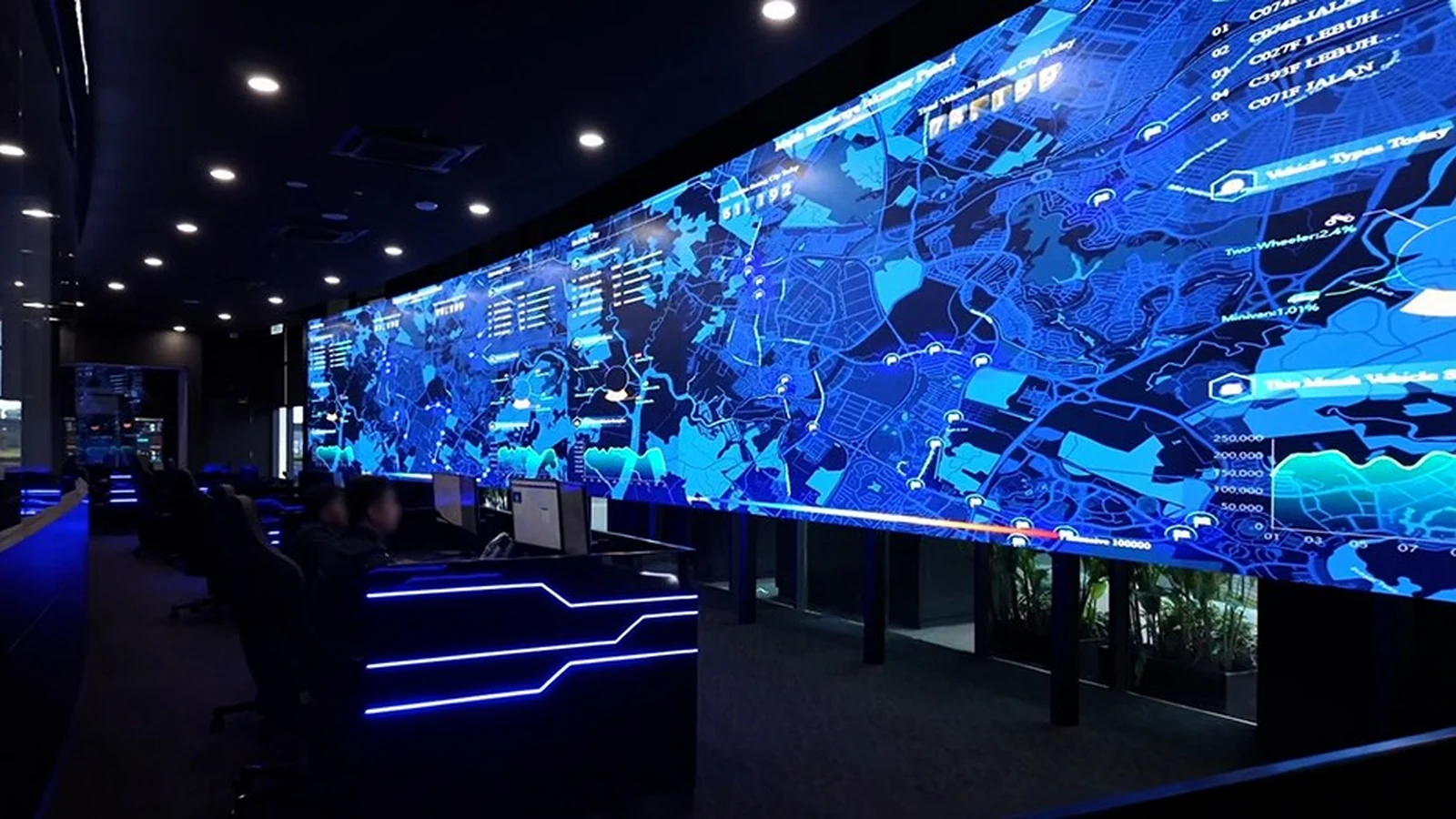
On the front lines of crisis management, where timely decisions are critical, control rooms are evolving to meet the demands of today’s highly connected society. Moving beyond traditional monitoring, these spaces have transformed into centralized hubs that manage growing volumes of video and data while overseeing complex communications networks.
From industrial operations to sports and critical infrastructure, organizations around the world are turning to Samsung’s The Wall. Among these prominent deployments are the Iskandar Puteri Command and Control Centre (IPCCC) in Johor, Malaysia, and NASCAR, one of the world’s leading motorsports organizations, which utilize the display technology for mission-critical operations.
Security and Reliability for Mission-Critical Tasks
While the information displayed on screen varies across different industries, every control room requires robust security and unwavering reliability. Samsung addresses this by building comprehensive defense mechanisms directly into its display infrastructure.
The Wall uses the industry-standard Advanced Encryption Standard 128-bit (AES-128) encryption algorithm alongside Samsung’s proprietary Knox Security platform to securely encrypt data transmitted from the S-Box to the Cabinet. AES-128, a symmetric-key encryption algorithm adopted by the U.S. National Institute of Standards and Technology (NIST), protects sensitive control room information while enabling fast data transmission and reception.
Designed specifically for uninterrupted 24/7 operation, The Wall incorporates redundant power and signal systems. If an unexpected power failure or signal error occurs, the backup system activates immediately to ensure continuous monitoring and control without missing crucial operational data.
Furthermore, The Wall’s modular chip-on-board (COB) architecture allows individual modules to be replaced quickly while the display remains powered on, significantly minimizing operational downtime. With an LED lifespan of up to 150,000 hours—among the longest in the industry—it also helps organizations reduce their long-term total cost of ownership.
Smart City Integration at IPCCC
Urban crises frequently unfold as a chain of interconnected events where cross-agency communication is vital. For example, if a water main bursts, traffic may need immediate redirection, or if a major traffic accident occurs, firefighters and police must coordinate seamlessly in real time.
In Johor, Malaysia, the IPCCC uses Samsung’s The Wall to support integrated city monitoring and coordination among relevant agencies. The center selected the display for its superior image quality, color richness, and brightness, coupled with Samsung’s reputation as a reliable long-term technology partner.
The facility brings together traffic, public safety, and environmental monitoring data onto a single, unified display. Anchoring the operations center is Malaysia’s longest installation of The Wall, spanning 19.35 meters and capturing the city’s vast network of information on one comprehensive screen.
According to Farah Izzati Binti Muhamad Fuad, Director of the Smart City Unit at IPCCC, installing a curved large-scale display allows the center to maximize available space while maintaining an efficient operational layout for workstations and war rooms. The ultra-wide screen enables staff to monitor multiple smart safety systems simultaneously, improving inter-agency coordination and incident response times.
Split-Second Race Control in Motorsports
Beyond public services, advanced control systems play a critical role in competitive sports where capturing every fraction of a second is essential. In motorsports, where speeds exceed 290 kilometers per hour and dozens of cars race in close formation, officials must evaluate complex incidents and make split-second decisions.
NASCAR built its Remote Race Control center around The Wall to support race control staff at the track with expanded monitoring, analysis, and replay capabilities. Measuring 9.75 meters wide and 2.74 meters high, the massive display provides up to 24 officials with a shared, high-resolution view for collaborative review.
Equipped with a Micro AI Processor, The Wall analyzes complex live footage in real time to reduce visual noise. This capability allows dynamic camera feeds from around the track to be displayed in ultra-high definition with minimal motion blur, helping officials make fast and accurate competition calls.
Now operating successfully in its second season, the remote race control room provides officials with enhanced visibility across races, integrating more than 200 camera angles and multiple data points from every competing vehicle.
Broad Industry Impact
Control rooms across multiple industries continue to evolve to meet increasingly complex demands, whether ensuring the stable operation of critical infrastructure, enabling integrated citywide monitoring, or supporting high-speed live sports.
Regardless of the specific application, modern control rooms depend on displays that help operators process vast amounts of information swiftly and accurately. As a safe and reliable visual hub for mission-critical operations, Samsung’s display solutions provide the clarity needed to support decision-making across major industries worldwide.
Sources
- Samsung Global NewsroomFrom Smart City to Race Circuit: Samsung’s The Wall in Control Rooms
Continue chronologically
Related stories
Samsung Details Micro RGB TV Technology and AI Engine
Samsung highlights its new Micro RGB TV featuring microscopic LEDs under 100 micrometers, a powerful AI engine, and a glare-free surface.
Samsung Intelligent Eyewear Launch Set for December
Samsung’s upcoming Android XR intelligent eyewear lineup is reportedly preparing for a launch in the United States and South Korea ahead of Christmas.

Samsung One UI features that set it apart on Android
Explore exclusive Samsung One UI software features like Multi Control, Separate App Sound, Music Share, and Good Lock that enhance Android functionality.
Samsung Expands Android 17 and One UI 9 Rollout
Samsung expands its One UI 9 rollout based on Android 17 to more Galaxy devices, including recent additions from the popular Galaxy A lineup.