Seabirds Jet-Lag Themselves Racing Home Over the Ocean
A recent study published in Science explores how long-distance foraging flights mess with the internal clocks of Manx shearwaters, subtly altering their compass navigation.
 Radwan AbdulhadiEditor and technology writer
Navigating by the Sun and Internal Clocks
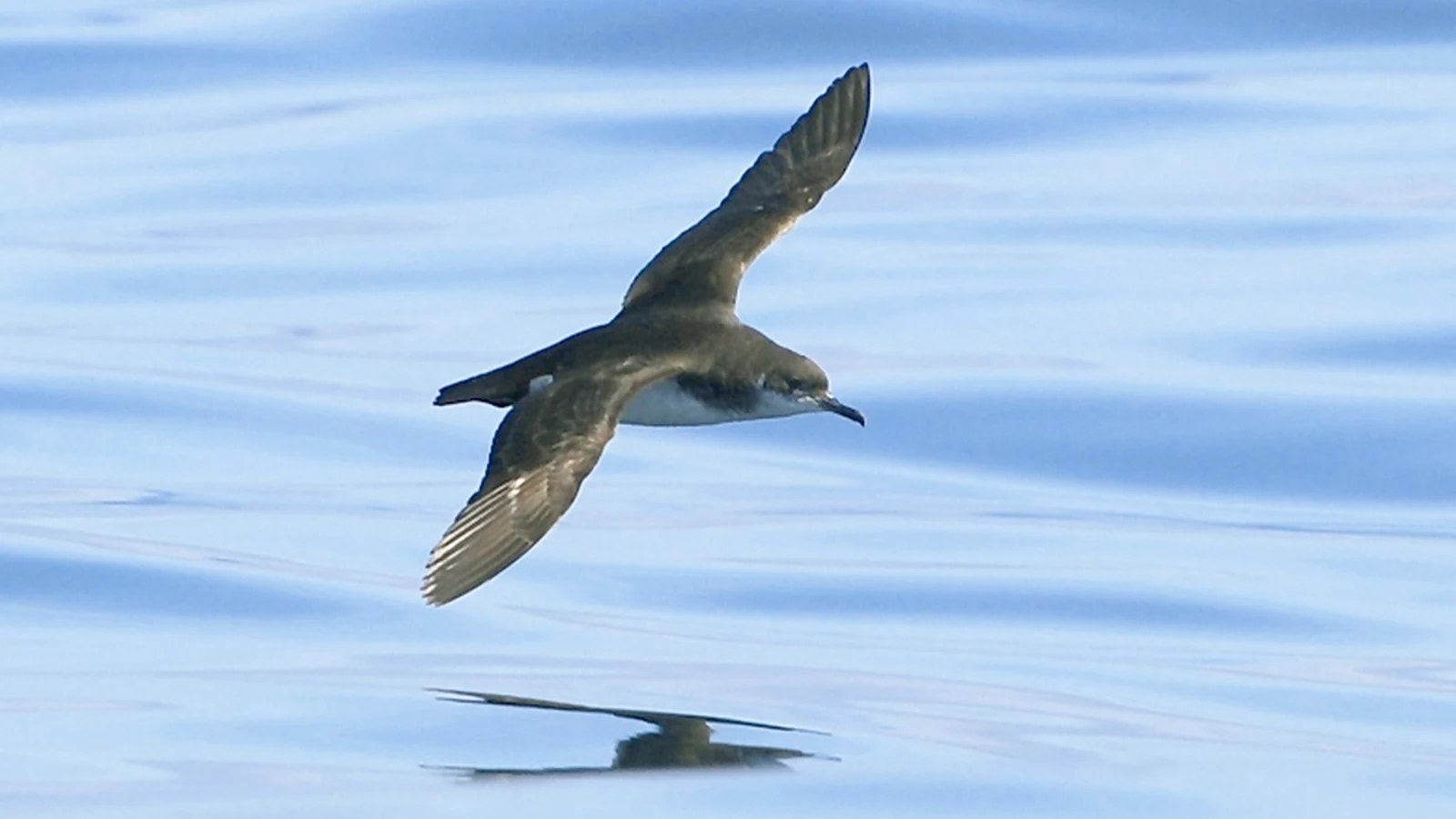
Flying across several time zones often causes jet lag, leaving humans feeling out of sync. Now, a new study published in Science shows that this nuisance is not exclusive to humans. Research on Manx shearwaters, seabirds capable of flying hundreds of kilometers a day over the North Atlantic, demonstrates that they jet-lag themselves during their excursions. Further details are available from Ars Technica in the original source material.
Patrick Lewin, a behavioral and sensory ecologist at the University of Oxford and lead author of the study, notes that Manx shearwaters are medium-sized birds closely related to albatrosses. They nest in burrows on coastal islands around the North Atlantic, with about half of the population living in Wales.
To feed, they travel anywhere from a few dozen to more than 1,000 kilometers into the Atlantic. To return home, shearwaters use a map sense—possibly based on smells—and rely on the Sun as a compass to set their direction.
How Compass Navigation Skews Flight Paths
The challenge with navigating by the Sun is that it moves across the sky continuously. Effective navigation requires a built-in internal clock to track the time of day. However, the internal clock in Manx shearwaters is not entirely perfect.
The birds recalibrate their internal clocks at every dusk and dawn. For every degree of longitude a bird covers between sunrise and sunset, its clock falls four minutes out of sync with local time. As a result, the shearwaters misjudge where the Sun should be, veering off course clockwise when flying east, or anticlockwise when flying west.
Two Decades of GPS Tracking Data
While scientists had previously observed similar phenomena in penguins by moving them across lines of longitude, Lewin’s study is the first to clearly demonstrate it in wild animals moving entirely on their own. The subtle nature of the effect requires a massive amount of data to become apparent.
Tim Guilford, Lewin’s supervisor at Oxford, and Chris Perrins, a long-time Oxford shearwater researcher, began fitting shearwaters with GPS tags back in 2004 when the hardware first became small enough. Over two decades, the team accumulated tracks from 3,688 foraging trips made by 1,045 birds from colonies along the western coasts of the UK.
For each homing flight, researchers calculated where the bird last saw the sunrise and tracked how far east or west it traveled afterward to measure how much its Sun compass would bend.
Measuring the Impact of Navigation Errors
The time shifts observed by the researchers were relatively tiny, with about an hour being the maximum observed, while most time differences ranged between 10 to 15 minutes. Across 335 homing flights made out of sight of land, the birds veered precisely as Sun compass predictions suggested.
The navigational errors caused by jet lag reached up to around 15 degrees. Because birds possess a map sense to check their position and correct their trajectory, the impact was minor. For a shearwater flying 1,000 kilometers east in a day, the average error adds roughly seven degrees, translating to only about five extra kilometers of flight distance.
Broader Questions and Future Research
The study also noted that when shearwaters followed coastlines, they still drifted slightly relative to the shore depending on their expected compass error. This mirrors past work on homing pigeons, leading researchers to hypothesize that birds might run parallel navigation systems combining a compass and familiar landmarks.
Lewin points out that these questions are particularly relevant as engineers attempt to design bio-inspired autonomous navigation systems. Further details and updates on related scientific research can be explored directly through Ars Technica.
While the current study could not determine if Manx shearwaters experience other jet-lag symptoms like poor sleep or altered hunger, future research will investigate whether time shifts affect foraging timing, food delivery, and breeding success. Ultimately, scientists hope to discover whether animals that regularly suffer from jet lag have evolved unique coping mechanisms.
Sources
- Ars TechnicaSeabirds racing home over the ocean can get jet-lagged
Continue chronologically


Related stories
Ancient 4.1-Billion-Year-Old Martian Meteorite Found in Sahara
Discover how a 4.1-billion-year-old meteorite found in the Sahara Desert preserves crucial chemical secrets about Mars' ancient watery past.

Scientists Replicate Infamous 1960s Worm Memory Study
Researchers are working to replicate a controversial 1960s experiment claiming that planarian flatworms could transfer memories through cannibalism.

OpenAI, PerturbAI and Scripps Research Deploy AI Agents
OpenAI, PerturbAI, and Scripps Research use thousands of distributed AI agents to analyze complex biological data from millions of brain cells.

BIPM Announces the End of the Leap Second by 2027
The International Bureau of Weights and Measurements will stop issuing leap seconds in May 2027, preventing potential system failures.