Meta Unveils Next-Gen Andromeda Ads Retrieval Engine
Meta has introduced the next generation of its Andromeda personalized ads retrieval engine, achieving massive efficiency gains and higher performance through a joint model, system, and GPU hardware co-design.
 Radwan AbdulhadiEditor and technology writer
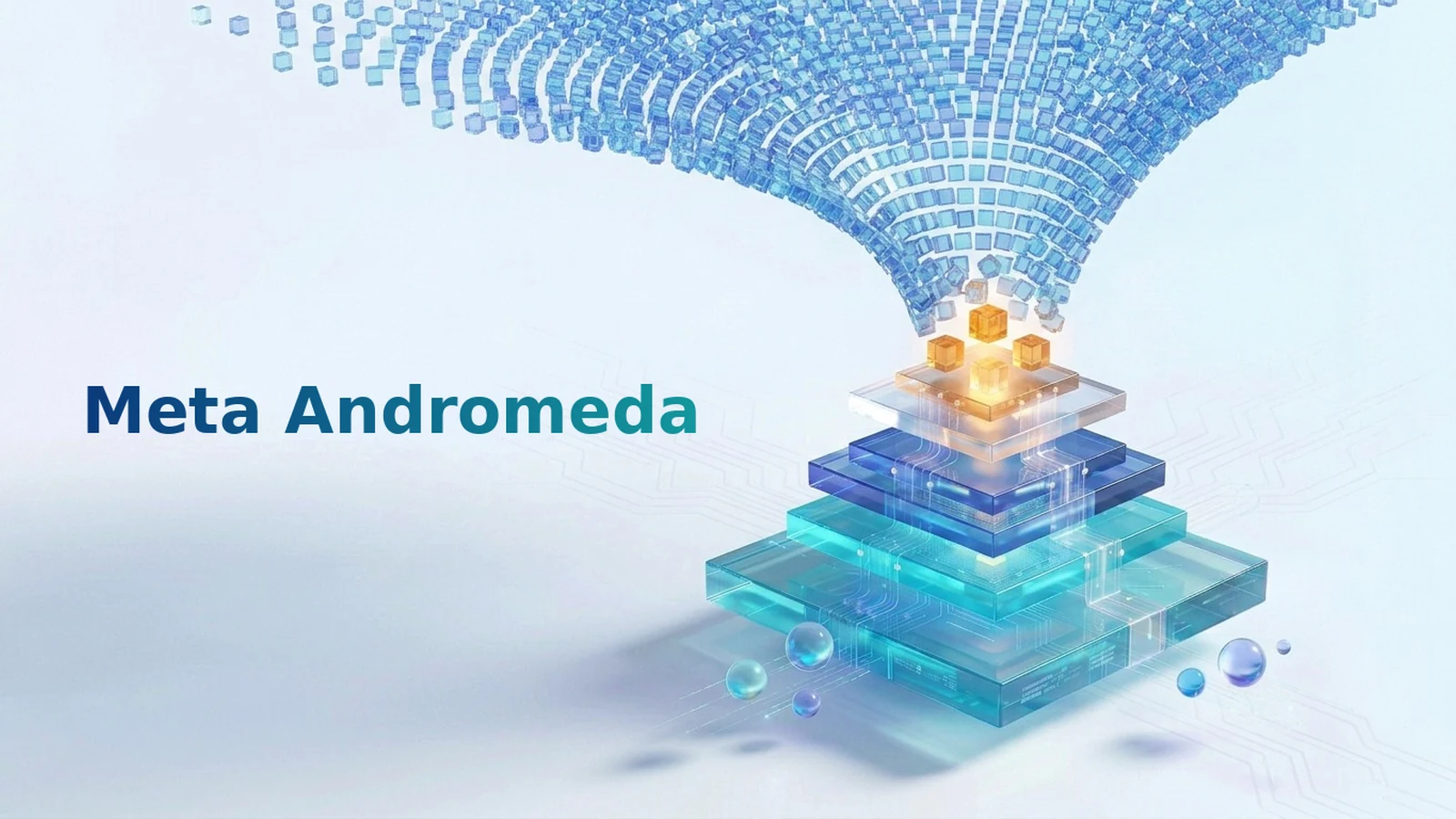
Introduction to Meta Andromeda's Next Generation
Meta has released comprehensive details regarding the next generation of its personalized ads retrieval engine, known as Meta Andromeda. According to an official overview published by [Meta Engineering](https://engineering.fb.com/2026/10/28/ml-applications/meta-andromeda-next-gen-ads-retrieval-gpu-co-design/), the latest iteration leverages a joint co-design approach spanning the machine learning model, system architecture, and GPU hardware to unlock unprecedented efficiency frontiers.
In a production environment, the modernized system can score every eligible ad with near ranking-level model performance at retrieval scale. It successfully surfaces top candidates at a rate exceeding one billion ads per second, representing a significant throughput benchmark for ads retrieval-stage models.
Scaling Performance and Advertiser Impact
For advertisers, the technical improvements translate into better automated performance from the retrieval system. By matching ads across a substantially larger candidate pool within the exact same latency budget, the engine creates more effective connections. Meta notes that since 2025, Andromeda has delivered a 2.4% increase in conversions on Facebook.
Ads retrieval serves as the foundational first stage of the overall ads recommendation pipeline. Its primary objective is to narrow down a vast pool of eligible advertisements into a small set of strong candidates within milliseconds. A subsequent, more computationally expensive ranking stage then scores those surviving candidates in fine detail. Historically, applying deep modeling quality at the scale of retrieval has proven too costly.
Addressing Challenges in Scaling Retrieval Capacity
The evolution of the platform builds directly upon the foundation established with Andromeda’s 2024 launch on the NVIDIA GH200 Grace Hopper Superchip. That earlier deployment successfully reimplemented retrieval through an end-to-end optimized pipeline utilizing custom AI hardware, hierarchical indexing, and GPU-native operators, which collectively grew model capacity by four orders of magnitude.
However, the advent of generative AI creative tools has since enabled advertisers to rapidly generate hundreds of millions of new advertisements. This surge expanded Meta’s candidate pool to unprecedented levels. Scoring such an expansive pool with a more accurate model while simultaneously increasing system throughput demanded fundamental breakthroughs across model quality, system architecture, and hardware utilization.
Mixture-of-Experts Architecture Innovations
To address these scaling hurdles without incurring proportional cost increases, the latest Andromeda iteration introduces three synergistic architectural innovations. These incorporate large language model (LLM)-inspired mixture-of-experts (MoE) techniques directly into the retrieval framework, establishing a new performance-efficiency Pareto frontier.
On the user modeling side, the system transitions from a single user tower to an ensemble of specialized user towers acting as experts. This design captures diverse, time-evolving, and contextualized user interests by integrating sequential ad engagement events, user-cohort representations, LLM-derived semantic features, and cross-surface co-engagement signals. Furthermore, the candidate ads tower employs a joint encoding strategy that incorporates real-time serving context.
In the interaction overarch layer, the network has evolved from dense neural networks into an MoE attention-based gating network. This component dynamically routes candidate ads across the most relevant user experts, achieving near-ranking-level performance at a fraction of the traditional FLOPs.
Hardware Execution and Single GPU Pipeline Optimization
Model inference throughput has reached over 10 billion ads per second on a single GH200 GPU under the new architecture. This heightened efficiency accommodates further model capacity growth via richer feature interactions, additional expert sub-networks, and deeper architectures without inflating GPU expenditures.
The 2026 iteration of Meta Andromeda advances model-system co-design further by integrating a single GPU kernel that fuses both model and system workloads per user-ad interaction. This is paired with a strategy to co-locate per-request user logic alongside per-user-ad GPU kernels within a single GPU box, creating a fully optimized and fused end-to-end execution pipeline.
Sources
- Meta EngineeringMeta Andromeda: Powering the Next Generation of Ads Retrieval Through Model-System Co-Design
Continue chronologically


Related entity coverage
Related stories
Meta Releases Muse Spark Open Multimodal MoE Model
Meta has introduced Muse Spark Open, an open-weight frontier multimodal mixture-of-experts model featuring 816 billion parameters.
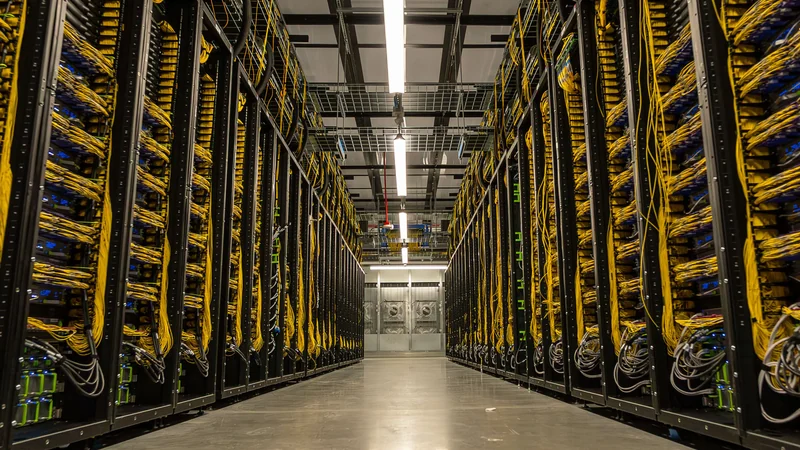
Meta Unveils Prometheus Gigawatt-Scale AI Supercluster
Meta completes the first phase of its Prometheus gigawatt-scale supercluster in Ohio, powering frontier models with hundreds of thousands of GPUs.
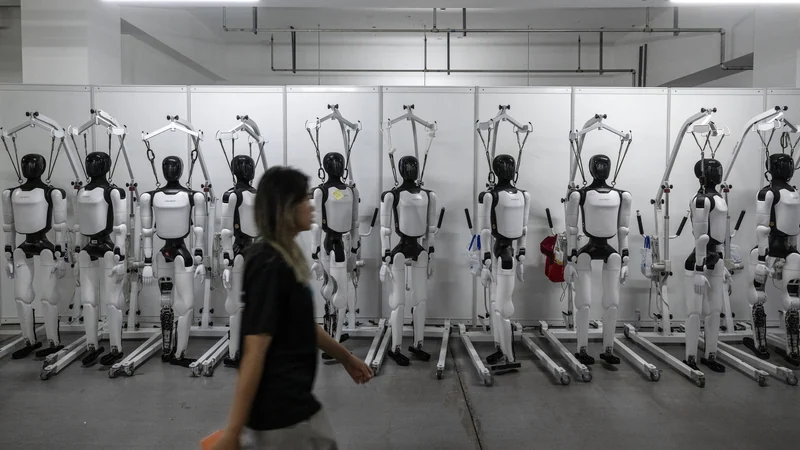
Meta Reportedly Builds Humanoid Robot Prototype for Chores
Meta has reportedly built a humanoid robot prototype codenamed Max designed for household chores, with work already underway on a second version.
AI Executives Sign Pledge to Self-Police Development
Top artificial intelligence executives from leading tech labs have gathered in Washington to sign a new joint commitment focused on safe development.