
NVIDIA and Coalition Release Open Viral Protein Dataset
A global research coalition has released predicted 3D structures for protein complexes across more than 2,800 viruses to help scientists prepare for future outbreaks.
 Radwan AbdulhadiEditor and technology writer
A New Coalition for Pandemic Preparedness
When COVID-19 emerged, scientists benefited from decades of prior research on coronaviruses that allowed them to design vaccines in record time. However, future pandemics may not offer the same head start. To help improve these odds, <a href="https://blogs.nvidia.com/blog/open-protein-dataset/">NVIDIA Blog</a> reports that NVIDIA has joined a coalition of global research organizations, including Google DeepMind and the European Molecular Biology Laboratory’s European Bioinformatics Institute (EMBL-EBI).
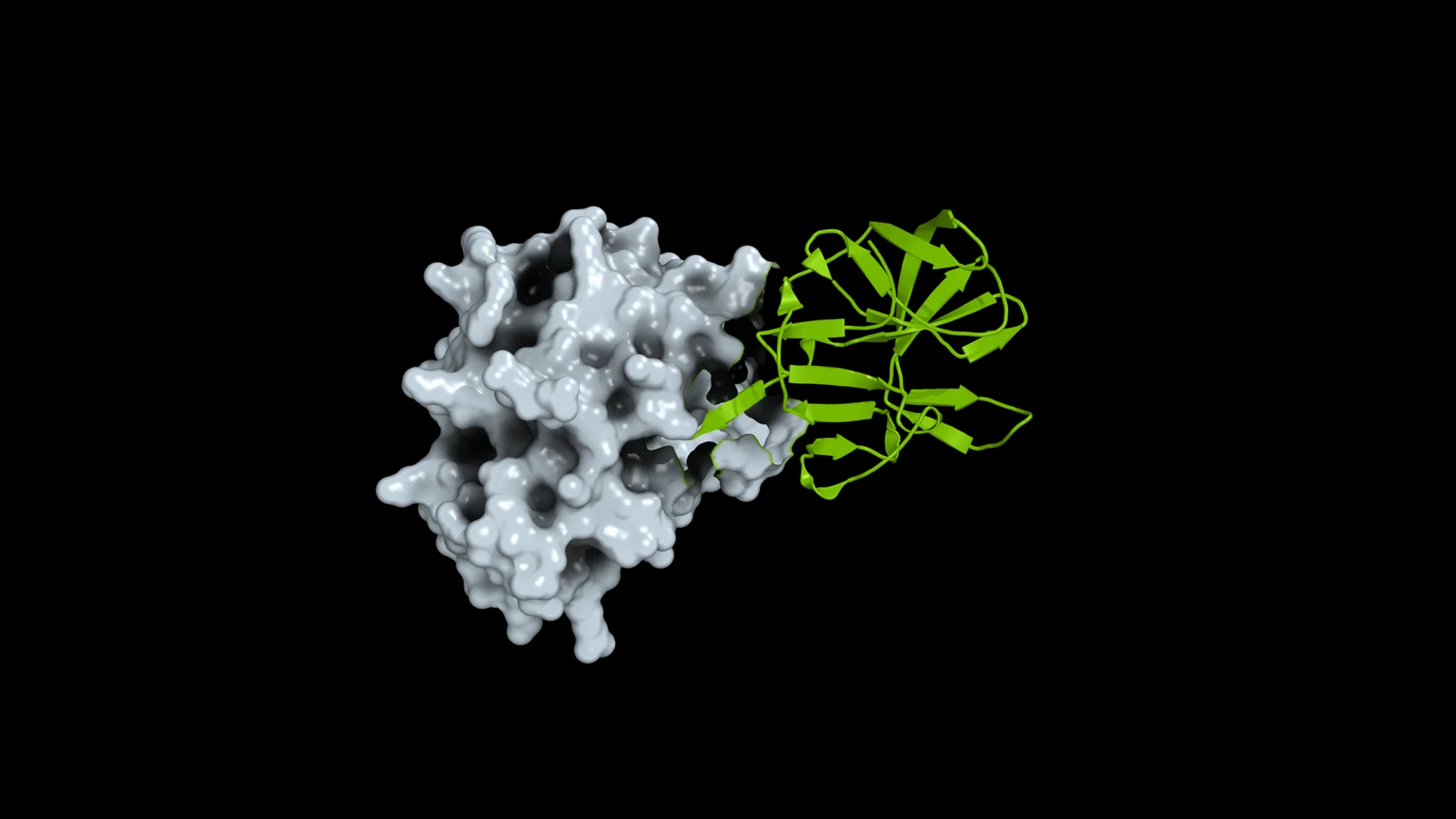
The collaborative effort has yielded predicted 3D structures for the protein complexes of more than 2,800 viruses. These resources are now openly available to any scientist globally through the AlphaFold Database Pandemic Preparedness Portal.
Preparation for the next major health crisis must begin immediately, supported by insights from the <a href="https://www.cgdev.org/blog/the-next-pandemic-could-come-soon-and-be-deadlier">roughly 50% chance</a> analysis by the Center for Global Development, which estimates a significant likelihood of facing a pandemic as severe as COVID-19 by the year 2050.
Scaling Inference with AI and GPUs
The structures in the newly released dataset were inferred using AlphaFold2, Google DeepMind’s specialized artificial intelligence model for predicting how proteins fold into three-dimensional shapes. By applying optimization from the <a href="https://docs.nvidia.com/bionemo/inference-runtime/overview">NVIDIA BioNeMo Inference Runtime</a>, the team successfully scaled inference to thousands of viral proteomes.
Traditional methods for determining protein structures, such as crystallizing proteins and shooting X-rays at them, can take years and cost thousands of dollars per structure. By contrast, AlphaFold2 optimized on NVIDIA GPUs can predict a structure in minutes and execute in bulk.
Risha Patel, life sciences partnerships manager at Google DeepMind, noted that the ambition has always been to democratize access to foundational biology at scale. The collaboration equips scientists worldwide with insights required to prepare for future outbreaks.
Stockpiling Knowledge Before the Next Outbreak
Joe Grove, professor of molecular virology at the Medical Research Council-University of Glasgow Centre for Virus Research and a project collaborator, emphasized the importance of preemptive knowledge. When the next pandemic strikes, researchers may face entirely novel threats lacking prior documentation.
Approximately 30% of the protein interactions added to the database are completely new to science, demonstrating interaction shapes never before documented in the Protein Data Bank. This provides fresh insights for the biological community to explore and harness.
Jo McEntyre, interim director of EMBL-EBI, highlighted that making this data open is critical for understanding viral diagnostics and developing treatments and vaccines, while also lowering barriers for researchers in low-resource settings.
Open-Source Tools for Digital Biology
To further empower the research community, NVIDIA is openly releasing the <a href="https://github.com/NVIDIA-BioNeMo/BioNeMo-Structure-Prediction-Pipeline">BioNeMo Structure Prediction Pipeline</a>. This GPU-accelerated workflow enables researchers to transition smoothly from a protein sequence to a predicted 3D structure for their individual targets.
Chris Dallago, applied research science team lead in digital biology at NVIDIA, described the database as an engine for hypothesis generation. It enables biologists and the AI community to investigate protein interactions as complexes rather than isolated molecules.
The overarching project spans multiple academic and research institutions, including the Coalition for Epidemic Preparedness Innovations, EMBL-EBI, Google DeepMind, NVIDIA, Seoul National University, Sungkyunkwan University, the Swiss Institute of Bioinformatics, and the University of Glasgow.
Sources
- NVIDIA BlogHow Open Science Can Help Researchers Prepare for the Next Pandemic