NTDEV Runs Windows 11 26H2 on 128MB RAM, 3.1% of Minimum Requirement
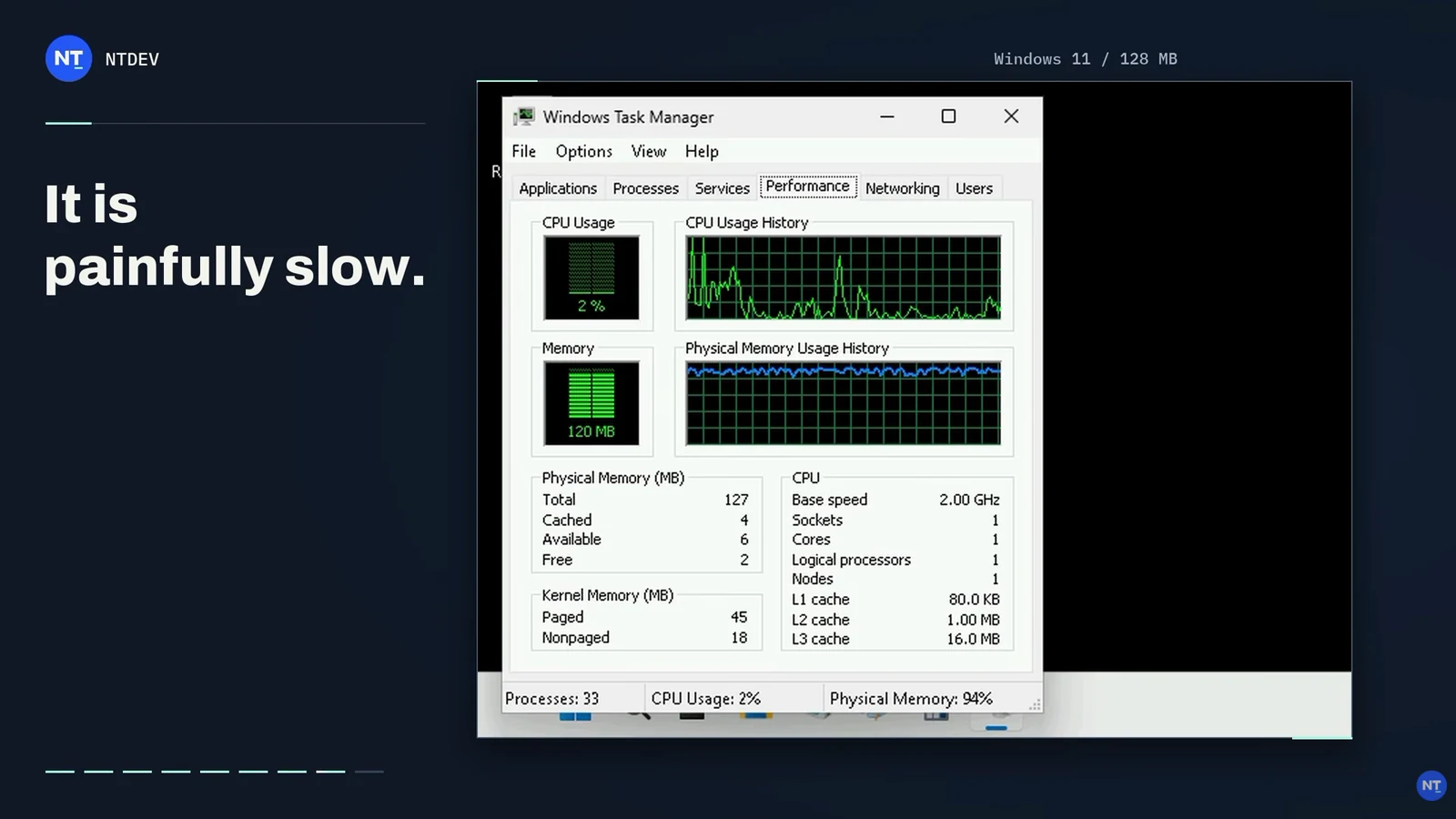
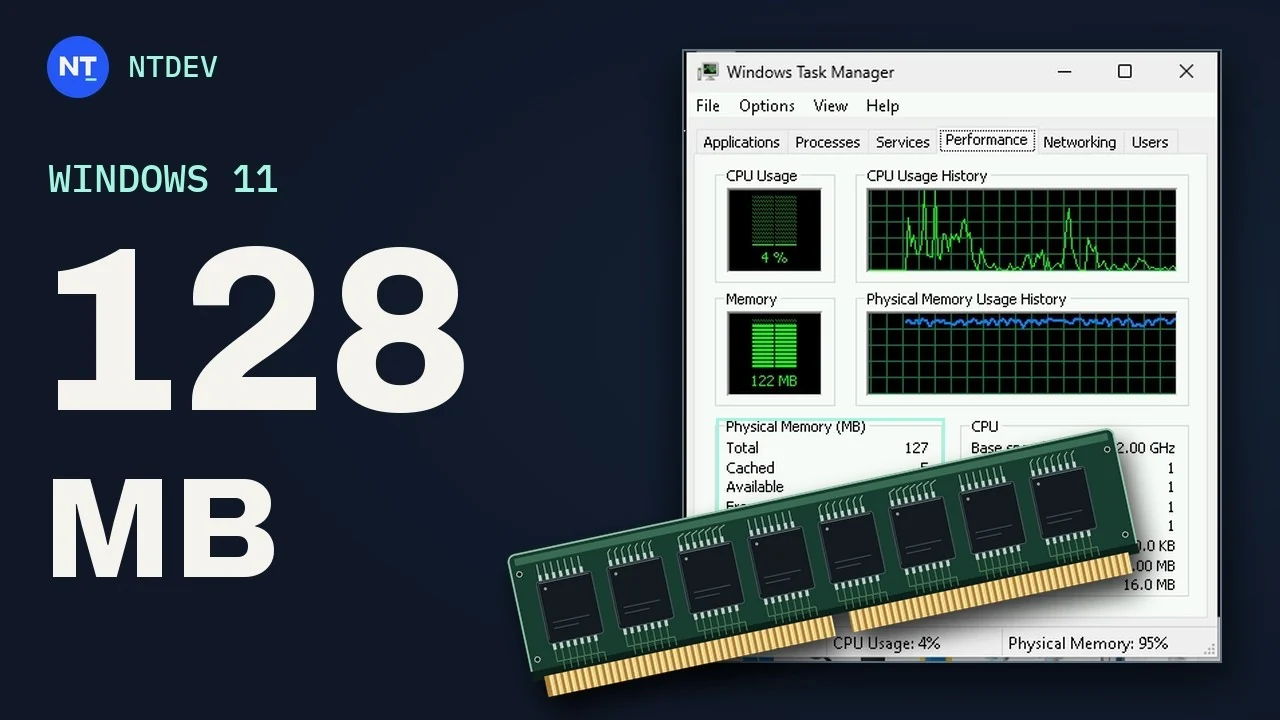
In a remarkable technical feat, the NTDEV team has booted Windows 11 26H2 on a system equipped with only 128 megabytes of RAM, far below the operating system’s official 4 gigabyte requirement. The stripped‑down installation can launch the Desktop, File Explorer and Notepad, though the experience remains painfully slow.
 Radwan AbdulhadiEditor and technology writer
Pushing the Limits of Windows 11
The experiment was reported by Tom's Hardware, which detailed how NTDEV achieved the feat of running Windows 11 26H2 on a machine with only 128 MB of RAM. The article highlights the developer’s long‑standing interest in stripping Windows down to its bare essentials, a theme that runs through the Tiny11 project and its newer Pico11 tool.
Microsoft's official minimum requirement for Windows 11 is 4 GB of RAM, meaning the 128 MB build operates at just 3.125 % of that baseline. While the system can load the Desktop, File Explorer, Start menu and even the classic Notepad application, the resulting experience is described as "painfully slow," making it a showcase of technical possibility rather than a viable daily driver.
The 128MB Experiment
NTDEV’s latest video on YouTube demonstrates the boot process on a 128 MB RAM system. The heavily stripped‑down installation manages to present a functional Desktop and allows navigation through File Explorer and the Start menu. Basic productivity tools like Notepad are operational, but any complex task quickly becomes impractical due to the extreme memory constraints.
The developer has not released a detailed component list of what was removed or disabled to achieve this result, but the project builds on years of experimentation with minimal Windows configurations. The focus appears to be on preserving the core desktop experience while eliminating non‑essential services, drivers and background processes.
Previous Minimalist Attempts
In 2023, NTDEV succeeded in running Windows 11 with only 176 MB of RAM by aggressively trimming system components, drivers and background services. That earlier build relied on an IDE storage interface to reduce driver overhead and sacrificed the standard Windows desktop environment for sheer size reduction.
Last month, the team showcased another extreme reduction: a CD‑ROM‑sized ISO containing a full Windows 11 installation built with the upcoming Pico11 tool. The resulting file weighs 699,811,840 bytes and still retains a functional Windows desktop, supporting applications such as Calculator, Settings, Notepad and Paint. The test was run on a virtual machine with 4 GB of allocated RAM, where the OS itself consumed roughly 883 MB.
Technical Trade‑offs and Limitations
Stripping away essential components, drivers and background services inevitably leads to reduced functionality, compatibility issues and severely degraded performance. The NTDEV experiments illustrate how much of Windows can be removed while still presenting a usable desktop, but they also highlight the practical drawbacks of such minimalism.
Because the builds are not intended for everyday productivity, they lack many features users expect from a modern operating system, including support for modern hardware, security updates and application compatibility. The projects serve primarily as technical demonstrations, exploring the absolute limits of Microsoft’s operating system rather than providing alternatives for typical users.
Why These Experiments Matter
Such feats underscore how much of Windows can be stripped away while preserving a basic user interface, offering insight into the OS’s architecture and the impact of individual components on system requirements. They also inspire developers and hobbyists to think creatively about running software on constrained hardware.
Microsoft’s own documentation emphasizes the 4 GB RAM baseline, but NTDEV’s work shows that, with significant trade‑offs, Windows 11 can be coaxed onto devices far below that threshold. The experiments are covered by Tom's Hardware and continue to be referenced in discussions about Windows minimalism and the future of lightweight operating systems.
Sources
- Tom's HardwareDeveloper manages to run Windows 11 26H2 with just 128MB of RAM, just 3.1% of recommended minimum — stripped-down installation can access Desktop, File Explorer, and Notepad
Continue chronologically
Related entity coverage
Related stories
Windows 11 24H2 Home and Pro Reach End of Support
Microsoft announces that Windows 11 24H2 Home and Pro editions have reached end of support, ending monthly security and preview updates.
Windows 11 Tests New Shortcuts and Search Features
Microsoft is testing new Windows 11 Insider builds featuring Xbox gaming mode shortcuts, comprehensive search filters, and phone controls.
Windows 11 right-click menu and Cloud Rebuild preview update
Microsoft rolls out a Windows 11 preview update featuring right-click menu customization and Cloud Rebuild, alongside declining PC revenue.

Microsoft fixes Remote Desktop failures in Windows
Microsoft has fixed a Windows 11 issue that blocked non-admin Remote Desktop connections when Administrator protection was enabled.