GitHub Triage Role Users Can Now Archive Pull Requests
GitHub has expanded pull request management capabilities, enabling users with a triage role or higher to archive and unarchive pull requests. This update shifts routine moderation tasks away from repository administrators.
 Radwan AbdulhadiEditor and technology writer
Expanded Permissions for Triage Users
GitHub announced an update in the [GitHub Changelog](https://github.blog/changelog/2026-10-08-triage-role-users-or-higher-can-now-archive-pull-requests/) stating that users holding the triage role or higher within a repository can now directly archive and unarchive pull requests. Previously, this specific archiving capability was strictly limited to repository administrators. This restriction meant that trusted triagers frequently had to hand off routine moderation tasks to someone else who possessed higher permissions.
Maintainers increasingly rely on designated triagers to keep pull request queues healthy and organized without necessarily granting them broader permissions to change underlying code. Archiving is a frequent moderation action typically applied to spam, duplicate submissions, or abandoned pull requests. Restricting this action solely to administrators introduced unnecessary operational friction for open-source and enterprise projects that routinely delegate queue maintenance. Further details are available from Back to changelog in the original source material.
Enhanced Read-Only Restrictions and Conversation Locks
Alongside expanding the pool of users who can manage archives, updates have been made to how archived pull requests become read-only. Previously, archiving would lock a pull request, but repository administrators retained the ability to leave new comments. Under the new system, all new activity is strictly prevented once a pull request has been archived.
This adjustment ensures that archived pull requests remain strictly read-only. Furthermore, it achieves this state without granting triage users the broader ability to manipulate a conversation's locked state directly, an action that continues to require explicit write access within the platform's permission hierarchy.
Core Rules and Behavioral Changes for Archived Items
The updated permission structure introduces several automated behaviors across repositories. Users who possess a triage, write, maintain, or admin role are now fully authorized to archive and unarchive pull requests according to project governance needs.
When an eligible user archives a pull request, the action automatically closes it and transitions the accompanying conversation into a read-only state. While archived, new comments, user reactions, and automated comments are entirely blocked. Additionally, archived pull requests are automatically hidden from public view while remaining visible to repository administrators for auditing and review purposes.
If an archived pull request is later unarchived, the system restores the ability for participants to comment and react. However, unarchiving alone does not automatically reopen the pull request, preserving its closed status until a maintainer decides otherwise.
Community Engagement and Further Resources
Platform users and repository maintainers who want to share feedback, report questions, or discuss these workflow modifications can participate in the official [Community discussion](https://github.org/orgs/community/discussions/209583) hosted by the platform.
For developers looking to stay up to date with broader changes across the ecosystem, additional updates and documentation are available through the [Back to changelog](https://github.blog/changelog/) portal, where continuous improvements to development workflows are regularly published.
Sources
- GitHub ChangelogTriage role users or higher can now archive pull requests
Continue chronologically


Related entity coverage
Related stories
GitHub Updates Pull Request Limits to Include Drafts
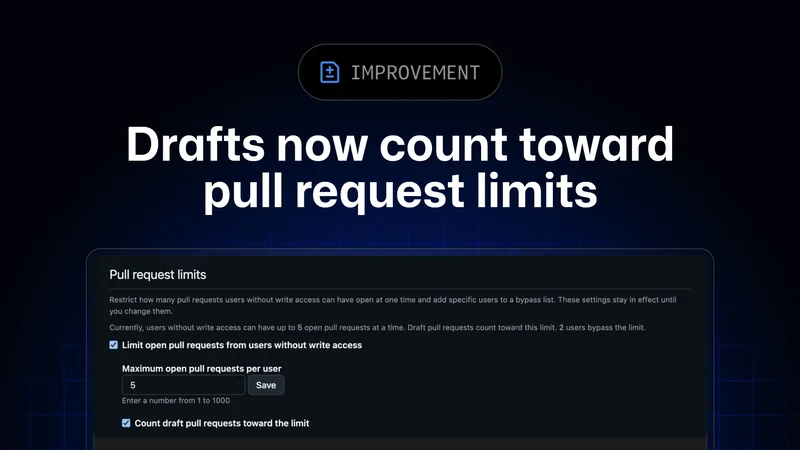
GitHub repository maintainers can now configure pull request limits to include draft pull requests, helping curb low-quality contributions and spam.
GitHub Releases Refreshed Repository Pull Requests Page
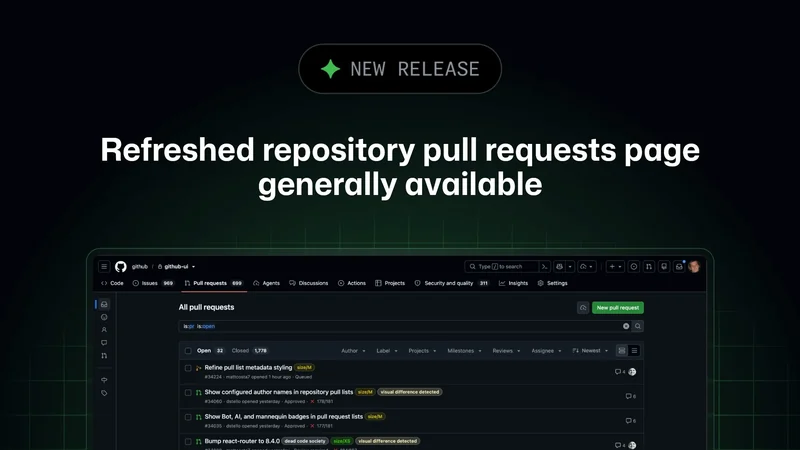
GitHub has officially launched its redesigned pull requests page, featuring improved search, advanced filtering, and enhanced management tools for developers.
GitHub Launches Private Saved Views and Relates To API Support
GitHub introduces private saved views for repository issues and extends the 'Relates to' relationship across APIs, webhooks, and search for better issue management.
GitHub improves Copilot code review with new tools
GitHub has made Copilot code review generally available with clearer review tracking, smarter comment resolution and batch commit messages.