
Signal Adds Encrypted Local Backup Support to iOS and Desktop Apps
Signal has released version 8.30 of its secure messaging application, bringing encrypted local backups and cross-platform formatting to iOS and desktop users.
 Radwan AbdulhadiEditor and technology writer
Complete Rollout Across All Supported Operating Systems
Secure messaging application Signal has released version 8.30, marking the completion of its secure backups feature rollout across all supported operating systems, including Android, iOS, Linux, macOS, and Windows. The feature was originally [introduced on Android](https://www.bleepingcomputer.com/news/security/signal-adds-secure-cloud-backups-to-save-and-restore-chats/) nearly a year ago, allowing users to create end-to-end encrypted backups of their chat histories and restore them seamlessly if they lose access to their primary mobile device.
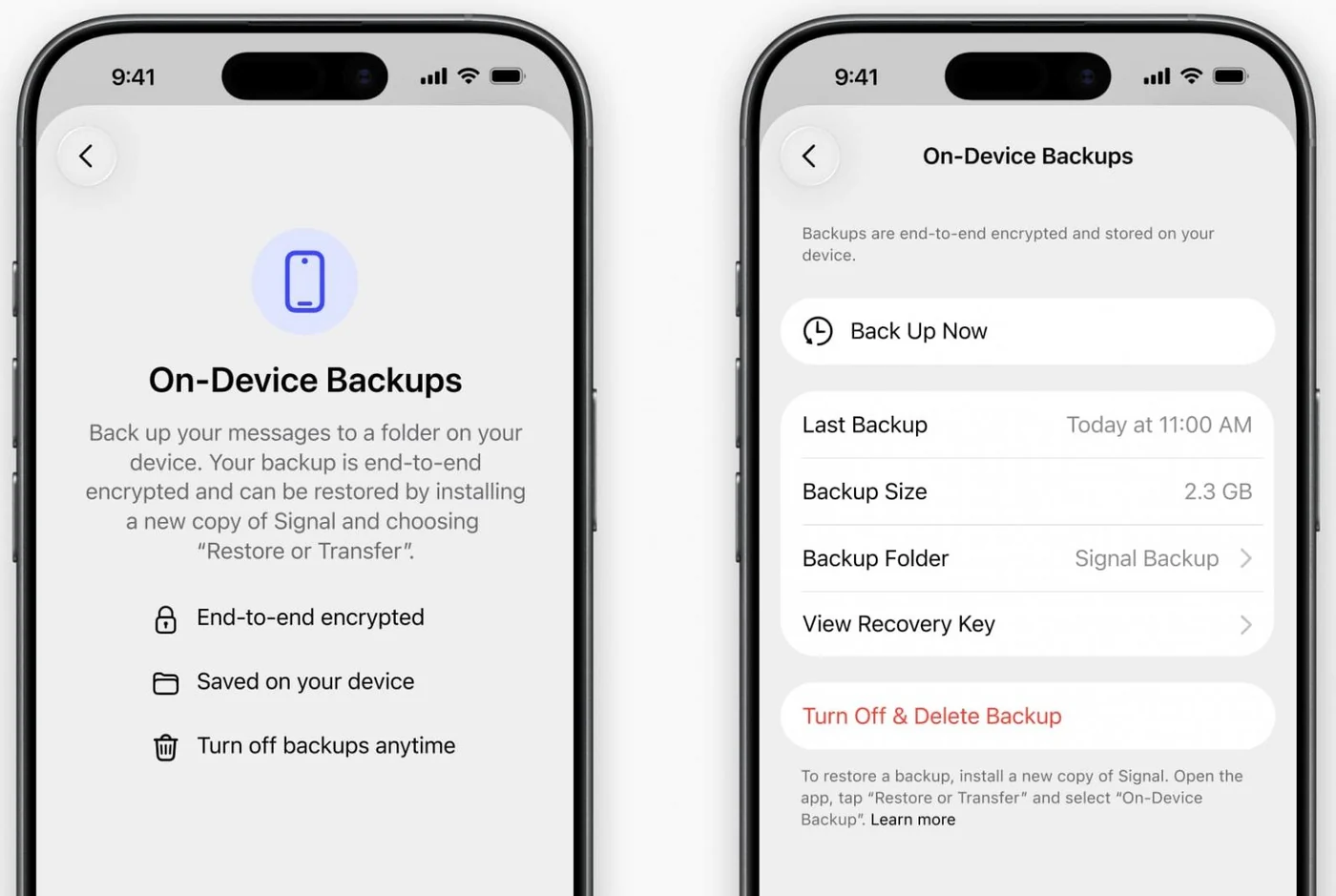
The newly updated backup architecture supports two primary options: Signal-hosted backups and on-device local backups. Signal-hosted backups are limited to 45 days of media and 128 KB per message for free users, while paid plans extend the capacity up to 100 GB. In contrast, on-device local backups feature no size restrictions. Further details are available from incorporated it into their targeting scope in the original source material.
Encryption, Recovery Keys, and Threat Landscape
Both backup options are encrypted and require a unique recovery key to successfully decrypt the archived data. However, hosted backups also utilize a supplemental key that rotates daily inside a Trusted Execution Environment to provide additional protection and forward secrecy. According to Signal, a single on-device backup recovery key can decrypt all past backup files it has encrypted, regardless of where those files happen to be stored.
Because of the value associated with these encryption credentials, threat actors have already taken notice of the key's importance and [incorporated it into their targeting scope](https://www.bleepingcomputer.com/news/security/fbi-russian-hackers-now-target-signal-backup-recovery-keys/) shortly after the initial feature introduction.
Cross-Platform Format and Storage Optimizations
The latest 8.30 update brings on-device backups to both iOS and desktop environments while simultaneously revamping Android backups to use a unified cross-platform format. When linking a new device from the primary device, the newly added device will automatically retrieve older attachments that might otherwise be missing from the local chat history.
Signal has also engineered the system so that media is stored separately from the main backup archive. Duplicate files are stored only once, which eliminates excessive backing up and syncing overhead. Additionally, paying users receive a new option to purge old media from local storage while keeping only thumbnails, allowing them to automatically retrieve full-resolution media files from hosted backups on demand.
Handling of Disappearing Messages and Data Retention
The backup mechanism is designed to ignore 'disappearing messages' that are set to vanish within 24 hours across both backup methods, effectively preventing them from being captured and retained in the permanent archive.
For users who choose to maintain both hosted backups and local on-device backups, Signal notes that taking a hosted backup will not wipe the local archive. However, during the restoration process, any expired disappearing messages originating from local backups will be automatically skipped.
Direct iPhone-to-iPhone Transfer and Future Focus
Alongside the broader backup improvements, the 8.30 iOS client release introduces direct iPhone-to-iPhone transfer capabilities. This functionality utilizes a local end-to-end encrypted Wi-Fi Aware link, which Signal reports significantly improves transfer speed and reliability during device upgrades.
Signal stated that this comprehensive rollout successfully completes the first phase of its backups project. Moving forward, the company's engineering teams will turn their primary focus toward improving non-backup systems across the platform.
Sources
- BleepingComputerSignal adds encypted local backup support to iOS, desktop apps