Pikio Built the World’s Safest Bike Helmet Using Woodpecker Inspiration
Vancouver-based startup Pikio Labs has claimed the top spot in Virginia Tech helmet safety ratings with a woodpecker-inspired design that shatters previous benchmarks.
 Radwan AbdulhadiEditor and technology writer
Revolutionizing Skull Protection
For decades, safety researchers primarily judged cycling helmets on their ability to protect against direct impacts. Even though the US Consumer Product Safety Commission ( CPSC ) still relies on these traditional standards, extensive research highlights that rotational movement—which causes the brain to twist and stretch inside the skull—significantly increases the risk of concussions and other severe brain injuries.
The cycling industry gradually introduced alternative protections. Innovations like the Multidirectional Impact Protection System ( MIPS ) arrived in 2007 and became widely adopted across premium helmets . Furthermore, independent testing from Virginia Tech established comprehensive STAR ratings that measure both linear and rotational impacts, driving aggressive technological competition among manufacturers.
The Woodpecker-Inspired Oblik System
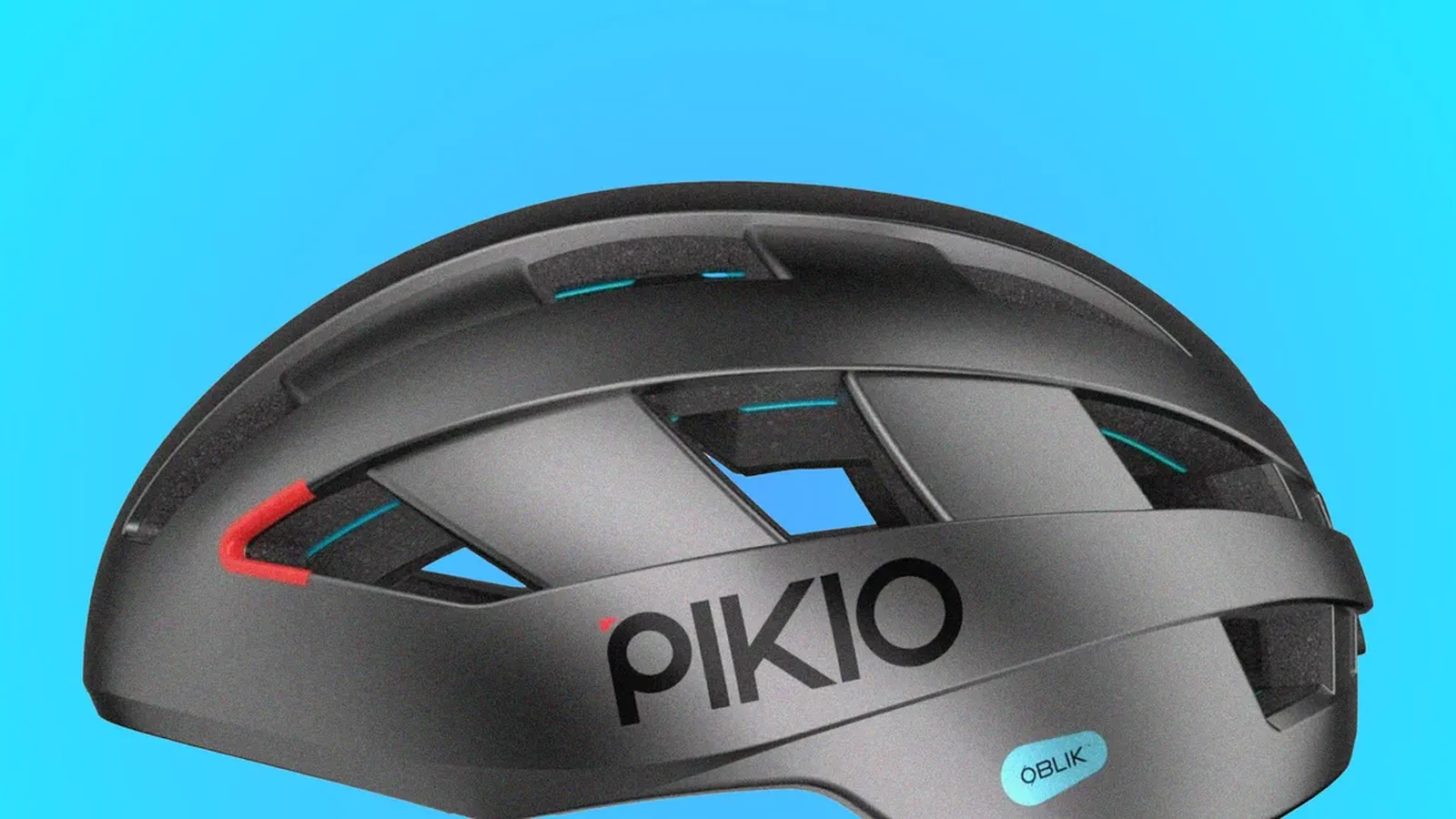
Sitting comfortably ahead of the competition in Virginia Tech testing is the Pikio Si Oblik road cycling helmet. Inspired by the headbanging, concussion-proof woodpecker, the Vancouver startup developed a novel safety system called Oblik. The helmet achieved a score of 4.61, which is notably lower—and better—than the previous best score held by the Canyon Deflectr’s.
While most bike helmets utilize a single continuous block of expanded polystyrene (EPS) foam, the Oblik system breaks this familiar structure into independently mounted sections. Each section attaches to a base EPS layer using flexible connection points, allowing them to move separately or detach during severe impacts. This design helps manage linear and rotational energy simultaneously.
Foundational Research and Engineering
The technology behind the helmet comes from founder Daniel Abram, who has spent 18 years researching impact protection and helmet design. After studying mechanical engineering, Abram moved into helmet research at Simon Fraser University, where he helped develop BrainShield . He subsequently founded BiaGuard before MIPS acquired those patents and intellectual property in 2022.
The intricate engineering required for the Pikio Si Oblik translates to a more complex manufacturing process. While a standard cycling helmet typically features around eight to ten parts, the Pikio Si incorporates approximately 80 individual components. These include separate foam sections, flexible connection points, and dual-density construction.
Market Availability and Pricing
Pikio Labs offers the Pikio Si Oblik as a premium product available for preorder via its official sales channel, the Pikio Si Oblik product page. Priced at $379, it sits at the higher end of the market, reflecting the intensive manufacturing requirements and complex multi-component structure necessary to achieve its industry-leading safety metrics.
As Pikio looks toward the future, the company plans to introduce a second design early in the new year. Whether the startup evolves into a major standalone helmet brand, a technology supplier, or both, its groundbreaking performance has established a brand-new safety benchmark for the entire cycling industry to chase.
Sources
- WIREDHow This Tiny Startup Built the World’s Safest Bike Helmet
Continue chronologically
Related stories
Meta Infrastructure Sets Records During 2026 World Cup
Meta details how its infrastructure handled record-breaking messaging, live video watch times, and traffic spikes during the 2026 World Cup.

Meta Unveils Petal, World’s First Petabit-Class Subsea Cable
Meta has announced Petal, a 7,000 km subsea cable connecting the U.S. and France. It is the first system to achieve 1 Pbps capacity using multi-core fiber.
Reddit Tests In-App Search Ads Amid Declining Google Traffic
Reddit is beginning to test in-app search ads to monetize high-purchase intent as search traffic declines due to Google's AI-powered search.

Apple Restricts Dating Apps and AI Companions to Adults
Apple introduces strict App Store age rating requirements, mandating an 18+ classification for dating apps and romanceable AI companions.