Meta Infrastructure Sets Records During 2026 World Cup
The quadrennial tournament pushed Meta's global infrastructure to historic highs, yielding all-time records across WhatsApp, Instagram, Facebook, and Threads.
 Radwan AbdulhadiEditor and technology writer

Historic Traffic and Messaging Records
Every four years, major global sports events serve as massive planned stress tests for digital infrastructure. During the recent <a href="https://about.fb.com/news/2026/07/the-2026-summer-of-football-a-record-breaking-moment-across-meta/">2026 World Cup</a>, Meta platforms experienced record-breaking activity across messaging, video, and networking simultaneously. According to technical data shared by <a href="https://engineering.fb.com/2026/10/15/production-engineering/2026-world-cup-record-traffic-reliability-at-scale/">Meta Engineering</a>, the tournament produced unprecedented surges in usage across WhatsApp, Instagram, Facebook, and Threads.
WhatsApp experienced its highest traffic peak during the July 19 final match between Argentina and Spain, handling more than 30 million messages per second. This milestone surpassed the previous record set just 12 days earlier during the Round of 16 match between Argentina and Egypt, which had reached 29 million messages per second. Additionally, Messenger, Threads, and Instagram Direct recorded a peak of 49 million messages per minute.
Surges in Live Video and Engagement
The tournament drove massive engagement across Meta's social platforms. Instagram saw recommendation system traffic climb up to 80% higher week-over-week. Furthermore, final-squad players collectively added 213.6 million activated followers—representing a 6.6% increase—which pushed their combined followings from 3.26 billion to 3.47 billion users.
Live video watch time also saw extraordinary growth compared to the July baseline. Instagram experienced a 90% increase in watch time, while Facebook recorded a 242% spike. On Threads, tournament-tagged posts generated 1.5 billion impressions, engaging approximately 15 million people daily and peaking at 25 million users on July 6. Meanwhile, Facebook users created 80 million posts explicitly mentioning the World Cup throughout the event.
Analyzing Traffic Patterns and Break Surges
Meta's analysis of global egress traffic alongside game events revealed a distinct pattern. Rather than spiking during gameplay, sharing surges predominantly occurred during breaks, including hydration breaks, halftime, extra time, the final whistle, and awards ceremonies. For instance, the end-of-regulation whistle during the final generated a 46% traffic surge in about four minutes, followed by a 57% spike lasting roughly 15 minutes at the final whistle.
The single highest-traffic five-minute window for WhatsApp saw the platform deliver nearly 8.4 billion messages without interruption. These localized surges were efficiently absorbed by underlying network and infrastructure components designed to scale dynamically under heavy demand.
Global Traffic Management and Infrastructure
To maintain stability across 39 consecutive days of traffic spikes, Meta relied on sophisticated traffic distribution systems. <a href="https://research.facebook.com/publications/taiji-managing-global-user-traffic-for-large-scale-internet-services-at-the-edge/">Taiji</a> balanced load across datacenters, while <a href="https://engineering.fb.com/2018/05/22/open-source/open-sourcing-katran-a-scalable-network-load-balancer/">Katran</a> and Proxygen managed layer 4 and layer 7 traffic distribution. A global load-balancing system directed users to the best-positioned edge nodes, and AutoScaling provisioned necessary compute capacity on demand.
Ahead of the tournament, edge teams collaborated closely with Internet Service Provider (ISP) partners to implement targeted network capacity upgrades. These enhancements improved the quality of experience for end users and established permanent capacity capable of supporting future demand.
Strategic Preparation and Regional Scaling
Instagram prepared for nearly six weeks of continuous traffic surges by deploying capacity buffers, implementing country-level graceful degradation for high-traffic regions like Brazil, Argentina, India, Indonesia, and Spain, and preventing cascades into downstream data systems. Early warning signals alerted engineers well before capacity thresholds were reached.
Unlike global events like New Year's Eve where traffic peaks are staggered across time zones, the World Cup caused simultaneous regional peaks. Meta forecasted regional demand independently rather than shifting load across regions, and skipped standard deployment freezes to allow engineering teams to ship updates normally throughout the entire event.
Sources
- Meta Engineering2026 World Cup: Breaking Records, Spiky Charts and Reliability at Scale
Continue chronologically

Related entity coverage
Related stories
Meta Tests Full-Screen TikTok-Style Feeds for Facebook and Instagram
Meta is testing opening Facebook and Instagram directly into full-screen vertical video feeds, previewing a potential seismic shift for social media.

Meta Expands Teen Self-Harm Alerts to Facebook and Meta AI
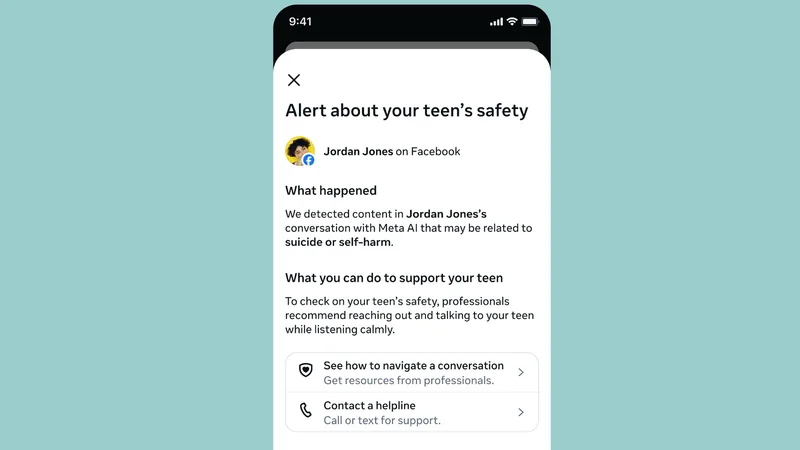
Meta is expanding its parental notification system to Facebook and Meta AI, alerting caregivers if teens repeatedly search for self-harm or suicide content.
Sapienz Receives ISSTA 2026 Impact Paper Award
Ke Mao, Mark Harman, and Yue Jia win the ISSTA 2026 Most Influential Paper Award for their foundational 2016 automated testing research.
Instagram quietly launches a new Apple TV app for Reels and video
Instagram has officially expanded to Apple TV, bringing short-form video, live streams, and upcoming longer-form content to the living room.