Enterprise Installations for GitHub Apps Generally Available
Enterprise installations for GitHub Apps have reached general availability, bringing expanded API support to help organizations replace classic personal access tokens (PATs) across their automation workflows.
 Radwan AbdulhadiEditor and technology writer
General Availability of Enterprise GitHub App Installations
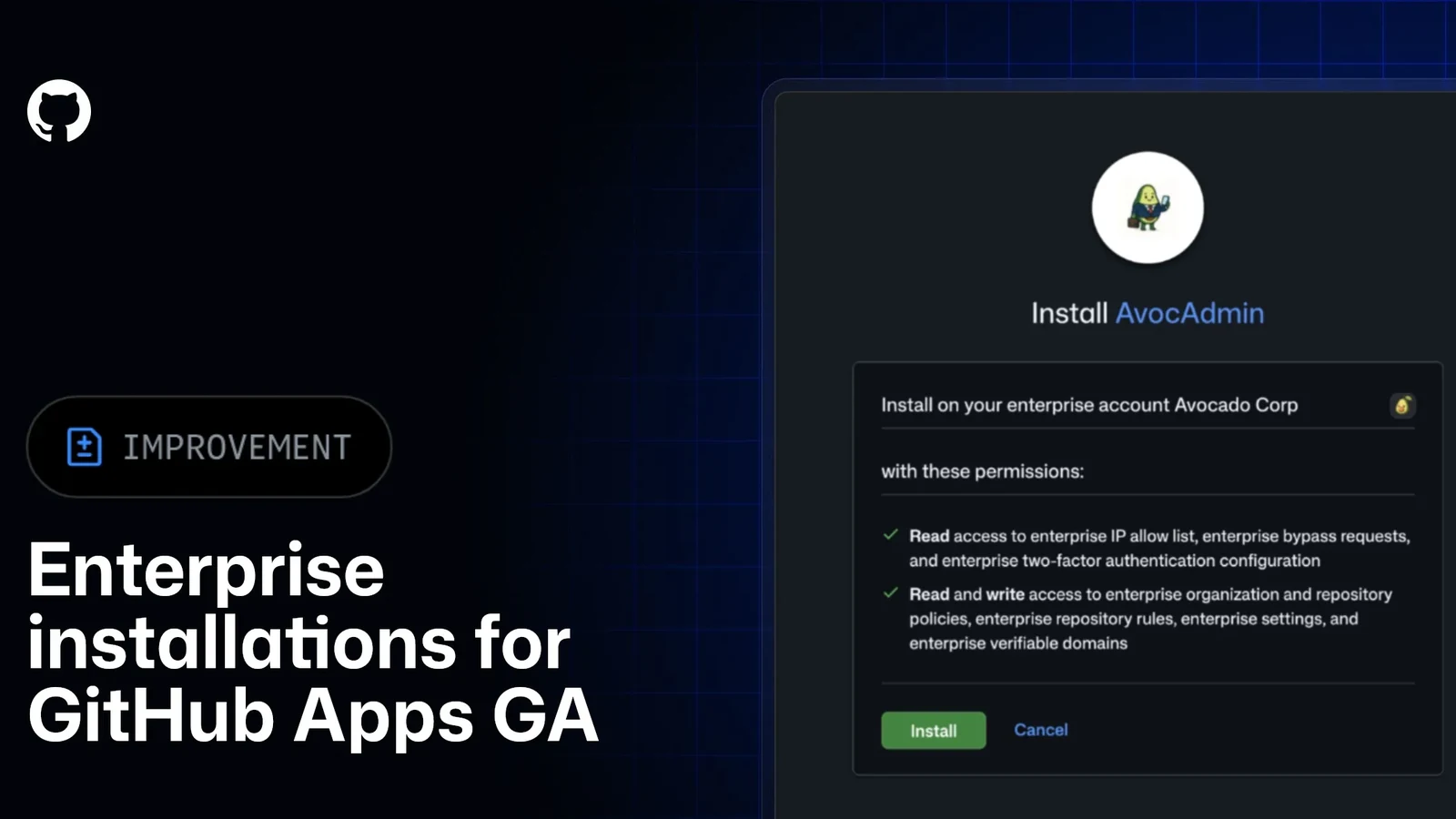
The developer ecosystem has reached a significant milestone as enterprise installations for GitHub Apps become generally available. According to announcements on the GitHub Changelog, organizations can now install these applications directly at the enterprise level. This rollout enables teams to modernize their tooling by moving away from legacy authorization methods and adopting more robust application-based integrations.
With the expansion of supported APIs, administrators gain the flexibility to replace classic PATs with GitHub Apps in a broader range of enterprise and organization automation scripts. By transitioning away from personal access tokens, engineering teams reduce security risks associated with user-tied credentials while streamlining large-scale automation pipelines across multiple organizations.
Enhanced Governance, Security, and Administrative Controls
The newly expanded permission sets focus heavily on three critical operational pillars: governance, security, and administrative settings. Additionally, two notable gaps at the organization level have been successfully closed to ensure smoother operations. These enhancements empower administrators to maintain tight security postures while managing their environments programmatically.
Under governance capabilities, applications can now manage enterprise-level repository policies and rulesets alongside reading delegated bypass requests. Security-focused controls allow platforms to configure two-factor authentication requirements, verify domains, manage IP allowlists, and control broad enterprise access restrictions. Meanwhile, administrative features support updating enterprise profiles while managing member privileges and repository access settings throughout the entire enterprise structure.
GraphQL Support and Enterprise API Integration
To support these advanced enterprise app installations, developers can leverage comprehensive GraphQL capabilities. For technical guidance on interacting with these systems programmatically, administrators can consult the documentation regarding Managing an enterprise account with GraphQL.
Platform engineers looking to deploy or configure specific enterprise-level actions can reference targeted administrative endpoints. This includes operations covering private repository forking, default repository permissions, repository visibility changes, repository creation, repository deletion, issue deletion, collaborator invitations, and deploy keys.
Managing Administrative Operations and Settings
Additional administrative controls provide granular oversight for member activities and repository parameters. Using the updated schema definitions, teams can manage enterprise settings such as repository creation, repository deletion, issue deletion, collaborator invitations, and deploy keys seamlessly through authorized applications.
These expanded API capabilities effectively eliminate previous functional gaps that hindered certain automation tasks. By closing these gaps, GitHub ensures that complex enterprise workflows can operate with fewer manual interventions and higher reliability.
Migration Paths and Upcoming Releases
Organizations planning to migrate their legacy scripts should begin by evaluating their workflows and selecting appropriate permissions within their GitHub App settings. For step-by-step guidance on deployment, developers can refer to official documentation regarding Installing a GitHub App on your enterprise.
Looking ahead, these updates are scheduled to become available in GitHub Enterprise Server (GHES) 3.24. This ensures that organizations utilizing on-premises or hybrid server deployments will soon gain access to the same enterprise app installation capabilities currently rolling out across cloud environments.
Sources
- GitHub ChangelogEnterprise installations for GitHub Apps generally available
Continue chronologically

Related entity coverage
Related stories
GitHub Announces Major App Improvements for Least Privilege
GitHub releases new updates for GitHub Apps to improve least privilege access, streamline repository management, and help developers transition from classic PATs.
GitHub Adds Code Quality Finding Audits for Dismissals
GitHub now supports reviewing manual dismissals and reopenings of Code Quality findings directly within organization and enterprise audit logs.
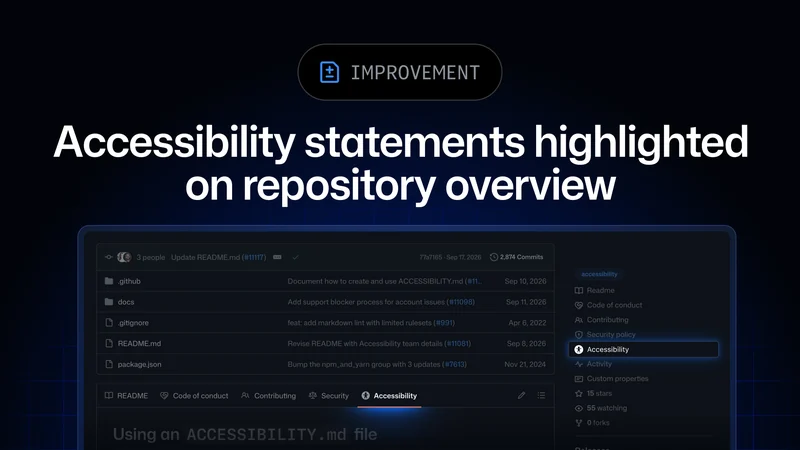
GitHub Highlights Accessibility Statements on Repository Overview
GitHub now highlights ACCESSIBILITY.md files on repository overviews, making it easier for developers to discover and share accessibility project info.
GitHub Announces Major Security Improvements for SSH
GitHub is removing several outdated SSH algorithms, adding a post-quantum key exchange method, and requiring larger RSA SSH keys for improved security.