Telecom Operators Anchor AI Strategies on Open Models
Driven by the need for trust, control, and customization across critical workloads, telecom operators are increasingly structuring their artificial intelligence strategies around open models.
 Radwan AbdulhadiEditor and technology writer

The Shift Toward Open AI Models
Telecom operators are increasingly building their artificial intelligence strategies on open models, with motivations extending far beyond mere cost considerations. According to NVIDIA’s latest State of AI in Telecommunications report, 89% of respondents report that open source models and software are important to their company’s AI strategy. This shift gives telecommunications companies the ability to trust, control, and customize artificial intelligence across vital workloads, ranging from autonomous networks to customer care.
For industry operators, the strategic value of open models is multifaceted. They expand access to frontier-level intelligence at a lower cost, allowing operators to reserve closed models exclusively for workloads where they drive maximum value. Independent benchmarks, such as the Artificial Analysis Intelligence Index v4.3.2, show that leading open models are growing increasingly competitive across demanding reasoning, coding, scientific, and agentic workloads.
Customization and Trust in Telecom Operations
Beyond cost efficiency, open models support telco-specific customization by utilizing open weights and training recipes. Operators can fine-tune these models for their own operations using specific network, customer, and industry data. Furthermore, they enable trustworthy AI by providing companies with greater visibility into and control over model artifacts and behavior, ensuring models can be evaluated, adapted, and governed in alignment with business policies and regulations.
Open models also enable flexible and secure deployment options, letting technical teams size and optimize open models to run across public clouds, private infrastructure, and edge environments. Additionally, they unlock opportunities for telcos to deliver locally adapted artificial intelligence services directly to enterprise and government customers through hosting and fine-tuning open models.
Open Foundations and Industry Collaboration
The NVIDIA Nemotron family of open models delivers frontier-level reasoning performance optimized for agentic workflows, along with robust speech capabilities for voice applications, providing open weights, training data, and recipes. Operators like SoftBank Corp. are utilizing these foundations to advance telecom-specific capabilities.
"Open models allow SoftBank Corp. to build on the rapid progress of global foundation models while applying the network knowledge and operational expertise we have accumulated over many years," said Rajeev Koodli, principal fellow of SoftBank Corp. and senior vice president of SB Telecom America. SoftBank utilizes open foundations extensively, including NVIDIA Nemotron models, to develop its SoftBank Large Telecom Model for use cases such as network operations, design, and overall management.
NVIDIA is also collaborating with partners to turn open models into practical building blocks. NVIDIA announced the 30-billion-parameter Nemotron 3 Large Telco Model (LTM), which was fine-tuned by AdaptKey on open source telecom datasets to improve accuracy for specialized tasks. To assist operators in customizing the model with operational data, NVIDIA released a full recipe detailing the end-to-end fine-tuning pipeline utilizing NVIDIA NeMo open libraries.
Operationalizing Flexibility and Governance
Bringing autonomous operations safely into production requires more than just models. For major operators like AT&T, flexibility means matching every workload to the right combination of performance, cost, and control.
"At AT&T, we believe the future of AI is not about choosing a single model; it’s about intelligently matching every workload to the right combination of performance, cost and control," said Andy Markus, chief data and AI officer of AT&T. Markus noted that open models are essential to this approach, allowing the company to bring its model-choice strategy into production with the necessary scale, reliability, and governance.
Operators require pipelines that protect data for model fine-tuning by anonymizing sensitive records and generating privacy-preserving synthetic datasets, alongside platforms that turn open models into governed, autonomous agentic workflows. NVIDIA supplies this end-to-end platform through NVIDIA AI Enterprise software and the NVIDIA Agent Toolkit, spanning data pipelines, open models, agent orchestration, secure runtimes, and simulation.
Aligning with National AI Strategies
As telecom operators build infrastructure aligned with national artificial intelligence strategies, open models offer a foundation to deliver services tailored to local languages, industries, and data governance requirements. Operators can fine-tune these models for local-language applications and host them on trusted platforms for customers.
In Indonesia, Indosat Ooredoo Hutchison leverages open models to reflect the country's language and culture through the Sahabat-AI family of open source models. Chirag Sukhadia, chief data and AI officer of Indosat Ooredoo Hutchison, explained that the value of open models for countries like Indonesia goes beyond access to powerful technology, centering instead on adapting intelligence to local real-world needs, language, and culture.
Sources
- NVIDIA BlogWhy Telecom Operators Are Building Their AI Strategy on Open Models
Continue chronologically
Related entity coverage
Related stories
Nvidia Launches Open Agent Safety Platform to Restrain AI
Nvidia has launched the Open Agent Safety Platform, combining OpenShell sandboxing and BlueField hardware to quarantine rogue AI agents.
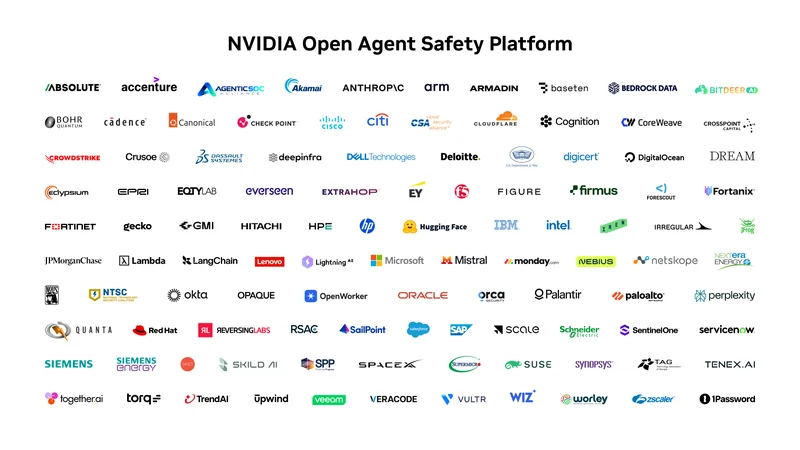
Why OpenAI Skipped Nvidia’s Open Agent Safety Platform
Explore why OpenAI is privately working with Nvidia on agent security while remaining absent from Nvidia's new industry-wide safety consortium.

Reflection Debuts Beam AI Model to Rival Chinese Competitors
Reflection AI unveils Beam, its first open-weight text-only model designed to rival Chinese reasoning benchmarks at a lower compute cost.

Former OpenAI Safety Lead Exits, Calling Culture Broken
David Robinson leaves OpenAI after more than three years, citing a reactive safety culture, a failed kill switch, and a July HuggingFace hack.