GitHub Announces Upcoming Deprecation of Selected Copilot Models
GitHub has announced that selected models across all of its Copilot experiences will be deprecated on November 16, 2026, prompting users and administrators to update their workflows and integrations ahead of the deadline.
 Radwan AbdulhadiEditor and technology writer
Overview of the Scheduled Model Deprecations
According to the official [GitHub Changelog](https://github.blog/changelog/2026-10-15-upcoming-deprecation-of-selected-github-copilot-models-in-mid-november/), GitHub has announced the upcoming deprecation of selected models across its entire suite of development tools. The changes are set to take effect on November 16, 2026, and will impact multiple artificial intelligence systems utilized within the platform.
The upcoming removal will apply broadly across all GitHub Copilot experiences. This comprehensive scope means that the changes will touch everyday developer tools, including Copilot Chat, inline edits, ask and agent modes, and code completions alike. Development teams and individual contributors who rely on these specific models must prepare their environments well in advance of the scheduled date.
Platform maintainers have outlined clear guidelines for what developers should expect as the deprecation date approaches. By communicating these timelines early, GitHub aims to minimize disruption to active coding workflows and give organizations sufficient time to test and deploy alternative solutions across their engineering pipelines.
Exceptions and Individual Subscriber Accommodations
While the deprecation affects a broad range of offerings, specific exceptions have been carved out for particular user tiers. Most notably, Claude Opus 4.8 will remain available to individual GitHub Copilot subscribers who are currently on annual plans, ensuring that these customers retain access to an Opus offering.
Because of this specific policy, the deprecation of Claude Opus 4.8 does not apply to individual annual plan customers. This provision allows dedicated individual developers to maintain their preferred workflow consistency without immediate disruption to their current subscription terms.
Platform users are encouraged to verify their current subscription plan type and check whether their specific development setup falls under these designated exceptions. Understanding these subscription boundaries helps prevent unexpected interruptions in daily programming tasks.
Workflow Updates and Enterprise Management
To ensure a smooth transition, developers and team leaders are advised to update their workflows and integrations to use supported models before November 16th, 2026. Detailed information regarding approved alternatives and system requirements can be found by consulting [our documentation on supported models](https://docs.github.com/copilot/reference/ai-models/supported-models?utm_source=model-release-announcement&utm_medium=changelog&utm_campaign=newmodels).
For organizational customers using Copilot Enterprise and Copilot Business, suggested alternatives are automatically enabled under default model enablement settings. This automatic transition occurs unless an administrator has previously turned off the global default or explicitly disabled the specific model within their organizational panel.
If administrators have turned off the global default setting for their organization, they retain the ability to manually enable access to the alternative models. This can be accomplished by adjusting the relevant model policies directly within the platform's Copilot settings dashboard.
User Interface Changes and Automated Cleanup
Once alternative models have been properly enabled by administrators or system owners, users will immediately see the updated options reflected directly in the Copilot Chat model selector. This integration ensures that developers can easily select and switch between currently supported models within their everyday GitHub Copilot experiences.
Engineers and administrators should also note that no manual action is required to remove the deprecated models once the transition date has passed. The platform will handle the removal automatically across all integrated client applications and backend environments without demanding extra maintenance from development teams.
This automated cleanup process is designed to reduce overhead for engineering departments, allowing teams to focus entirely on writing code rather than managing outdated artificial intelligence integrations and legacy software components.
Support Resources and Community Engagement
Enterprise customers who encounter questions, technical concerns, or unique integration challenges regarding the upcoming model transitions are strongly encouraged to reach out directly to their dedicated account team for professional assistance and tailored guidance.
Additionally, GitHub invites all interested developers to participate in ongoing discussions and share valuable feedback by joining the [GitHub Community](https://github.com/orgs/community/discussions/categories/copilot-conversations?utm_source=model-release-announcement&utm_medium=changelog&utm_campaign=newmodels) forums. Engaging with these peer spaces provides a useful channel for discussing best practices and sharing migration tips.
As the November deadline approaches, keeping abreast of these platform updates ensures that engineering organizations can maintain secure, high-performing development pipelines while leveraging the latest advancements in software engineering automation.
Sources
- GitHub ChangelogUpcoming deprecation of selected GitHub Copilot models in mid-November
Continue chronologically

Related entity coverage
Related stories
GitHub to Deprecate Selected Copilot Models on Oct. 19
GitHub says selected Copilot models will be deprecated across Chat, coding, agent and completion features on October 19, 2026.
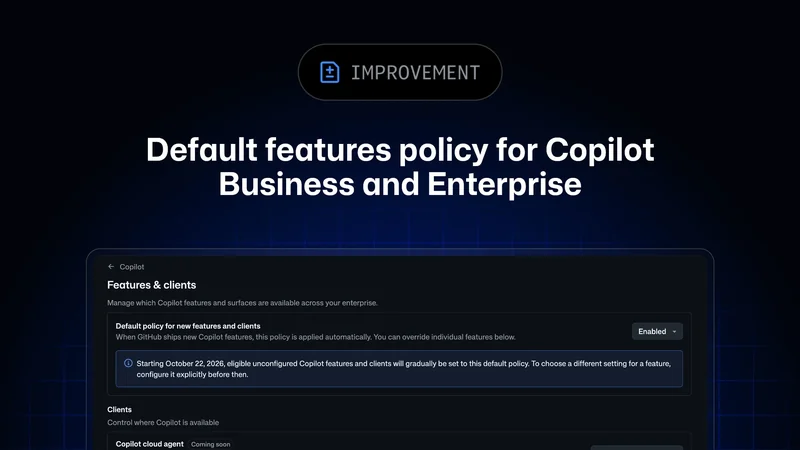
Global Default Policy for GitHub Copilot Features Rolls Out
GitHub begins gradually rolling out enforcement of its global default policy for Copilot Business and Copilot Enterprise plans through October 26.
GitHub Adds Feature Engagement to Copilot Dashboard
GitHub’s Copilot impact dashboard now shows regular feature use, while enterprise and organization reports add 28-day engagement data.
GitHub Copilot App Introduces Local Sandboxing in Preview
GitHub has announced local sandboxing for the GitHub Copilot app in public preview, helping to reduce the potential impact of unintended commands.