
Scaling MoE Reinforcement Learning on Amazon EKS with EFA
A newly detailed AWS architecture combines Amazon EKS, EFA, and DeepEP to boost aggregate reinforcement learning rollout throughput by 40% for large-scale RLHF and GRPO training.
 Radwan AbdulhadiEditor and technology writer
Addressing Infrastructure Challenges in MoE Reinforcement Learning
When post-training a Mixture-of-Experts (MoE) model with Reinforcement Learning from Human Feedback (RLHF) or Group Relative Policy Optimization (GRPO) at scale, engineers face three simultaneous operational hurdles. The first challenge involves coordinating heterogeneous compute for rollout generation and policy training. The second requires sustaining high-throughput communication across hundreds of accelerators, while the third demands dynamic orchestration to keep every system component in balance. On AWS, development teams can address these hurdles by deploying solutions using Amazon EKS, Elastic Fabric Adapter, and DeepEP.
Mixture-of-Experts models have emerged as a standard architecture for scaling large language models to hundreds of billions or trillions of parameters. By maintaining efficient inference through sparsity, MoE architectures reduce overall inference costs. However, sparsity introduces unique infrastructure complexities during training pipelines, which typically include pre-training, mid-training, supervised fine-tuning, and reinforcement learning. Among these phases, large-scale RL training places heavy demands on underlying hardware because it blends elastic inference work with tightly coupled model training requiring high-bandwidth communication.
Balancing Compute, Memory, and Network Bandwidth
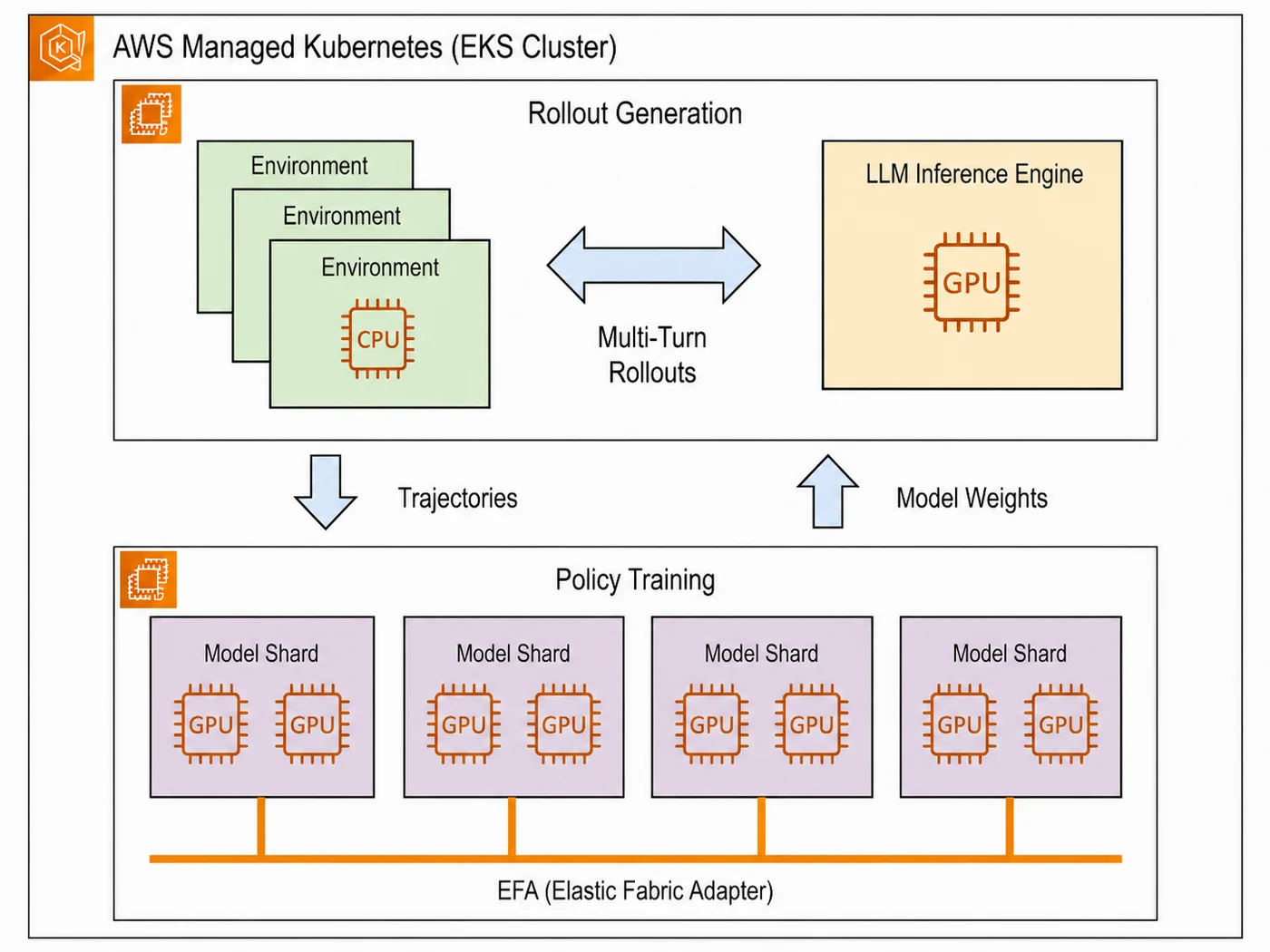
Large-scale asynchronous reinforcement learning jobs require optimizing two distinct and simultaneous workloads: rollout generation and policy training. During rollout generation, the system performs distributed inference geared toward maximizing aggregate throughput rather than minimizing time to first token or inter-token latency. Conversely, policy training relies on tightly coupled workers that must progress in lockstep. Any latency spike or straggling worker can stall the entire execution or trigger NVIDIA Collective Communications Library timeouts.
RL systems must carefully balance competing resource constraints spanning accelerator compute, system memory, and network bandwidth. Because MoE layers introduce sparse, dynamic all-to-all communication as tokens route across devices, managing memory bandwidth alongside compute becomes vital for maximum throughput. Reward models and verifiers add further operational pressure, making it necessary to balance all subsystems jointly to prevent any single element from acting as a system bottleneck.
Navigating Inter-Node Communication and Expert Parallelism
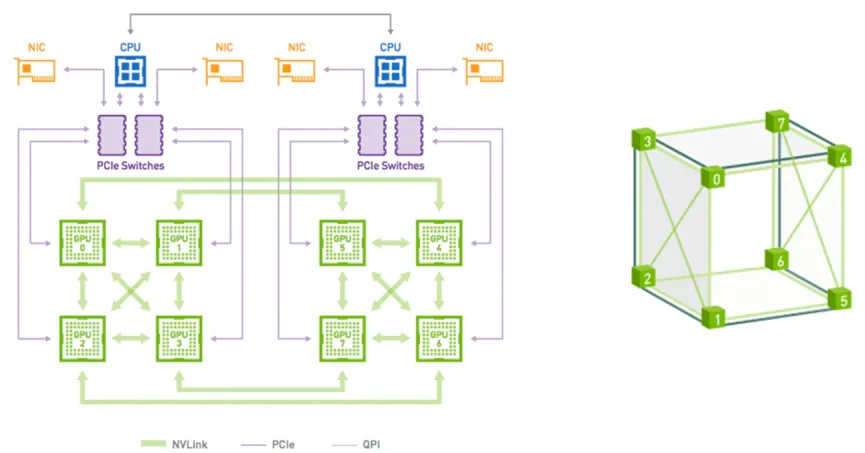
As reinforcement learning jobs scale beyond a single instance, model partitions and parallelism groups span multiple compute nodes. This scaling shifts data communication from the high-bandwidth intra-node NVLink fabric to lower-bandwidth inter-node links. MoE models amplify this shift because Expert Parallelism dynamically routes tokens across devices through sparse, fine-grained all-to-all communication traffic that grows heavily inter-node as the expert parallelism degree increases.
AWS accelerated computing instances utilize two primary communication domains: an intra-instance NVLink fabric connected via NVSwitch, and inter-instance networking handled through EFA. On supported configurations, EFA integrates with NVIDIA GPUDirect RDMA and operating-system bypass capabilities to transfer data directly between GPU memory buffers across instances, minimizing CPU and operating-system overhead in the communication path.
Achieving 40% Higher Rollout Throughput
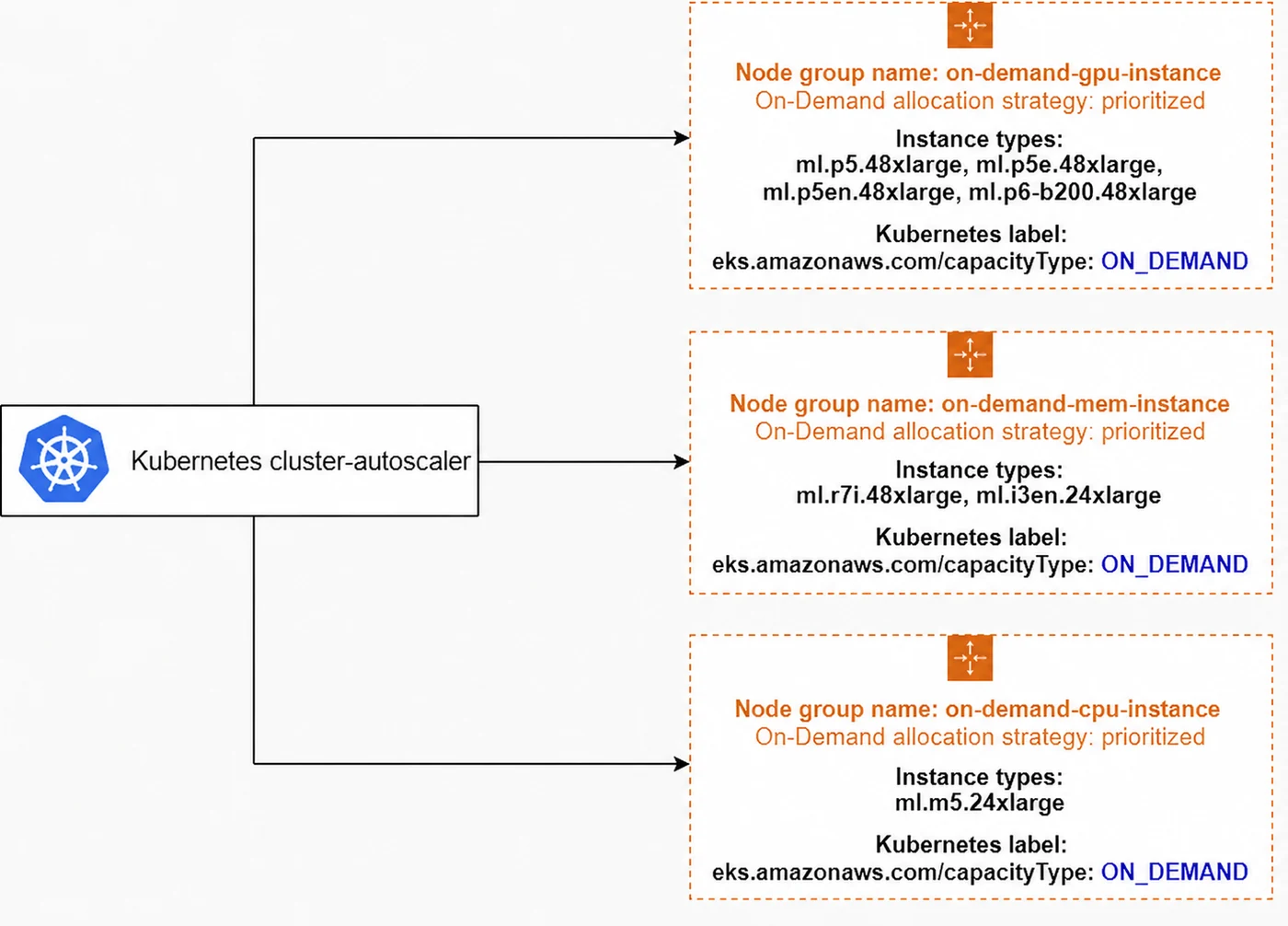
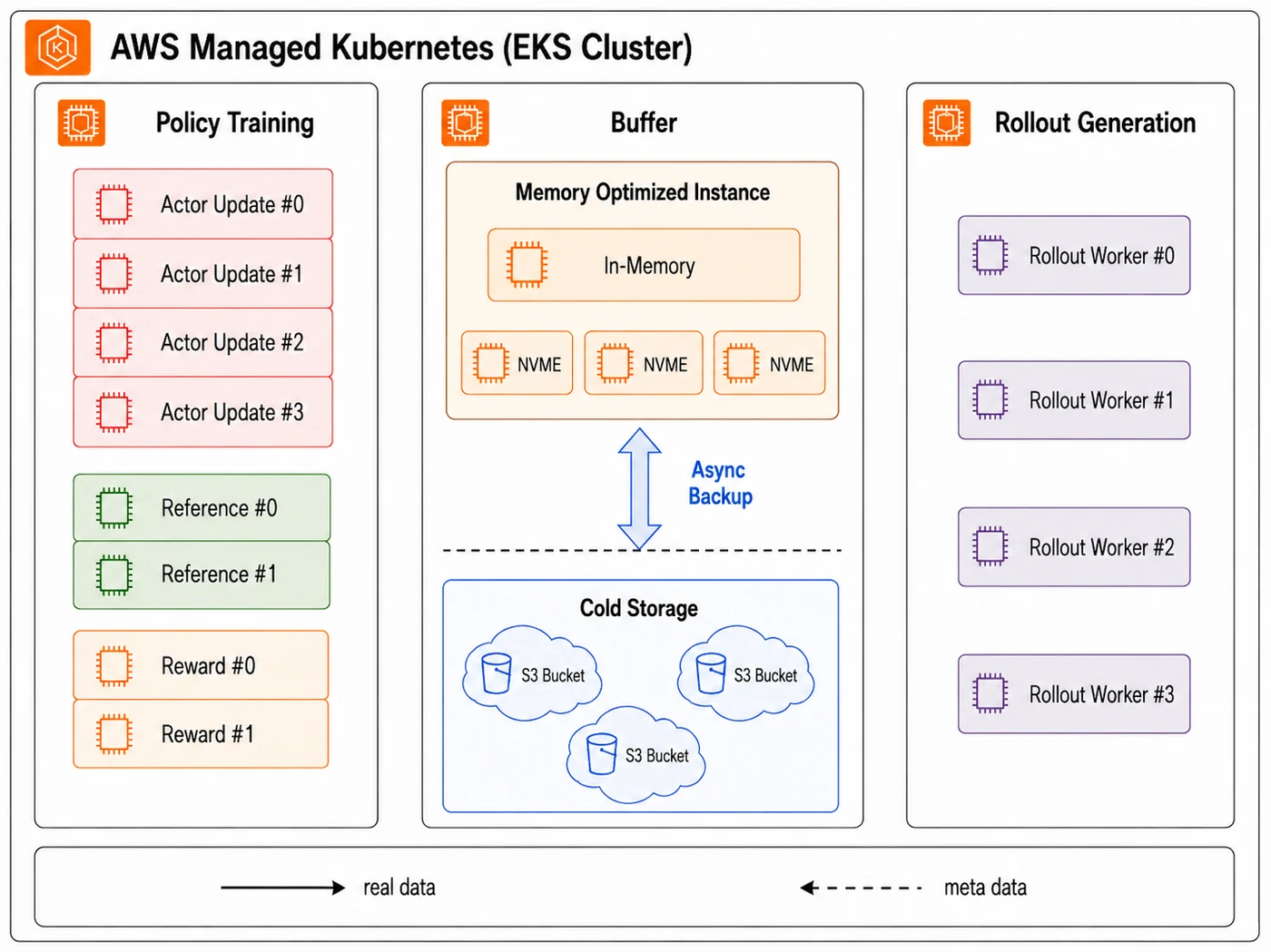
To scale these complex workloads efficiently, the architecture combines Amazon EKS, EFA, and Amazon Simple Storage Service so that orchestration, high-performance communication, and durable storage scale independently. Amazon EKS allows administrators to manage the lifecycle and placement of heterogeneous workers seamlessly.
By uniting these AWS services with DeepEP optimization for expert-parallel communication over EFA, organizations can increase aggregate reinforcement learning rollout throughput by 40% for large-scale RLHF and GRPO training pipelines.
Sources
- AWS Machine Learning BlogScaling MoE reinforcement learning on Amazon EKS with EFA and DeepEP with 40% more throughput