Rare November 2000 CompUSA Video Shows Y2K PC Retail Era
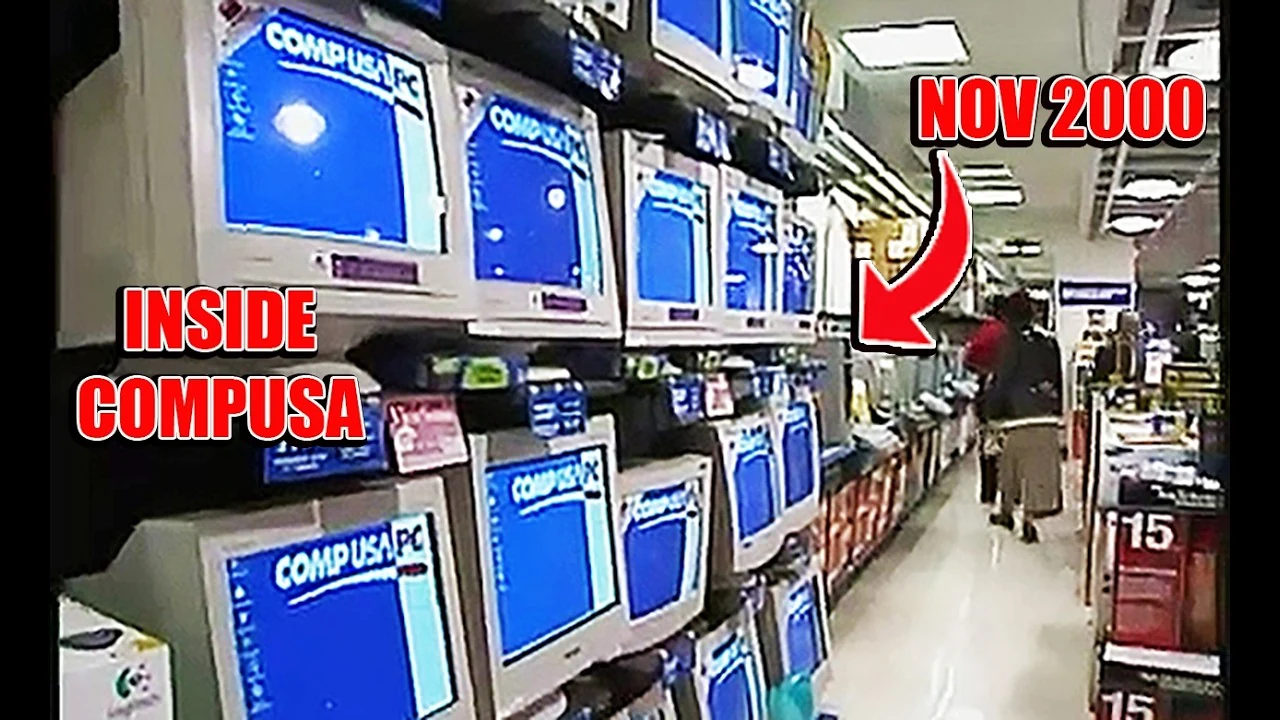
A newly shared archival video captures the chaotic charm of a New York City [CompUSA retail store](https://www.tomshardware.com/news/CompUSA-Opens-New-Retail-Stores,7526.html) during the height of the personal computer retail boom in November 2000.
 Radwan AbdulhadiEditor and technology writer
Stepping Back to the Year 2000
A piece of authentic archival footage has emerged on YouTube, offering retro computing enthusiasts a detailed look inside a bustling [CompUSA retail store](https://www.tomshardware.com/news/CompUSA-Opens-New-Retail-Stores,7526.html) located in New York City. Captured in November 2000, the video takes viewers straight back to the era of Pentium III and Athlon processors, long before online shopping completely transformed the consumer electronics landscape.
The store environment depicted in the clip is crowded and vibrant, dominated by walls of heavy CRT monitors, towering stacks of product boxes filling the aisles, and an overwhelming assortment of peripherals. Translucent acrylic plastics and beige computer towers defined the retail shelves during this memorable transitional era in technology.
Laptops and Subnotebooks of Y2K
Among the first hardware items highlighted in the footage is a trio of stylish Sony VAIO portable computers. At the center of the display sits a Sony VAIO C1 Series PictureBook subnotebook. This ultra-portable device featured a Transmeta Crusoe processor running at 600 MHz, paired with 128MB of SDRAM and a 12GB hard disk drive. Weighing roughly 2.2 pounds, the compact subnotebook utilized an 8.9-inch display and an ATI Rage Mobility dedicated graphics card.
Above the smaller Sony models, specification cards for larger portable computers indicate typical configurations of the period. These included Intel Pentium III processors running at 700 MHz, S3 graphics, 128MB of RAM, and 20GB hard drives.
Desktops, Compaq Presarios, and Apple Macs
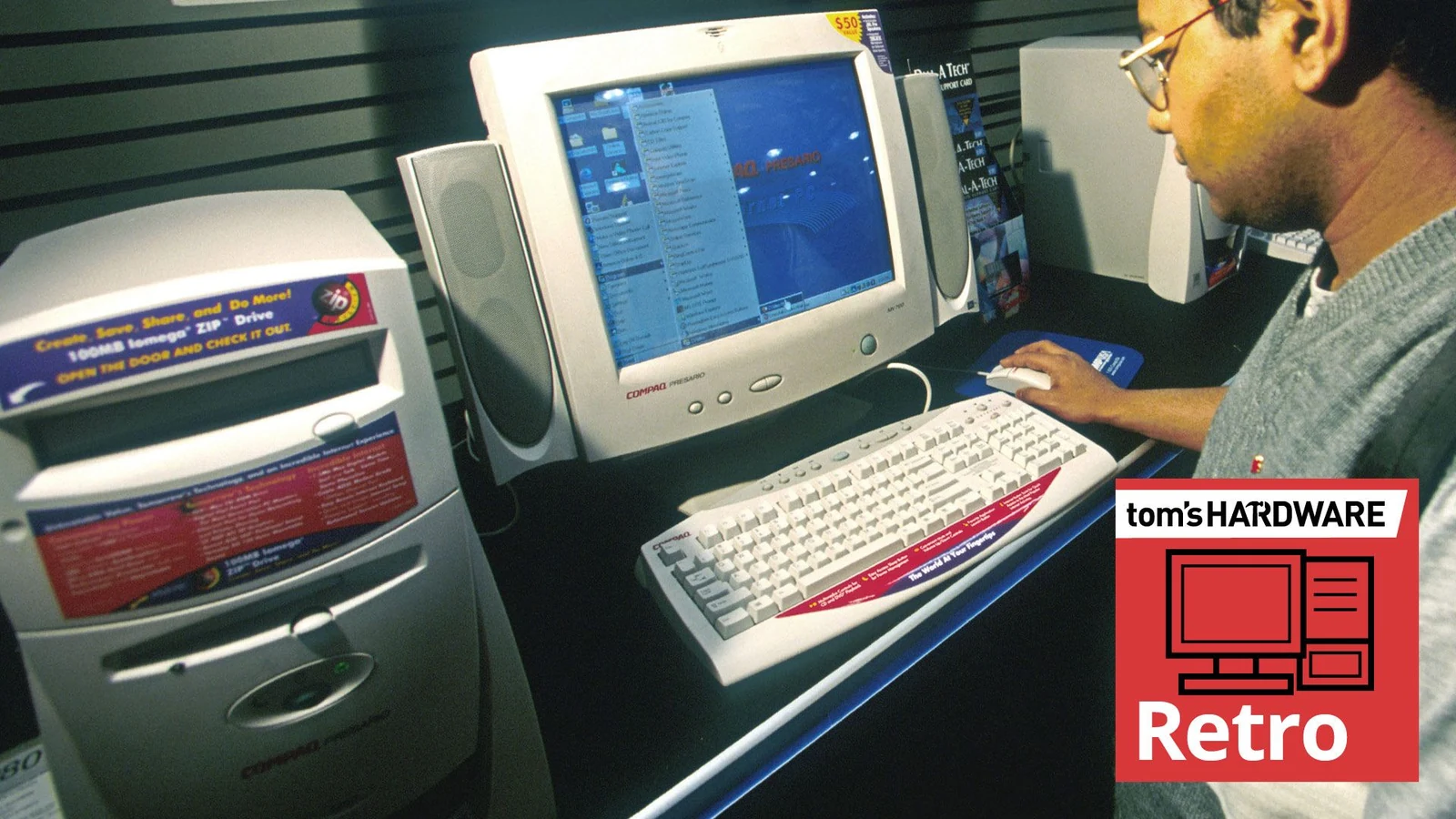
Shoppers and visitors in the archival video can be seen browsing desktop systems, including Compaq Presario machines featuring translucent accent faceplates inspired by the popular iMac designs of the time. These systems typically housed Celeron, Pentium III, AMD Athlon, or Duron chips, alongside graphics options such as the Nvidia RIVA TNT2 or GeForce2 MX.
In another section of the floor, Apple Mac desktop computers are displayed next to matching monitors. A visible specification card details a high-end Power Macintosh G4 Dual 500 equipped with twin 500 MHz G4 processors, 256MB of memory, a 40GB hard drive, a DVD RAM drive, and a 16MB video card carrying an expensive price tag of $3,500. Additionally, an in-store wall displays around 50 boxed iMac computers.
Peripherals, Displays, and Checkout Nostalgia
High-end display technology is also represented in the store tour, featuring a 21-inch ViewSonic A110 monitor priced at $750. The footage captures various boxed HP printers, unboxed multi-function peripherals on open display shelves, mice, mouse mats, and promotional displays dedicated to [Windows Me](https://www.tomshardware.com/software/windows/40-years-of-windows-how-windows-xp-changed-everything).
The recording wraps up near the checkout counters, where customers purchase everyday sundries and hardware peripherals. A final customer interaction shows a shopper inquiring about a mail-in rebate for an HP printer, highlighting retail practices that remain timeless.
The Rise and Fall of CompUSA
CompUSA ultimately faced severe financial pressures driven by intense competition from big-box retailers, the rapid growth of online e-commerce platforms, and internal management missteps. The famous retail chain underwent mass store closures and liquidation during 2007 and 2008, with a small subset of locations briefly sustained by Systemax and TigerDirect before the CompUSA brand was fully retired in 2012.
Sources
- Tom's HardwareRare archival footage tours the CompUSA NYC store in November 2000
Continue chronologically


Related entity coverage
Related stories
The Rise, Fall, and Resurgence of Portable MP3 Players
Explore the history of portable MP3 players, from early devices like the MPMan and iPod to the modern resurgence of retro audio technology.
The AI Graveyard: Startups and Projects That Didn't Make It
Explore the growing AI graveyard of discontinued projects, failed hardware, and high-profile tech missteps from Apple, OpenAI, Microsoft, and more.

Top Laptop Recommendations for 2026
Explore the top laptop recommendations for 2026 after extensive testing across models from Apple, Dell, HP, Lenovo, and more.
Nvidia RTX Spark Laptops Launch With Devices From Major Brands
Nvidia RTX Spark laptops are officially on sale from brands like Microsoft, Asus, HP, Lenovo, and Dell, with prices starting at $2,599.