GitHub Enterprise Cloud DR Adds Public Monitoring Preview
GitHub has rolled out a public preview of public monitoring for GitHub Enterprise Cloud with data residency, extending enterprise security features to oversee public commits.
 Radwan AbdulhadiEditor and technology writer
Public Monitoring Arrives for Data Residency Environments
GitHub has officially announced that public monitoring is now available in public preview for GitHub Enterprise Cloud with data residency (GHEC DR). This enhancement expands the utility of <a href="https://docs.github.com/code-security/secret-scanning/introduction/about-secret-scanning">secret scanning</a> beyond traditional internal repositories, allowing security teams to monitor public commits across github.com and attribute exposed credentials back to their enterprise environments in real time.
For organizations operating within data residency regions, implementing this level of oversight requires careful architectural considerations. Because these environments maintain strict tenant isolation boundaries from standard github.com infrastructure, enterprise membership rosters are not shared across the boundary.
Verified Domain Matching Powers Real-Time Attribution
To navigate the constraints of strict tenant isolation while still providing accurate threat intelligence, attribution for enterprises hosted in data residency regions is powered exclusively by verified domain matching. When a commit author’s email address matches a domain that your organization has completed <a href="https://docs.github.com/enterprise-cloud@latest/admin/configuration/configuring-your-enterprise/verifying-or-approving-a-domain-for-your-enterprise">verifying domains for your enterprise</a>, the system can securely process the alert.
Once matched, the alert is encrypted and delivered directly to your designated enterprise dashboard. This architectural design ensures that data remains securely within your designated geographical boundary while still providing critical visibility into external security leaks originating from public commits.
Licensing Requirements and Administrative Controls
Deploying the new public monitoring capability requires an active subscription to either GitHub Advanced Security or GitHub Secret Protection. Organizations that already maintain these licenses will find that public monitoring is included at no additional cost, making it an accessible upgrade for existing security workflows.
Enterprise administrators and designated enterprise security managers can easily enable the feature directly through their enterprise security settings. Once configured, the platform begins monitoring public repositories for accidental credential exposures associated with the organization's verified domains.
Community Engagement and Further Resources
As the public preview rolls out to eligible environments, GitHub encourages users to share their implementation experiences, feedback, and questions through the official <a href="https://gh.io/community-secret-scanning">community discussion</a> channels to help shape the future development of these security features.
Security teams looking to dive deeper into enterprise configuration can review comprehensive documentation on credential monitoring and domain verification procedures. Staying informed on these changes helps organizations maintain robust posture across both public and private codebases.
Sources
- GitHub ChangelogPublic monitoring now available with data residency
Continue chronologically
Related entity coverage
Related stories
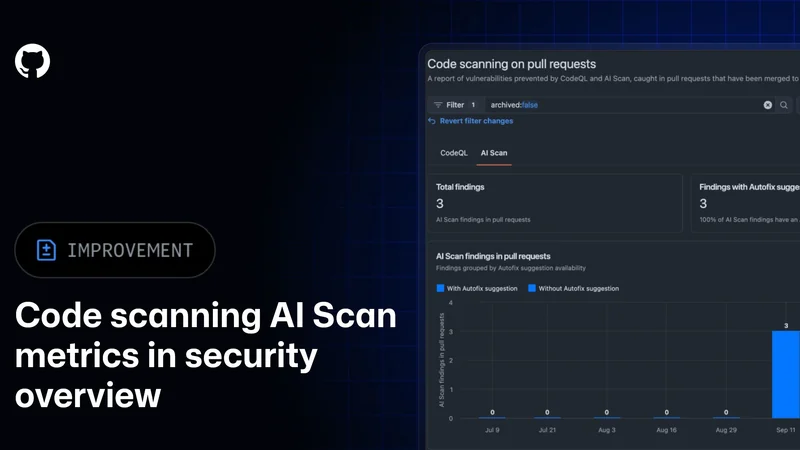
GitHub Adds AI Scan Metrics to Security Overview
GitHub is adding AI Scan metrics to its security overview, giving organization and enterprise administrators new data on findings and fixes.
Public Monitoring Adds Triage, Validity, API, and Webhooks
GitHub Enterprise Cloud adds new alert management capabilities to public monitoring, featuring automatic validity checks, REST APIs, and webhooks.
GitHub Adds Code Quality Finding Audits for Dismissals
GitHub now supports reviewing manual dismissals and reopenings of Code Quality findings directly within organization and enterprise audit logs.
GitHub Enterprise Cloud Launches License Compliance
Open source license compliance is now generally available for GitHub Enterprise Cloud, bringing ruleset-based dependency checks at scale.