OpenAI Is Building a Humanoid Robot, Says CEO Sam Altman
OpenAI CEO Sam Altman confirms the company is building a humanoid robot, but stresses that developing the robot's intelligence remains the ultimate hurdle.
 Radwan AbdulhadiEditor and technology writer

OpenAI Enters the Humanoid Robot Race
While OpenAI is already busy with the development of AI models and <a href="https://www.engadget.com/2215417/openai-first-device-humanlike-rechargeable-speaker/">new consumer hardware</a>, CEO Sam Altman and his team are expanding their ambitions to include a humanoid robot project. When asked on the <a href="https://www.youtube.com/watch?v=VeizK1M7V7E">Sources podcast</a> whether OpenAI would actually build one, Altman offered a succinct response: "We will."
Altman explained that choosing a human form factor is a logical decision because the world is explicitly designed for people. Doors, tools, and keyboards cater to a specific type of body, meaning a robot meant to operate within human spaces should likely match that form factor. Further details are available from Sources podcast in the original source material.

The Real Challenge Lies in the Brain
Despite committing to the physical build, Altman is less concerned with the exact look of the robot. He noted that such questions are less important than figuring out the underlying intelligence that makes the machine work. Giving a machine arms and legs is insufficient if it lacks the cognitive capability to use them effectively.
Developing a robotic brain requires complex problem-solving. A capable humanoid must interpret camera and sensor inputs, understand instructions, coordinate physical movements, and correct errors when real-world obstacles interfere. Tasks as simple as picking up a mug require the machine to identify the object, locate the handle, estimate grip strength, and apply the correct amount of force to avoid spilling coffee.
Timeline and Future Outlook
OpenAI's timeline for the project indicates that a consumer-ready product is still a long way off. <a href="https://www.fortune.com/2026/09/15/sam-altman-openai-ai-safety-pause-trump-xi/">Altman told</a> Fortune that he expects a cool demo in 2027, but believes robots will not be walking the streets for a few years beyond that. The company has not yet disclosed details regarding the demo, the appearance of the humanoid, or when outsiders might interact with it.
Similarly, details regarding consumer pricing, subscription models, release dates, and privacy frameworks remain unannounced. Equip future domestic machines with cameras and microphones, and privacy considerations around household deployment become significantly more complex.
Recruitment and Hardware Development
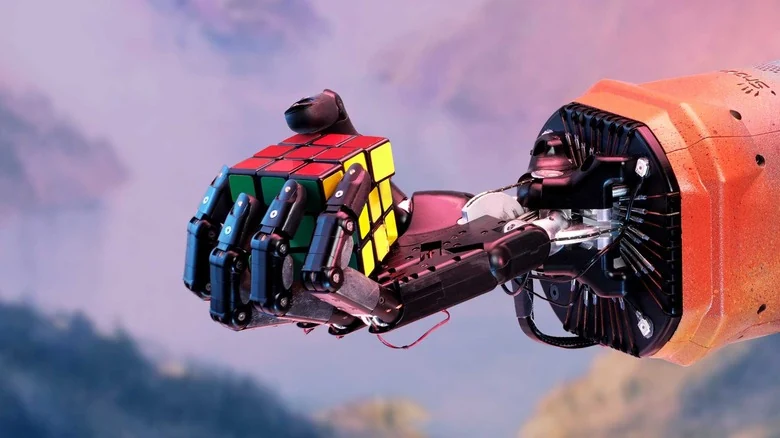
Focusing heavily on intelligence does not mean OpenAI is treating hardware development as an afterthought. Current robotics job listings at the company indicate active work on custom electromechanical actuators incorporating motors, transmissions, sensing, and thermal systems. Additional openings cover manufacturing and supply chain infrastructure required for scaled production.
OpenAI is currently recruiting across multiple disciplines, including motion control, state estimation, actuator control, whole-robot behavior, and machine-learning infrastructure. In total, the company's careers page features dozens of open robotics positions to help tackle these physical AI systems.
Historical Context and Industry Competition
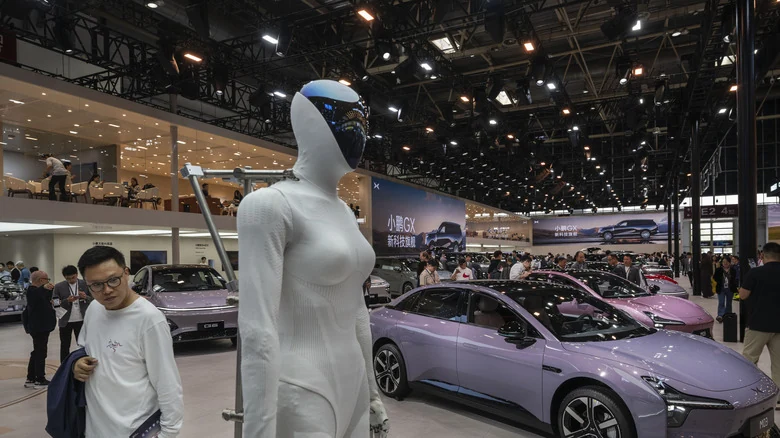
OpenAI brings prior research experience to the robotics sector. Its Dactyl project previously trained a robotic hand to manipulate real objects entirely within simulation, a technique later applied to solving a Rubik's Cube. This work highlights a persistent challenge in robotics: software models can learn actions virtually, but physical reality always dictates the final outcome.
OpenAI also enters a competitive market. Competitors like <a href="https://www.engadget.com/big-tech/elon-musk-just-told-davos-that-tesla-will-sell-humanoid-robots-next-year-really-he-swears-192515568.html">working on Optimus for years</a>, while other firms like XPENG have demonstrated autonomous humanoid assembly line production, underscoring the ongoing difficulty of synchronizing software with complex motors and joints.
Sources
- EngadgetOpenAI is building a humanoid robot, but the body isn't the real challenge
Continue chronologically

Related entity coverage
Related stories
OpenAI CEO Sam Altman Reveals New AI Agent at Developer Event
OpenAI CEO Sam Altman introduced new Dots AI agents at the annual developer conference while avoiding mention of recent security concerns.

OpenAI CEO Sam Altman Criticizes PC RAM Allocation
OpenAI CEO Sam Altman argues that consumer PC RAM allocation is inefficient, claiming memory should be prioritized for cloud data centers.
Sam Altman: OpenAI's Math Onslaught Will Not Stop
OpenAI CEO Sam Altman acknowledges mathematicians' struggles with AI-generated math results but insists the company's scientific onslaught will continue.

OpenAI PR Interrupts Sam Altman Interview Over Suicide Question
An OpenAI publicist interrupted an interview with CEO Sam Altman after the editor asked about a ChatGPT user's tragic suicide and mental health policies.