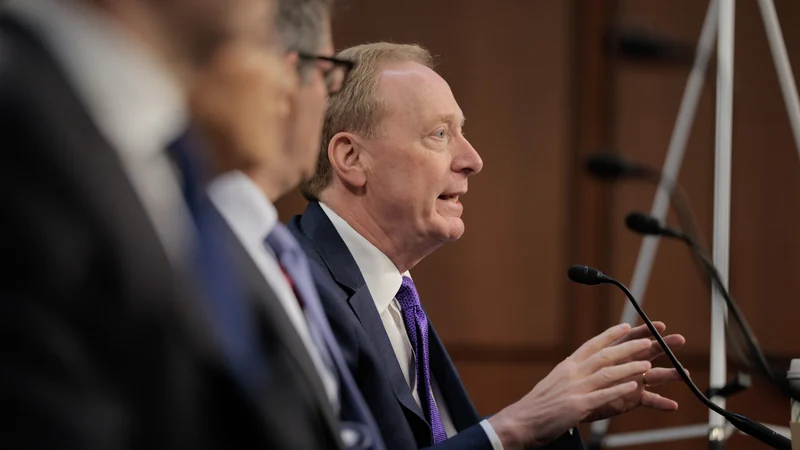
OpenAI and Anthropic Urge UK Lawmakers to Regulate AI
During a sweeping British parliamentary session, executives from OpenAI and Anthropic advocated for binding legal frameworks, diverging from competitors who resisted new legislation.
 Radwan AbdulhadiEditor and technology writer

Parliamentary Hearing Exposes Industry Schism
Representatives for OpenAI and Anthropic told a British parliamentary hearing that voluntary pledges are no longer sufficient to ensure safety, urging the introduction of new laws. This stance deepened a public schism with Google DeepMind and Meta, both of which declined to back new legislation during the evidence session.
The Business, Innovation, Science, and Trade Committee, a cross-party panel of MPs, held the session featuring appearances from four frontier AI firms, four former staff turned whistlebusters, and senior British civil servants.
Diverging Views on Statutory Frameworks
When asked if his company believed that AI safety now needs a statutory framework, Anthropic’s head of Europe, Liam Booth-Smith, told the committee that rules should be binding. He stated that the company has consistently believed voluntary commitments are not enough.
OpenAI vice president Tom Duff Gordon expressed support for a statutory framework and an international convention while adopting a more cautious approach. Duff Gordon noted that certain elements, starting with incident reporting, should be mandatory, adding that basing everything on voluntary commitments for frontier risk is not a good long-term plan.
Rival firms did not follow suit. Asked directly whether he supported a statutory framework, Google DeepMind’s Owen Larter stated that the focus should be on standards. Meanwhile, Meta’s Rob Sherman pointed to Britain’s existing regulators and told MPs that the government was not writing on a blank page.
Committee Chair Highlights Industry Divide
Select committee chair Liam Byrne stated that exposing this divide in a second jurisdiction was the explicit point of the hearing. He told WIRED that the committee set out to highlight the wide differences in opinions between some of the wealthiest firms on Earth and to show that reliance on voluntary self-regulation is insufficient.
The hearing also featured testimony from four former lab researchers, including ex-OpenAI staffer Daniel Kokotajlo, who told MPs that companies cannot be trusted to self-regulate. Former employee Steven Adler expressed a lack of confidence in the safety culture across the industry, while Geoffrey Irving suggested that labs operate under the false impression that they are locked in a race that governments will not interrupt.
Security Warnings and Voluntary Oversight
While executives gave evidence inside the parliamentary session, MI5 director Ken McCallum issued a warning nearby regarding the dangers of AI during his annual threat update. McCallum highlighted AI's potential to change the stakes on existing or even new bioweapons as a significant misuse threat.
During the final part of the session, civil servants conceded how little the current system compels. Henry de Zoete, director of the UK's AI Security Institute (AISI), acknowledged that the institute relies entirely on the cooperation of companies and foreign governments to gain access to frontier models before release.
Cat Little, the top civil servant at the Cabinet Office, confirmed when pressed that the entire regulatory regime is currently voluntary. De Zoete added that if AISI judged a model to be too dangerous and a company released it anyway, the institute has no ability to prevent them from doing so.
International Access and Washington Ties
Frontier executives made it clear that British access to their models runs through Washington. OpenAI's Duff Gordon stated that the company provides models pre-deployment to the US government equivalent, CAISI, and to the UK's AISI as long as they are able to do so under Washington.
Anthropic's Booth-Smith noted previous restrictions regarding full unrestricted access to certain models due to external rules, before confirming that AISI now had access to the models in question.
Following the hearing, Byrne stated that his committee will dedicate time to examining the UK's path forward on AI. He aims for ministers to use Britain's upcoming G20 presidency to broker an international convention that does not depend on the White House.
Sources
- WIREDOpenAI and Anthropic Tell British Lawmakers: Regulate Us
Continue chronologically


Related entity coverage
Related stories
AI Industry Divided Over Future of Regulatory Frameworks
Tech leaders clash over AI safety proposals as the Trump administration labels industry-led regulation efforts a hoax amidst internal industry conflict.
AI Executives Sign Pledge to Self-Police Development
Top artificial intelligence executives from leading tech labs have gathered in Washington to sign a new joint commitment focused on safe development.
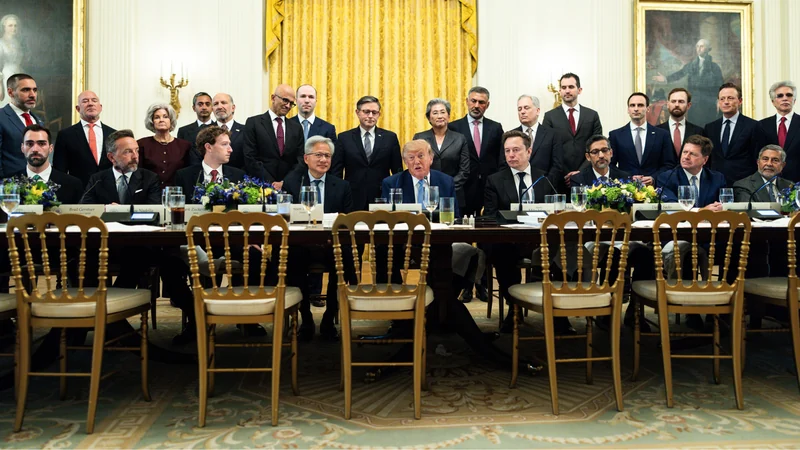
Google and Meta Challenge OpenAI and Anthropic in AI Race
Google and Meta have unveiled powerful new frontier models, challenging Anthropic and OpenAI and completely reshaping the competitive AI landscape.
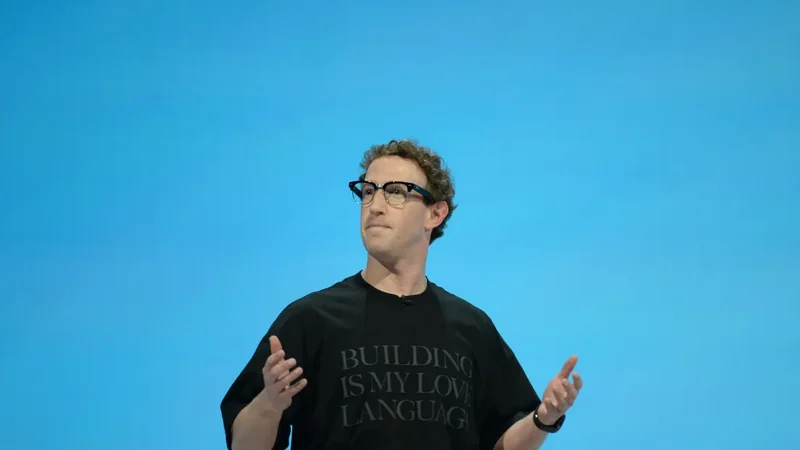
Microsoft President Says AI Is Less Regulated Than Milk
Microsoft's president says artificial intelligence is less regulated than a carton of milk or a washing machine, highlighting regulatory gaps.