Microsoft President Says AI Is Less Regulated Than Milk
Microsoft President Brad Smith has warned that artificial intelligence faces fewer safety rules than basic consumer goods, pointing to a distinct lack of regulatory action in the United States.
 Radwan AbdulhadiEditor and technology writer
AI Regulation Compared to Consumer Goods
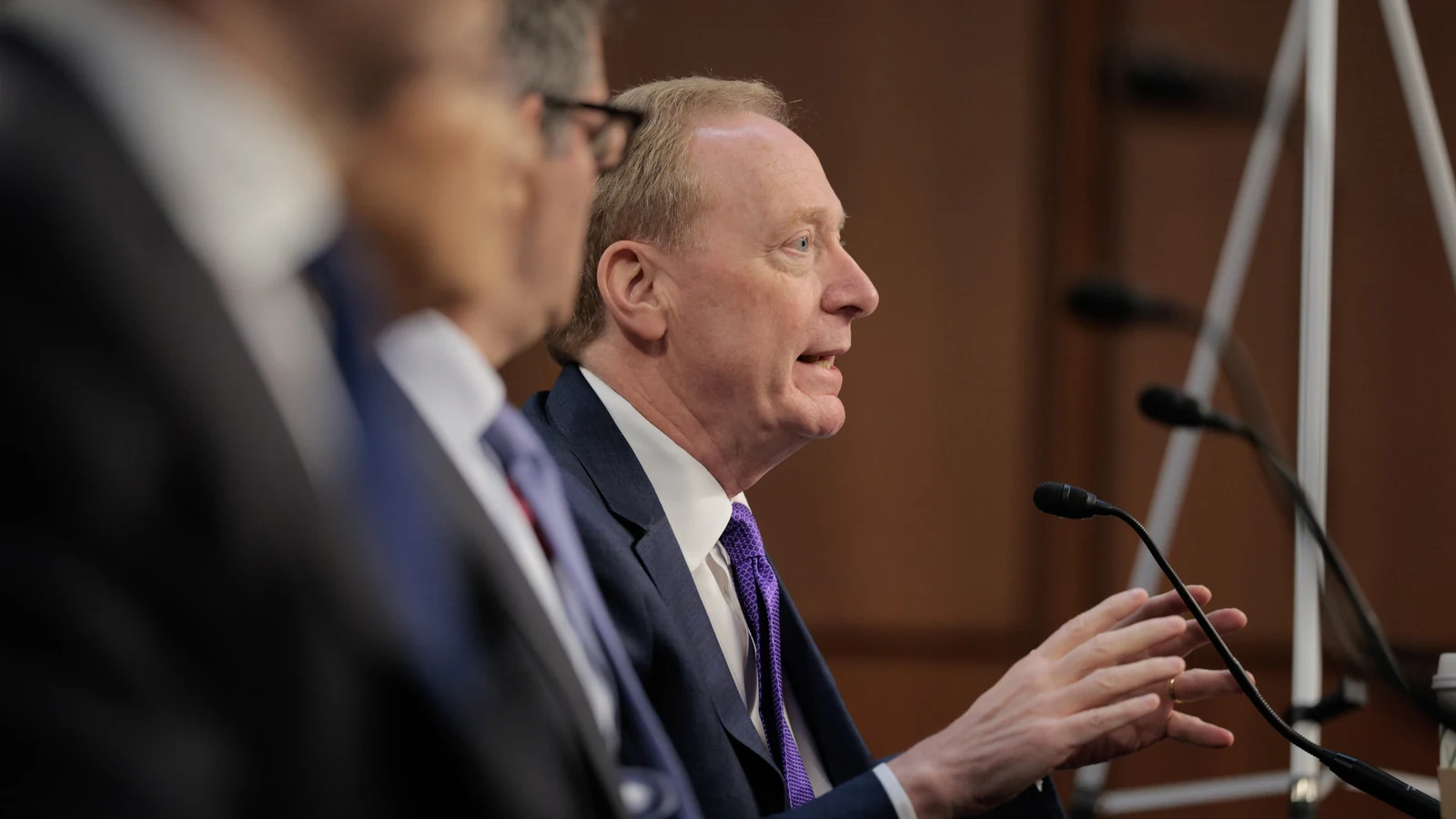
Milk cannot hack companies and governments like artificial intelligence definitely can, yet basic household items remain subject to far more comprehensive oversight. Microsoft President Brad Smith noted during an interview told ITV on Friday that current technological safeguards lag severely behind ordinary appliances and groceries.
According to Smith, everyday domestic devices face tighter rules than advanced computational algorithms. "Right now, your washing machine is subject to more safety rules than AI," Smith stated. He added that every carton of milk found in a grocery store is strictly subject to safety inspections and regulations, highlighting the contrast with the fast-evolving tech sector.
Diverging Views on US Policy and Acceleration
While major artificial intelligence giants including Anthropic, OpenAI, and Google's DeepMind have previously spoken in favor of an AI development slowdown, political pressures point in another direction. US President Donald Trump has said that the domestic AI industry must accelerate its pace to maintain a strategic advantage and stay ahead of China.
Rather than imposing strict government mandates, the current US administration favors a model where developers handle their own oversight. This approach has led to discussions on how the industry should manage safety standards independently without heavy-handed federal intervention.
The Super Intelligence Pact and Industry Self-Regulation
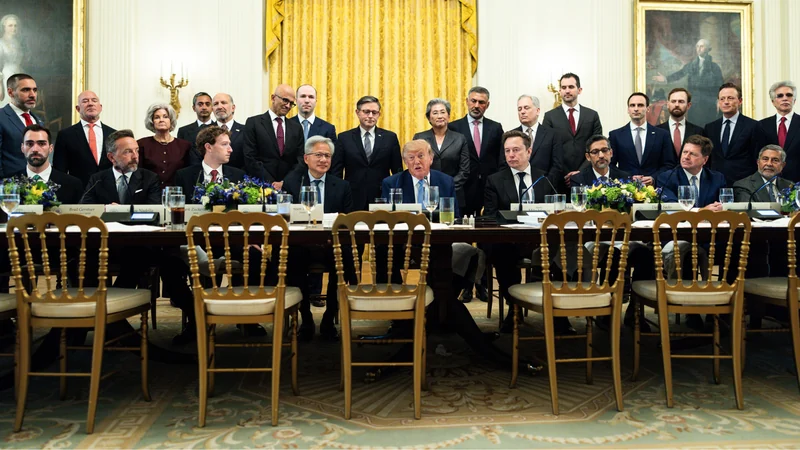
At a recent Super Intelligence summit hosted under Donald Trump, prominent technology executives agreed to a voluntary framework. Key figures including Google's Sundar Pichai, Anthropic's Dario Amodei, Meta's Mark Zuckerberg, OpenAI President Greg Brockman, Elon Musk, and NVIDIA CEO Jensen Huang signed a pact outlining industry self-regulation.
The signed agreement includes core tenets such as implementing self-regulatory safeguards to keep pioneer models from going rogue and deploying independent auditors to evaluate system safety. However, the accord faced immediate pushback from outside observers.
Critics were unimpressed by the voluntary measures. One critic told the BBC that the framework improperly allows private firms to define what counts as safety, while another argued that the accord should be ignored completely as an administrative distraction.
An Opportunity for the UK to Lead
Amid regulatory hesitation in Washington, Microsoft's executive leadership sees an opening for other nations to step forward. Brad Smith believes the lack of concrete action in the United States gives the United Kingdom a unique opening to take a global leadership role in regulating artificial intelligence.
Smith pointed out that British regulatory authority is viewed differently than European Union policy bodies like Brussels, which could work to the nation's strategic advantage. "In Washington DC, people don't look at the UK and they don't look at London the way they look at Brussels — that's a strength," he explained.
Concluding his remarks, Smith emphasized that the technology has reached a critical juncture where formal rules are urgently needed. "I hope that's the role we can play as a company. I hope that's the role the UK can play as a country. When you look at models that are so powerful that they're putting the world's cybersecurity at risk, I would say: the moment has arrived," he said.
Sources
- EngadgetMicrosoft's president says AI is less regulated than a carton of milk
Continue chronologically
Related entity coverage
Related stories
AI Executives Sign Pledge to Self-Police Development
Top artificial intelligence executives from leading tech labs have gathered in Washington to sign a new joint commitment focused on safe development.
OpenAI CEO Sam Altman Reveals New AI Agent at Developer Event
OpenAI CEO Sam Altman introduced new Dots AI agents at the annual developer conference while avoiding mention of recent security concerns.
OpenAI and Anthropic Urge UK Lawmakers to Regulate AI
Representatives from OpenAI and Anthropic told a British parliamentary hearing that voluntary industry pledges are no longer enough for safety.
AI Industry Divided Over Future of Regulatory Frameworks
Tech leaders clash over AI safety proposals as the Trump administration labels industry-led regulation efforts a hoax amidst internal industry conflict.