Meta Glasses Serve as a Pedestrian Dashcam for Runners
As pedestrian safety concerns grow, runners are turning to wearable technology to document road hazards and potential accidents.
 Radwan AbdulhadiEditor and technology writer

Addressing Pedestrian Safety During Outdoor Runs
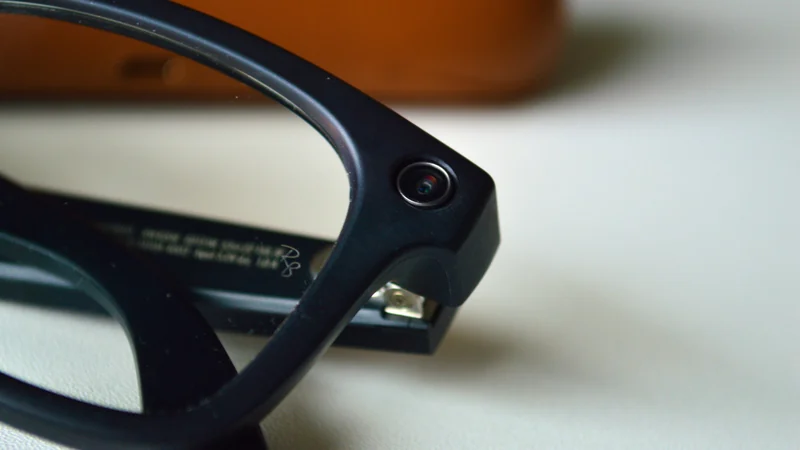
The growing prevalence of vehicular traffic has made outdoor running increasingly hazardous for pedestrians, particularly when crossing roads and navigating intersections. While vehicular dashcams have become a standard safety accessory for drivers, pedestrians lack an equivalent mechanism to document incidents or near-misses. Holding a smartphone while running or attempting to retrieve one from a pocket or armband holster during a sudden traffic incident is entirely impractical. To solve this dilemma, some runners have looked toward wearable technology already worn on the face, such as [my Meta glasses](https://amzn.to/4hXEzhm), to serve as an effective personal safety tool.
The integration of cameras into everyday wearable accessories provides an immediate solution for capturing unexpected road hazards. Rather than introducing an entirely new device into an athletic routine, leveraging pre-existing hardware eliminates the friction associated with safety documentation. This practical application transforms standard lifestyle technology into a functional utility that can document interactions with vehicles in real time.
Functionality and Recording Settings
Operating the recording feature during a workout requires minimal behavioral adjustment. Users can initiate a video capture simply by holding the designated camera button on [Meta Glasses](https://9to5google.com/guides/meta-glasses/) when approaching a high-risk intersection or observing an oncoming vehicle. For structured safety monitoring, the devices can be configured to record for three-minute intervals, ensuring that important moments are not cut short prematurely. Once the user has safely crossed the road, the recording can be manually stopped with a subsequent press of the button.
The convenience of this system extends beyond active recording. All captured media files are temporarily saved directly onto the hardware itself. Once the user completes their workout and the device reconnects to a smartphone, the recorded footage syncs automatically. This seamless data transfer requires virtually no manual intervention, making it a reliable option for individuals who prioritize a streamlined digital ecosystem during physical activities.
Hardware Options for Athletic Wearers
For athletes interested in adopting this wearable dashcam approach, certain models offer superior physical attributes. The [Oakley Meta HSTN glasses](https://amzn.to/4z9jUx0) are frequently recommended for runners due to their tight, secure fit and athletic-oriented styling. Alternatively, consumers seeking a more affordable entry point can explore [cheaper Meta-branded glasses](https://amzn.to/4smp6L9), which maintain the same core functional capabilities as more expensive design collaborations without brand-specific styling premiums.
Beyond the Meta ecosystem, alternative augmented reality and smart eyewear options exist on the market. For instance, [Rokid AI Glasses](https://amzn.to/3VPQC7X) serve as another viable alternative for users exploring smart eyewear outside of the primary market-leading product lines. Regardless of the chosen hardware, the core utility of having an integrated camera readily accessible during physical exercise remains a compelling draw for safety-conscious pedestrians.
Broader Ecosystem Context and Recent Updates
The expansion of smart eyewear capabilities has been a significant focus for [Meta](https://9to5google.com/guides/meta/) as the company continuously refines its product lineup. Recent software and hardware updates have introduced various enhancements to smart glasses, ranging from audio upgrades and turn-by-turn navigation features to slimmer device designs introduced in newer generations. These iterative updates demonstrate an ongoing commitment to improving the overall user experience for daily wearers.
At the same time, hardware manufacturers must navigate technical challenges and public perception regarding privacy and continuous recording. Addressing bugs, such as previous issues involving spontaneous recording behaviors, remains vital for maintaining consumer trust. As smart eyewear continues to evolve, features originally designed for casual media creation or navigation assistance are increasingly being repurposed by users for personal safety and documentation.
Sources
- 9to5GoogleI needed a dashcam while out running. Meta glasses turned out to be the answer
Continue chronologically


Related entity coverage
Related stories
Can AI Glasses Replace Your Daily Prescription Eyewear?
Explore the pros and cons of replacing your regular prescription glasses with AI smart glasses, including weight, battery life, and privacy concerns.
Ray-Ban Meta Audio Review: Camera-Free Smart Glasses
Meta's new Ray-Ban Meta Audio smart glasses drop the built-in cameras to deliver an audio-only experience with improved comfort and privacy.

Meta Brings Private Processing Infrastructure to AI Glasses
Meta expands its Private Processing confidential computing infrastructure to AI glasses, enabling secure cloud-based AI processing without exposing user data.

Meta Introduces F3 Lightning to Scale Ads ML Features
Meta details F3 Lightning, a new infrastructure layer that accelerates ads machine learning features to production without increasing costs.