Military Explores Commercial 5G Networks for Drone Defense
Defense organizations and technology companies are investigating how commercial 5G infrastructure and AI systems can be repurposed to detect and track enemy drone incursions on the battlefield.
 Radwan AbdulhadiEditor and technology writer
Military Trials and Battlefield Experiments
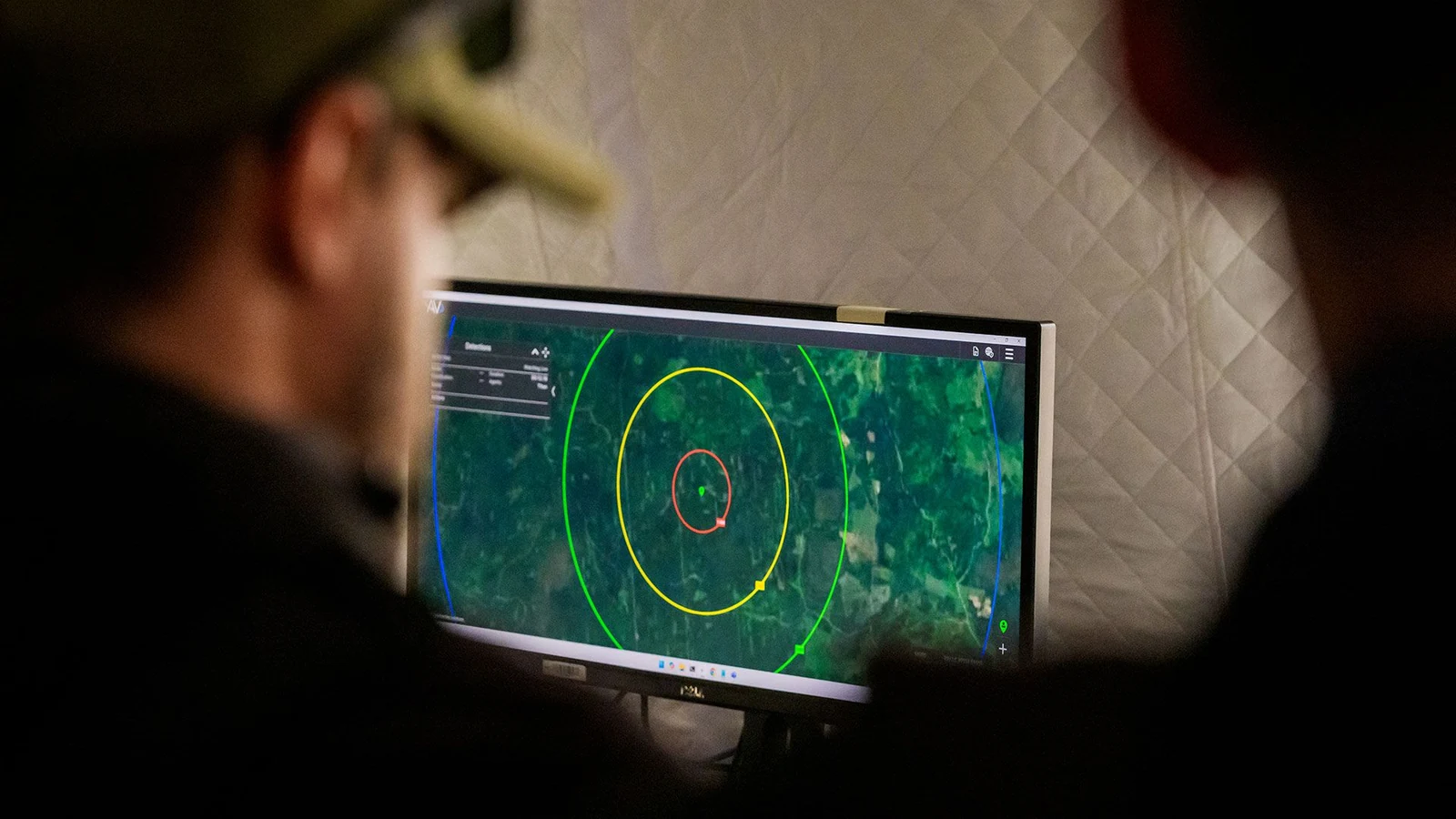
Defense organizations are increasingly looking at leveraging existing telecommunications infrastructure to enhance battlefield sensing and counter-drone capabilities. According to recent reports detailing [Tom's Hardware](https://www.tomshardware.com/networking/military-explores-commercial-5g-networks-for-enemy-drone-defense-ai-agents-developed-the-system-recently-used-in-battlefield-trials-in-latvia) coverage, military strategists are examining how commercial 5G networks can be used to sense and track enemy drone incursions without requiring massive new hardware investments. Drones and drone-defense capabilities have become vital in current armed conflicts, gaining serious global attention following developments in Russia, Ukraine, and the Middle East.
As part of these ongoing evaluations, defense planners note that utilizing extensive cellular networks already present across most nations represents a practical advantage for national security. However, military analysts also observe potential risks, such as commercial 5G masts turning into more attractive targets during active hostilities. Despite these concerns, trials involving [5G communications](https://www.tomshardware.com/news/intel-exits-5g-smartphone-modem-apple-qualcomm,39095.html) continue to advance across multiple international testbeds.
NATO Exercises in Latvia
In Latvia, NATO conducted a Digital Backbone Experimentation exercise known as DiBaX 2026 between October 19 and 30. During the exercise, the organization investigated whether existing 5G towers could passively detect and track flying objects, specifically enemy drones. Successful trials in this domain could grant large-scale telecommunications networks an additional security-enhancing purpose, while simultaneously bolstering NATO's resilience against disruption through diverse communication channels and satellite integrations.
The defense initiative also featured specialized [counter-drone](https://defence-blog.com/nato-turns-5g-towers-into-sensors-in-baltic-battlefield-experiment/) methods utilizing Baltic infrastructure. Allies including the United States, Canada, Germany, Finland, Lithuania, and host nation Latvia participated in the multi-nation exercises, where three distinct methods of commercial 5G utilization were tested. While some of the experimental tests encountered failures, military researchers gathered valuable operational lessons from the outcomes.
The Role of Agentic AI in Interoperability
A notable highlight of the Latvian trials was the use of systems developed by AI agents. According to Admiral Pierre Vandier, NATO's Supreme Allied Commander Transformation, the organization successfully connected systems that were never originally designed to communicate with one another by deploying artificial intelligence to solve interoperability barriers.
Admiral Vandier noted that this marked the first time a Maven system was able to communicate directly with a national system, a complex integration achieved within hours through the application of Agentic AI. This technological breakthrough demonstrated how artificial intelligence can rapidly bridge disparate military and commercial architectures during active battlefield scenarios.
Commercial Demonstrations in the United States
Concurrently, commercial telecommunications providers in the United States have begun demonstrating similar capabilities. AT&T and Ericsson recently showcased drone detection using advanced network sensing over a 5G network outside of AT&T Stadium in Arlington, Texas. Industry representatives described the demonstration as an early preview of emerging 6G technology, which officially incorporates both communications and sensing capabilities.
According to official public relations materials from the demonstration, the system successfully detected, located, and tracked the movement of multiple drones flying at altitudes between 300 and 400 feet within the coverage area. Major sporting venues and public spaces were highlighted as primary candidates for such technology due to their vulnerability to security threats.
Future Outlook for Defense Infrastructure
With both the NATO battlefield experiments and corporate technology demonstrations delivering promising initial results, integrating drone-sensing networks onto commercial 5G and 6G masts appears poised to become a valuable tool for modern defense strategies. By piggybacking on existing cellular architecture, military forces may achieve heightened low-altitude threat detection around complex public environments and major venues with minimal additional capital investment.
Sources
- Tom's HardwareMilitary explores commercial 5G networks for enemy drone defense — AI agents developed the system recently used in battlefield trials in Latvia
Continue chronologically

Related stories
Telecom Operators Anchor AI Strategies on Open Models
Telecom operators are increasingly building their artificial intelligence strategies on open models to gain control, customization, and trust.

SpaceX Eyes 80,000 Cell Sites in Major Mobile Carrier Push
SpaceX is reportedly planning to tap into at least 80,000 cell sites as part of its push to compete directly with Verizon, AT&T, and T-Mobile.
AT&T Partners With OpenAI to Rethink In-House Legal Work
AT&T is working with OpenAI to scale legal judgment and streamline intake for its in-house legal department through the LegalEdge team.

Apple Confirms AT&T Bug on iPhone 18 Pro Max
Apple acknowledges a network bug impacting certain iPhone 18 Pro Max devices on AT&T, detailing software fixes and hardware replacement needs.