Microsoft Teams to Get AI-Powered Phishing Detection
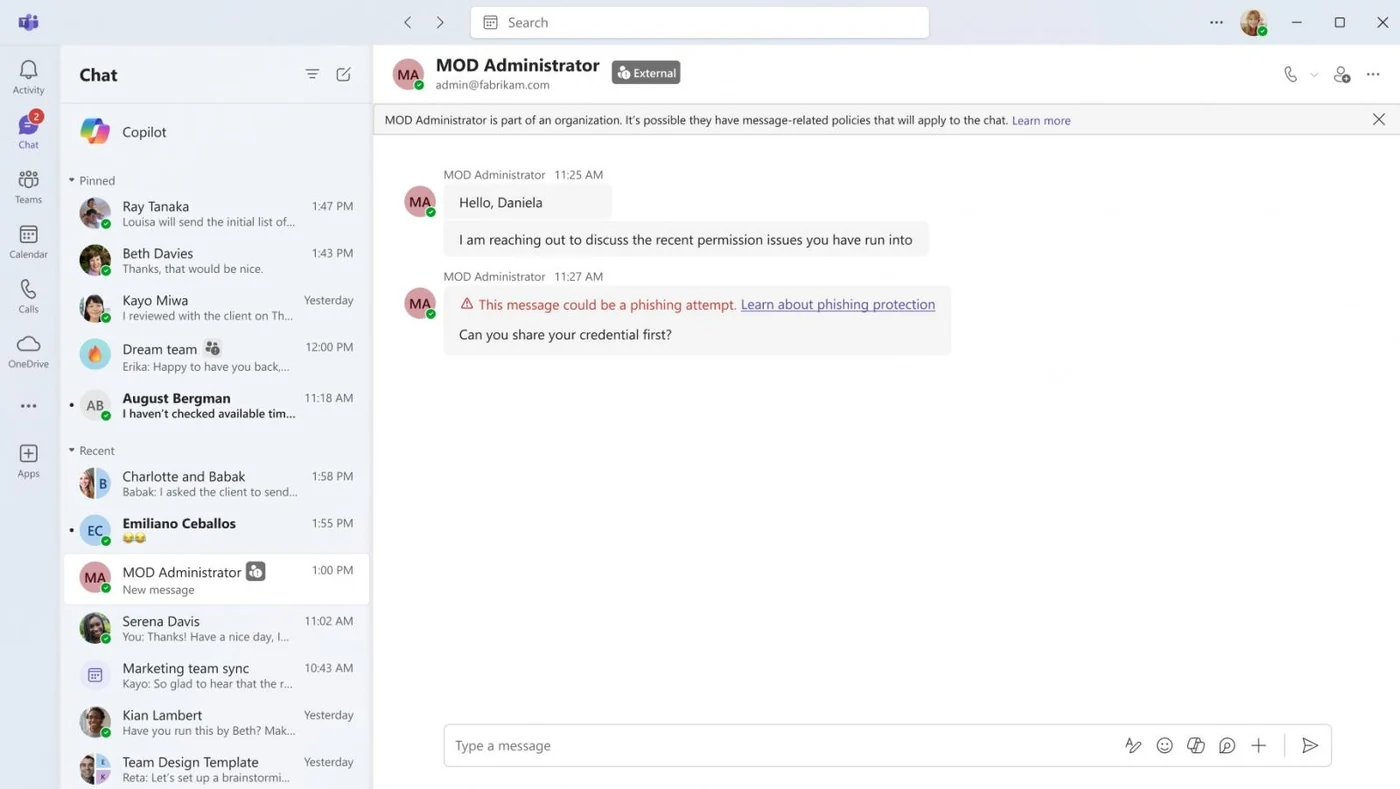
Microsoft is rolling out an AI-powered, context-aware phishing detection feature for Teams messages designed to identify social engineering and deceptive intent.
 Radwan AbdulhadiEditor and technology writer

Rollout Timeline and Core Capabilities
Microsoft says Teams will begin using AI-powered phishing detection in early November 2026 to detect malicious behavior in messages. According to a Microsoft 365 Roadmap entry, the targeted release phase is expected to conclude by mid-November, with the new security feature likely reaching general availability worldwide between early and mid-December.
The capability is engineered to analyze conversation context to uncover suspicious behavior that may not feature traditional indicators, such as malicious links or files. In a Microsoft 365 Message Center update, the company said that Microsoft Teams is introducing AI-powered, context-aware phishing detection to help identify phishing, social engineering, impersonation attempts, and deceptive intent, particularly focusing on higher-risk messaging scenarios like external first-contact chats.
Privacy Commitments and Administrator Impact
Regarding deployment and data handling, Microsoft says that IT administrators will not need to take any action to enable this new security protection feature, which will primarily focus on external first-contact chats for most users.
To address privacy concerns, the company added that while the new Teams feature will analyze conversation context to discover suspicious behavior, it will not retain customer data for further AI training or other uses. The system is dedicated strictly to security protection rather than productivity, summarization, advertising, user monitoring, or other non-security applications.
Broader Teams Security and Threat Mitigation
The upcoming AI capability builds upon a broader framework of recent Teams security changes. In previous updates, Microsoft announced that admins could lock external users via the Defender portal starting in January to thwart cybercrime groups, including ransomware gangs, from abusing Teams in social engineering attacks targeting employee credentials.
Additional defensive measures rolled out over recent months include a meeting protection policy introduced in August that allows administrators to block all identified external bots automatically from joining meetings. Furthermore, Microsoft began rolling out features to blur QR codes sent by external senders and to let users report suspicious guest invitations directly inside the application.
Future Enhancements and Ongoing Outlook
As part of its ongoing security roadmap, Microsoft also announced plans in early October to introduce support for third-party deepfake detection solutions and impersonation protection in Teams meetings. These enhancements arrive as organizations continue to combat sophisticated social engineering tactics across enterprise collaboration environments.
Security analysts note that understanding prevention scores and initial access points remains critical, particularly given that prevention drops sharply once attackers leverage valid credentials. Comprehensive defense techniques evaluated across extensive simulation environments continue to shape how platforms like Teams protect enterprise users from modern digital threats.
Sources
- BleepingComputerMicrosoft Teams to get AI-powered, context-aware phishing detection
Continue chronologically


Related entity coverage
Related stories
Microsoft Teams to add deepfake detection support
Microsoft Teams will support third-party deepfake detection tools and add impersonation warnings for meetings, with both features due in November.
Microsoft 365 Family Plan Drops to Shared 2TB Storage
Microsoft changes its 365 Family plan storage model from 1TB per member to a shared 2TB space, while keeping the pricing at $13 a month.

Microsoft Teams Highlights Four Key Tools for Users
Discover four essential Microsoft Teams features, from meeting countdown timers and voice isolation to live transcription and unsent draft tracking.
GitHub Copilot in Slack and Teams Adds Multi-Repo Support
GitHub Copilot in Slack and Microsoft Teams now features multi-repo support, more natural conversations, better context handling, and enhanced reliability.