Jack Dorsey’s Block Announces Dessa AI Voice Model
Jack Dorsey’s Block has announced an experimental AI model named Dessa, which is trained completely from scratch on human speech conversations and exhibits both natural and occasionally uncanny behavior.
 Radwan AbdulhadiEditor and technology writer

Introduction to Block's New AI Model
Jack Dorsey’s Block has officially announced an artificial intelligence model called Dessa, which has been trained entirely from scratch on human conversation. To showcase the capabilities and quirky nature of the system, Block shared various chats that the model has experienced with human speakers, which can sometimes come across as slightly awkward or uncanny. Further details are available from The Verge in the original source material.
For instance, a conversation shared by Dessa lead Ragavan Thurairatnam demonstrates a mostly natural back-and-forth exchange, though the model bizarrely mistakes the human speaker for someone named "Ronaldo" at the beginning. Additional examples and demonstrations can be found directly on the official Dessa website.
Audio Demonstrations and Capabilities
The development team has highlighted several different demonstration scenarios to exhibit how Dessa processes speech. Among these are a voice-based guessing game, a discussion covering Christopher Nolan's films that veers into an unexpected tangent regarding Bryan Singer’s Superman movies, and a conversation detailing a surprise trip to Paris where Dessa responds with emotional gratitude.
Furthermore, a recorded conversation comparing OpenAI’s GPT-Live-1 voice model alongside Dessa shows that Dessa can sound notably natural during exchanges. Audio clips from these interactions have been packaged and shared online for public review.
Technical Specifications and Local Execution
According to details provided by the Dessa team, the software functions as a true speech-to-speech model where everything it has learned derives directly from human speech patterns. Rather than relying entirely on massive remote data centers for basic utility, the model is designed to run locally on a MacBook Pro M4 Max or better hardware setups.
The developers liken the learning approach to biological processes, noting that human babies learn how to talk without ever seeing a single written word. The team wanted to explore whether an artificial intelligence model could achieve the same feat, concluding that while it is possible, the engineering process is exceptionally difficult.
Motivations and Safety Objectives
When explaining the core reasons behind the project, the Block team pointed to three main objectives: scientific curiosity, improving overall understanding between humans and machines, and advancing AI safety measures. The developers emphasize that speech serves as the most natural interface for any type of intelligence.
Current voice AI technologies are criticized by the creators for flattening spoken words into text and failing to keep up with natural human timing. Additionally, the team noted that existing models remain largely unresponsive to emotional cues embedded in human voices, creating a safety problem when systems fail to recognize serious pain or distress.
Outlook and Future Access
Block positions Dessa as an initial step toward resolving emotional awareness gaps in conversational speech models. As part of its rollout strategy, the team has announced plans to distribute early access versions of the model to a select group of dedicated AI safety researchers.
As the technology sector continues to explore novel voice interfaces and conversational agents, projects like Dessa highlight ongoing efforts to replicate human conversational nuances and emotional detection directly within speech architectures.
Sources
- The VergeJack Dorsey’s Block made an AI model that talks to you like an awkward new friend
Continue chronologically


Related entity coverage
Related stories
Jack Dorsey's Block Reveals Human-Like Voice Model Called Dessa
Block has introduced Dessa, a full-duplex speech model trained entirely on human speech that can run locally on consumer hardware like a MacBook M4 Max.

Block Uses OpenAI Tech to Build AI-Powered Security
Block leverages OpenAI technology to enhance its security workflows, investigating threats faster and proposing automated patches in minutes.

Jack Dorsey's Bitchat Pulled from App Stores in India
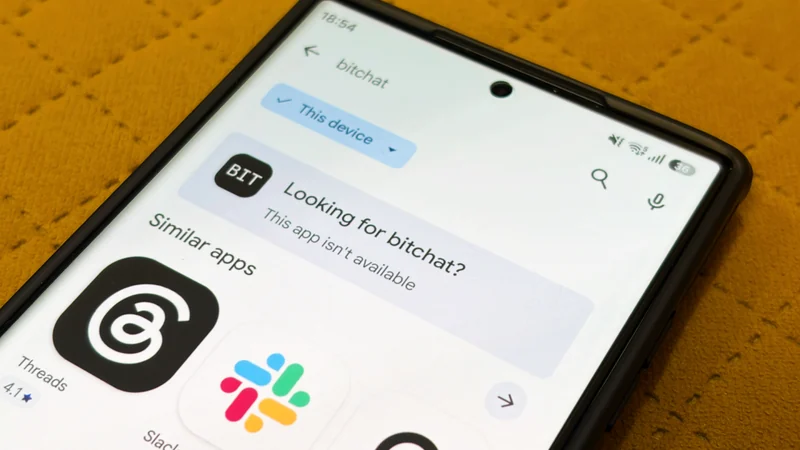
Jack Dorsey's decentralized messaging app Bitchat disappears from Apple and Google app stores in India following government blocking orders.
OpenAI Announces New Safety Report and Teen Protections
OpenAI details upcoming safety reporting, stricter firearms restrictions for minors, and enhanced intervention features for ChatGPT users.