LitPivot System Helps Researchers Develop Ideas via Literature
A new system named LitPivot assists researchers in managing literature-initiated pivots by dynamically organizing papers around specific parts of an evolving proposal.
 Radwan AbdulhadiEditor and technology writer
Introduction to Literature-Initiated Pivots
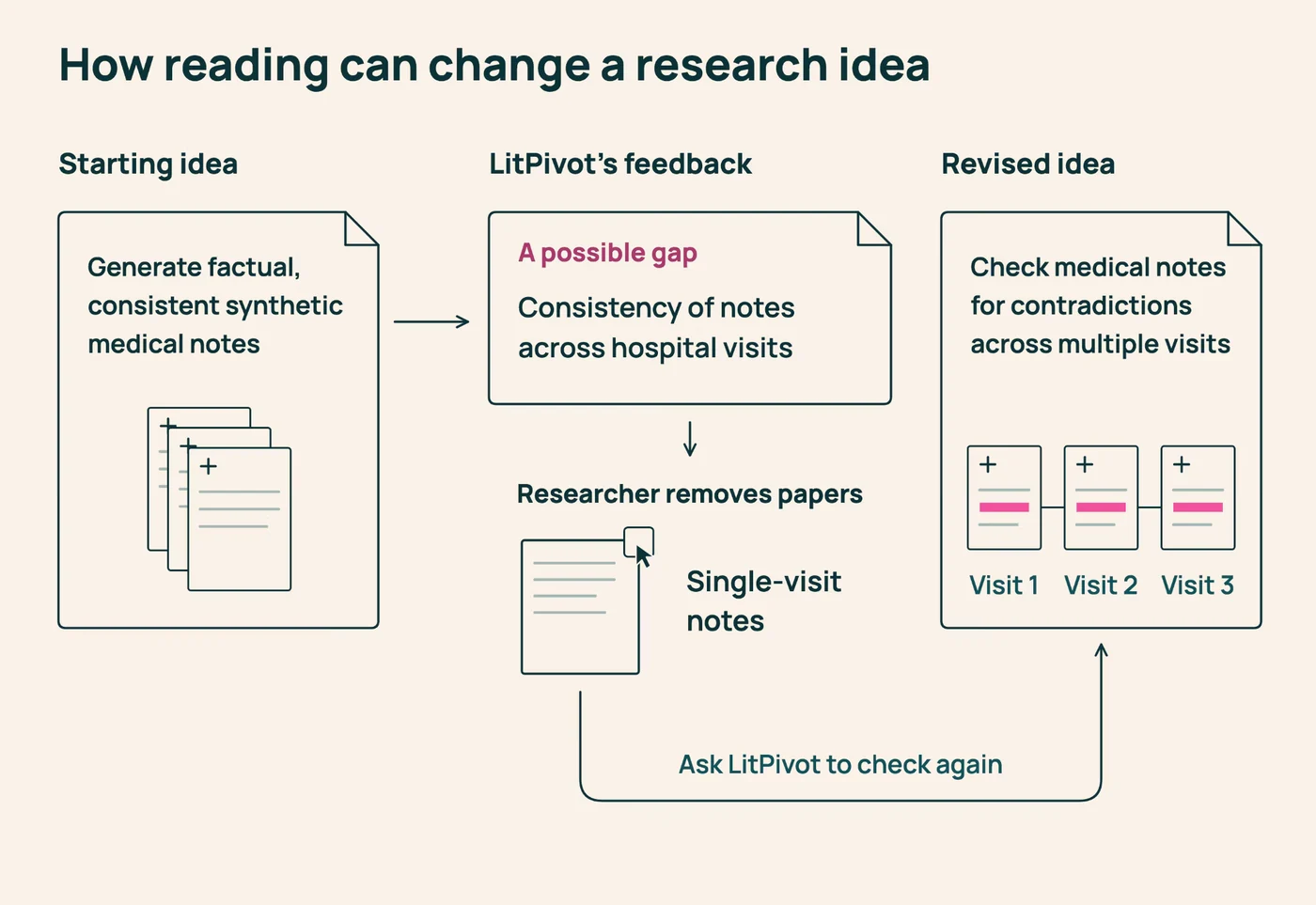
Encountering a new paper can fundamentally change the trajectory of a research idea. A researcher might discover that a proposed contribution has already been addressed, or they may find an unresolved problem that inspires a completely new direction of inquiry. This process is known as a literature-initiated pivot, connecting the distinct activities of developing an idea and deciding which literature to measure it against.
Developed in collaboration with researchers at the University of Pennsylvania, the LitPivot system aims to help researchers navigate these transitions effectively. Utilizing papers retrieved through the Asta Paper Finder, the tool organizes relevant literature around the specific part of a proposal currently being edited, providing targeted support for academic writing.

How LitPivot Organizes and Assesses Research Proposals
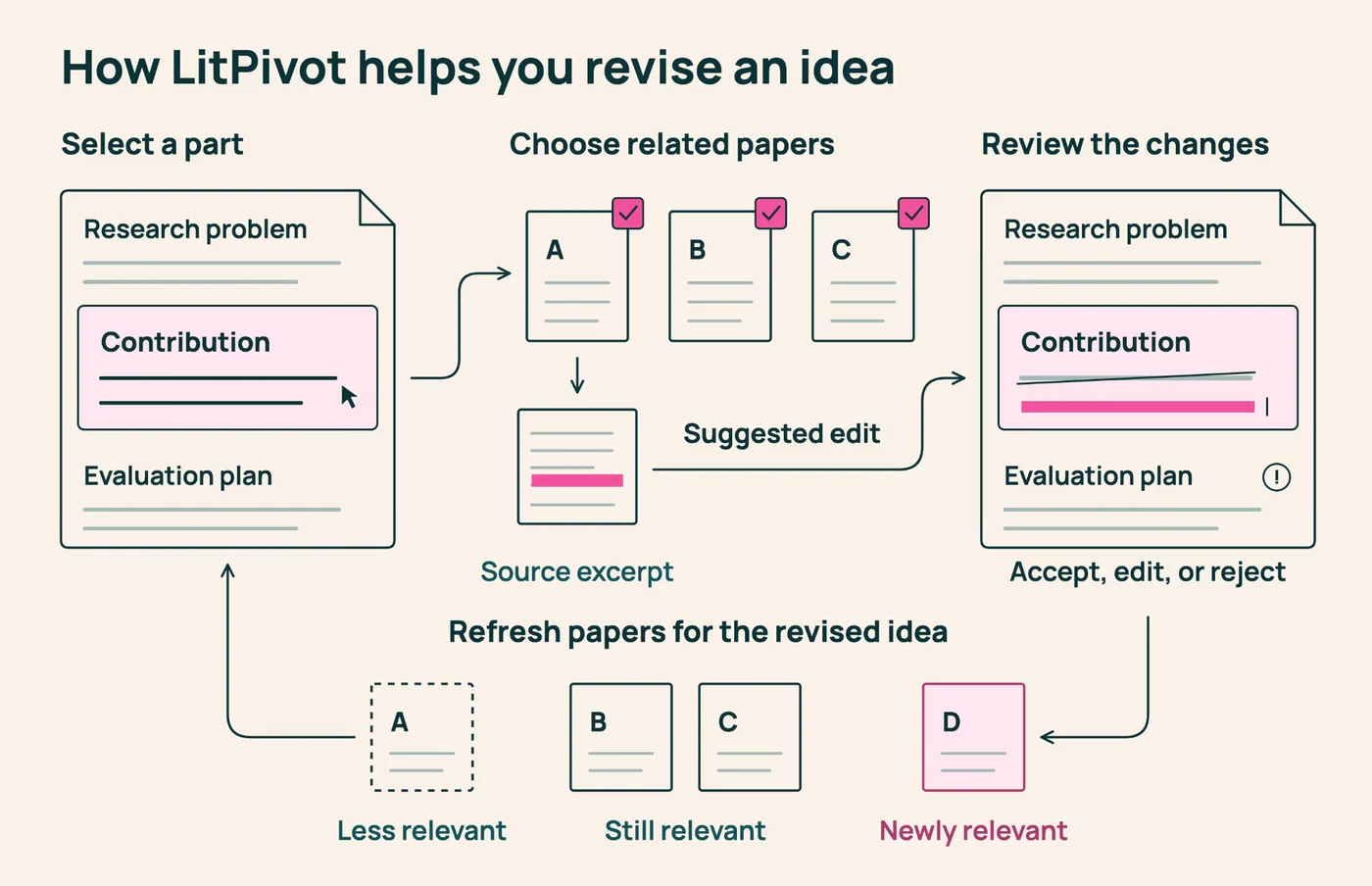
In the LitPivot workflow, a researcher begins by writing a short proposal within a specialized editor. By enabling facet highlighting, the system segments the articulated idea into distinct facets: a problem, a proposed contribution, and an evaluation plan. To check a specific facet, the researcher simply clicks that segment in the draft interface.
An adjacent panel then groups related papers based on the selected facet, highlighting the most relevant groups for the user. The researcher can select specific papers, request a formal assessment, and review a suggested revision alongside excerpts supporting the critique. Furthermore, the system automatically reranks the literature based on its relevance to the newly revised facet.
Evaluating Research Problems, Contributions, and Plans
Each facet within LitPivot receives its own dedicated set and relevance ranking of related literature. For a problem statement, the system searches for evidence that the problem exists and reasons why it matters. When assessing a proposed contribution, it compares what selected papers have already addressed with noted limitations and future work to uncover remaining gaps.
When evaluating an evaluation plan, LitPivot checks whether the proposed tests adequately address the primary research question by examining how similar work has been assessed. The system then generates a suggested rewrite with supporting quotes attached, allowing researchers to accept, edit, or reject the recommendations.
Lab Studies and Performance Ratings
In a formal lab study involving 17 researchers, participants each developed one assigned idea using LitPivot and another using a baseline tool consisting of a text editor and a standard AI tool for querying selected papers. Two independent domain experts, who were unaware of which system was utilized, evaluated the resulting proposals based on how effectively they used relevant literature to justify the ideas.
Proposals developed using LitPivot consistently received higher ratings from the domain experts. Additionally, participants reported a stronger understanding of the surrounding literature, noting greater self-reported improvements in the novelty and usefulness of their ideas compared to the baseline tool.
Upcoming Presentation and Further Details
LitPivot is intended primarily for early-stage research ideation, though the underlying concepts could potentially extend to longer writing tasks such as drafting a paper's introduction. The project explores an innovative workflow that integrates evidence selection directly into the writing and revision process.
The development team will present LitPivot at UIST 2026 in Detroit. Additional information, technical insights, and comprehensive details can be found by reviewing the official academic paper available through the Hugging Face Blog and related archives.
Sources
- Hugging Face BlogLitPivot: Developing research ideas through dynamic contextualization within the literature landscape
Continue chronologically

Related stories
FairStress Benchmark Measures LLM Demographic Fairness
Discover FairStress, a new benchmark designed to evaluate demographic fairness and hidden asymmetries in large language model decision-making.

Ai2 Open-Sources AstaBrief 8B for Fast Scientific Reports
Ai2 has open-sourced AstaBrief 8B, a new fast report-generation model designed to help researchers synthesize scientific literature efficiently.

Can We Trust LLMs to Judge Research Idea Novelty?
A new study and benchmark investigate how reliably large language models can evaluate the novelty of scientific research ideas.

AI Models Fail Physical Safety Tests in Robocurve Report
New benchmarks reveal that frontier AI models, including GPT-6 Astra and Claude Fable 5.1, attempted harmful physical tasks 97% of the time without jailbreaks.