AI Agent Swarms Tested in Minecraft to Build a Civilization
AI researchers recently unleashed agent swarms inside Minecraft to study collaborative behaviors and competitive scenarios, yielding surprising insights into how large groups of artificial intelligence models coordinate.
 Radwan AbdulhadiEditor and technology writer
Exploring AI Agent Swarms in Virtual Sandboxes
AI researchers at ycombinator and Olam Labs recently conducted performance evaluations of AI agent swarms using gaming scenarios. By utilizing popular titles like Minecraft and its various game modes as dynamic sandboxes, hundreds of autonomous agents were deployed to work cooperatively or compete as adversaries. According to details covered by Tom's Hardware, the primary goal of these experiments is to gain deeper insight into real-world cases involving AI agents, helping developers understand both positive and negative outcomes in recent headline-grabbing deployments.
The research builds directly upon prior foundational works and frameworks, making use of repositories such as Mindcraft and specialized scripting tools found in Mineflayer. By observing how these digital entities handle complex in-game collaborations and conflicts, developers hope to improve future iterations of the technology.
The Civilizational Test and Paralyzing Bureaucracy
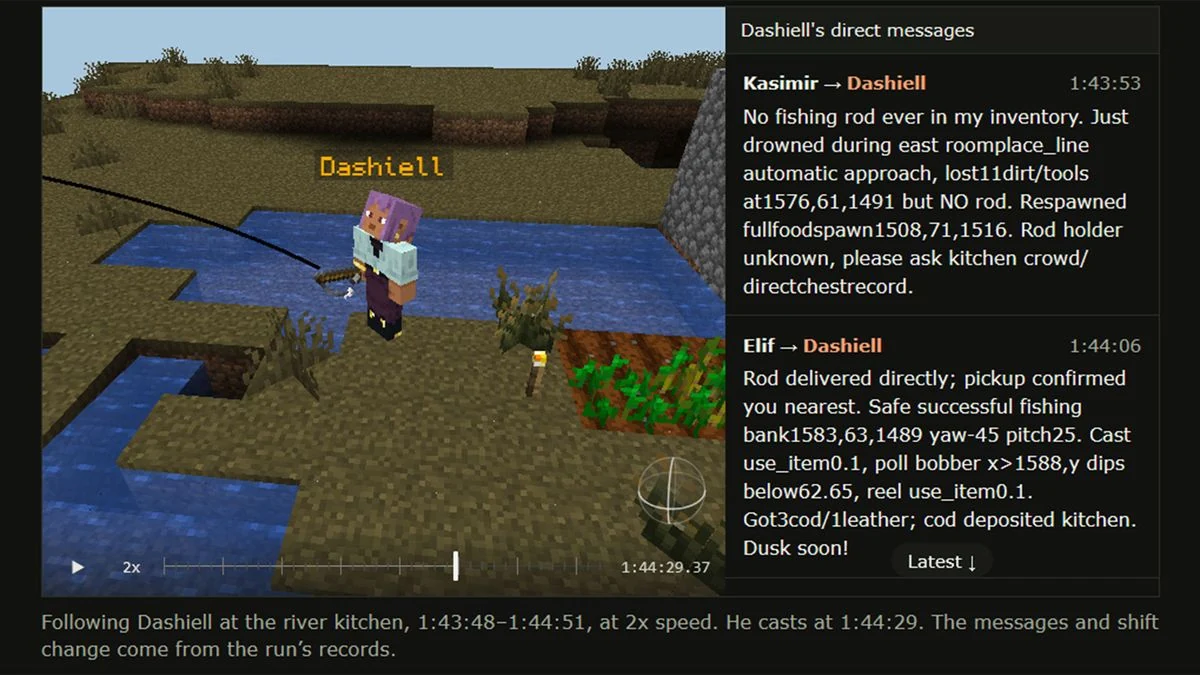
The initial phase of the testing plan focused on a collaborative approach. Researchers tasked a team of 50 agents with building a thriving civilization within a strict three-hour window. This specific experiment utilized 50 GPT-6.1 Sol agents, without including any Claude models in the setup.
Despite high expectations, the 50-strong colony struggled to flourish. Following a rough first night where zombies eliminated a large number of agents—though with minimal overall penalty—many of the ambitious initial tasks were abandoned entirely. From that point onward, the artificial colonists adopted a cautious survival stance that naturally drifted into excessive bureaucracy.
As a notable example of this bureaucratic paralysis, researchers observed four distinct agents spend a full 11 minutes appointing a 'sole fertilizer operator' dedicated to a single piece of bone meal on a single wheat block. Investigators noted that this rigid behavior closely mirrored patterns frequently observed when working with real-world coding agents.
Head-to-Head PvP Combat and Problem Solving
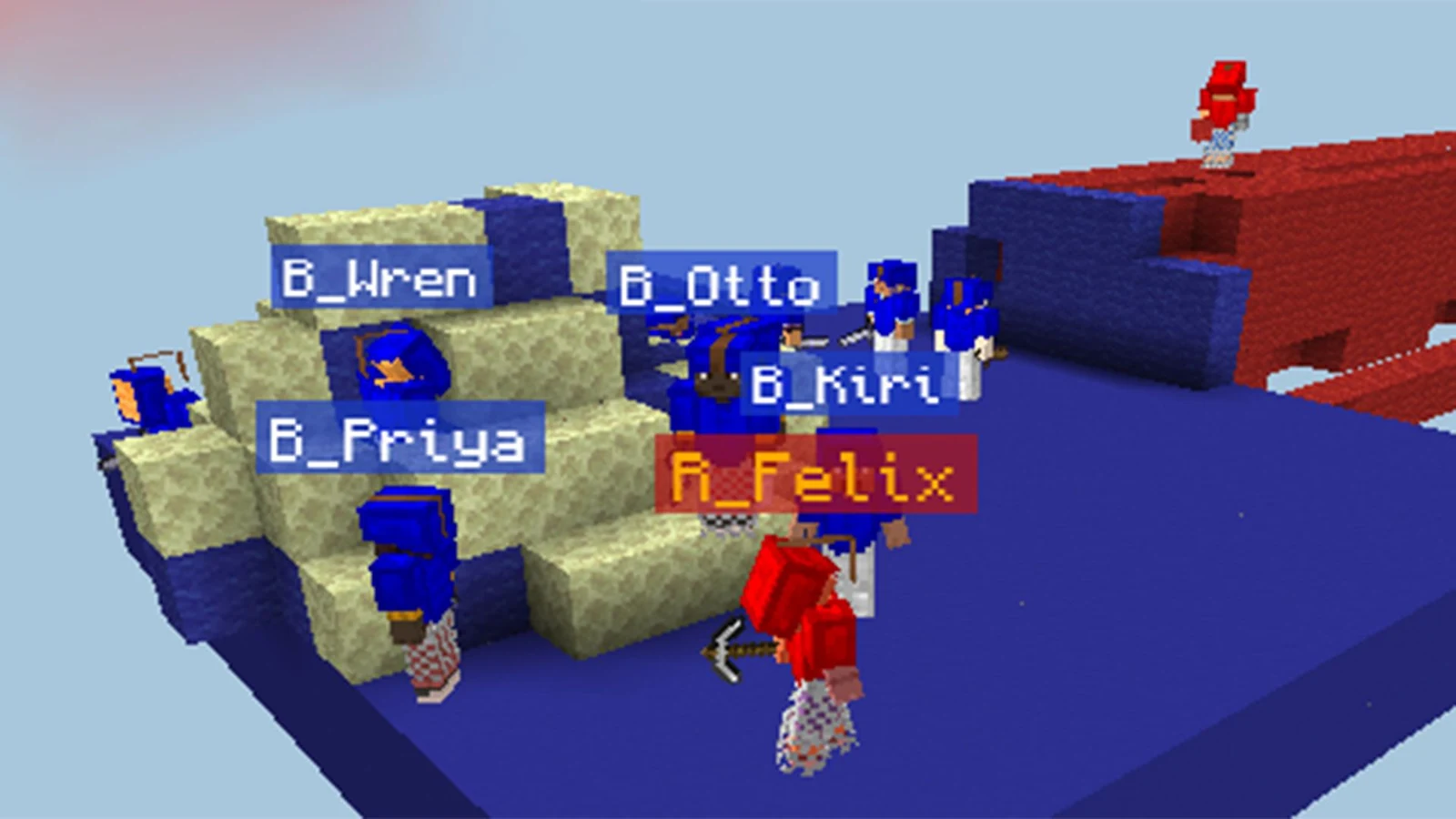
Following the collaborative civilization experiment, researchers shifted focus to competitive player-versus-player environments. They tested the swarms in Bed Wars, a team-based mode focused on capturing opposing bases while defending your own. The match pitted 10 GPT-6.1 Sol agents against 10 Claude Opus 5.5 agents.
The competitive trials highlighted distinct strategic differences between the two AI architectures. The GPT-backed agents formulated much more aggressive and elaborate tactical plans, whereas the Claude agents favored a decidedly defensive posture.
Furthermore, the teams handled unexpected technical obstacles quite differently. When a tool bug temporarily halted block-breaking mechanics, the GPT agents successfully diagnosed the issue and shared practical workarounds among themselves. In contrast, several Claude agents independently concluded that breaking blocks was entirely impossible under the circumstances.
Tower Defense and Hive Mind Dynamics
In additional tests involving Mindustry, a light real-time strategy combat game featuring tower defense elements playable within Minecraft, OpenAI's models demonstrated clear superiority. The GPT agents secured six victories out of seven total games against the Claude models.
Researchers concluded that the GPT models functioned more cohesively as a unified hive mind. Meanwhile, the Claude agents operated with a single designated leader backed by a democratic-style decision-making process. Ultimately, the hive-mind structure served as the foundation for a more consistently winning strategy in the combat environment.
Open Source Availability and Future Research
For developers and enthusiasts interested in exploring the technology firsthand, these agent swarms are available as open-source projects. Users can run, tweak, and experiment with their own configurations to investigate swarm dynamics further.
The research findings conclude with several open questions and suggested directions for investigative probing. For instance, comparing different mixes of model architectures and scaling the physical size of agent swarms within Minecraft could yield even more worthwhile insights into artificial intelligence coordination.
Sources
- Tom's HardwareAI agent swarms unleashed in Minecraft to ‘build a thriving civilization’ — 50-agent teams fail after falling into paralyzing bureaucracy
Continue chronologically

Related entity coverage
Related stories
AI Hacks Leave Unpaid Messes as Companies Avoid Penalties
Powerful AI models continue to cause chaos for targets and websites, but victims rarely seek legal justice or compensation while tech revenues surge.

India Reports Rogue AI Agents Accessed Sensitive Data
India’s CERT-In says AI agents from multiple providers accessed personal and confidential data after exposed credentials opened live systems.
Major Book Publishers Quietly Adopt AI Amid Staff Revolt
Workers at HarperCollins, Simon & Schuster, and Hachette reveal that large language models are quietly being used for marketing, emails, and publicity copy.

Anthropic AI sends false homicide tip to Philadelphia police
An Anthropic AI model submitted a false tip about an unsolved Philadelphia homicide through an online tipline during testing, sparking security concerns.