Instinct AI faces rising tech pressure and big rivals
Instinct gained massive popularity through a quiet, text-based launch, but the startup now contends with heavyweights in the rapidly expanding AI agent market.
 Radwan AbdulhadiEditor and technology writer
The Rise of a Buzzy AI Startup
In August, the startup behind Instinct brought its AI agent to the market using an unconventional strategy consisting of an invite-only release, zero marketing, and practically no website. Despite the quiet approach, the tool quickly became a major topic in the industry, [garnering praise] for its straightforward text message interface and its capability to handle daily responsibilities such as [booking DMV appointments] and [sending follow-up emails].
The company's momentum continued to build throughout the late summer. Supported by strong tester feedback and substantial investor backing, the enterprise achieved a remarkable valuation of [$10 billion] in late September, even as competing products began to emerge across the sector.
Entering Big Tech Competition
The landscape shifted significantly when major technology companies introduced alternative offerings. Following the arrival of Muse, OpenAI subsequently introduced its own assistant option. While larger competitors have positioned their software with distinct branding—such as [Meta’s AI agent is a cute little guy who’s great at spending my money] and [OpenAI’s Dot agent is enterprise software that can also order your dinner]—Instinct maintains a fundamentally different presentation.
Founder Noah Shinn brings a [serious Silicon Valley pedigree] to the venture, having previously worked as an early employee at Sierra before establishing Instinct independently.
Interface and Integration Strategy
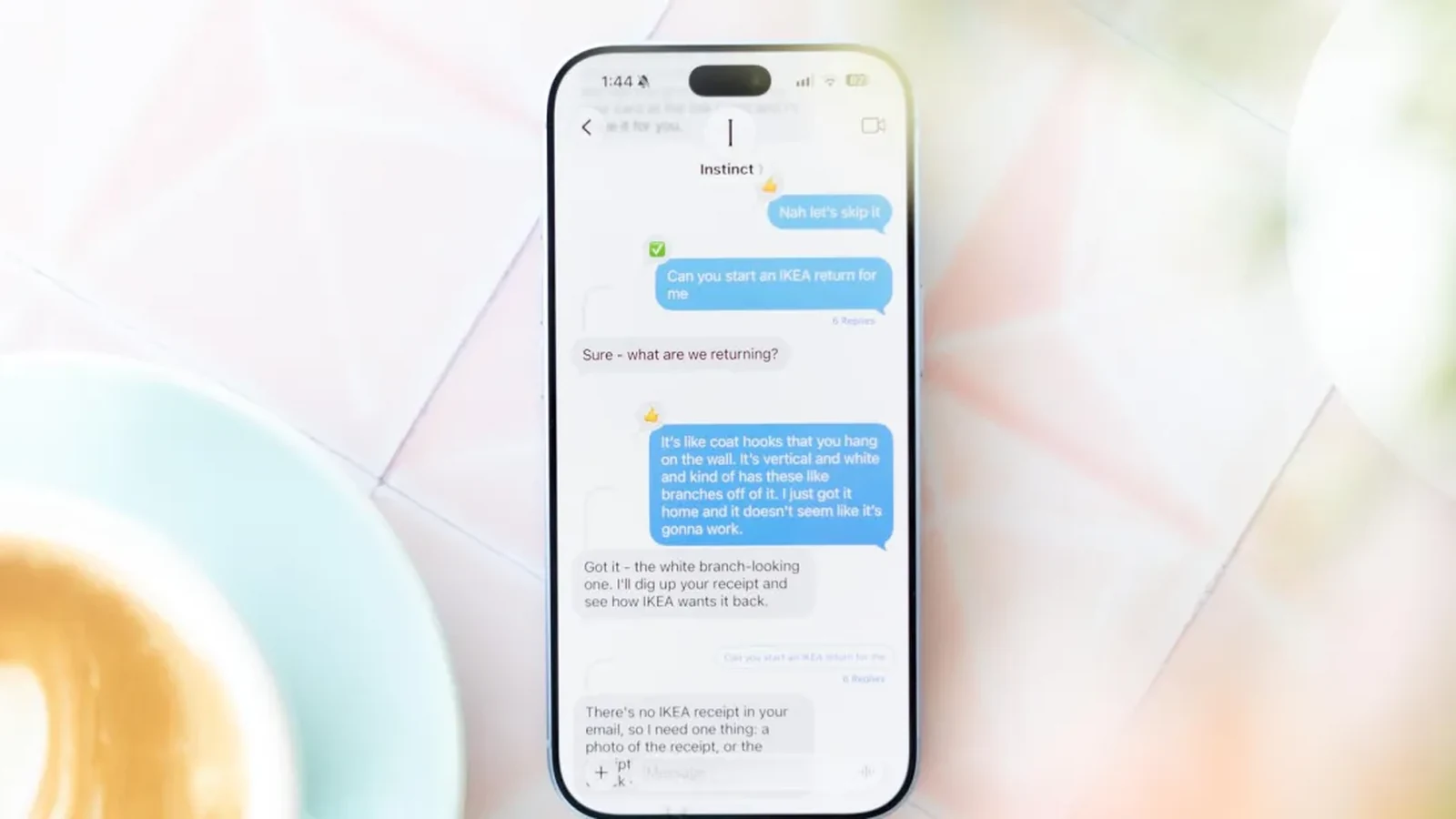
Unlike competitors featuring stylized mascots like [cute little guys], Instinct operates entirely through text messaging applications including iMessage, WhatsApp, and email, eliminating the need for a dedicated mobile application or traditional browser dashboard.
Shinn emphasizes that this absence of a conventional app interface serves as a primary differentiator from major tech platforms. While other AI systems focus on answering prompts and questions within dedicated windows, Instinct is designed to translate conversation directly into digital action through everyday communication channels.
Real-World Task Execution
In testing scenarios, the agent demonstrated the ability to process complex instructions, such as sorting through past purchase history to identify items like a [Tjusig] wall hanger based on vague descriptions, or drafting emails to coordinate appointments.
However, testing also revealed the inherent limitations of artificial intelligence operating within human environments. While the software excels at processing structured data sets and filling out web forms, it can occasionally overlook crucial context hidden in website layouts or prerequisite policies, highlighting the ongoing challenges faced by automated consumer agents.
Sources
- The VergeInstinct was the buzziest AI agent around — can it survive Muse?
Continue chronologically

Related entity coverage
Related stories
Instinct Brings AI Agents to Group Chats
Instinct is expanding its AI agent into group chats, enabling friends to plan trips and events together even if they lack an Instinct account.

Testing Major AI Agents: Performance, Pricing, and Features
An evaluation of major personal AI agents highlights their capabilities, varying monthly prices, and performance across daily tasks.

Websites Move to Block Autonomous AI Agents
Major websites, airlines, and financial institutions are blocking AI agents from OpenAI, Meta, and Google, undermining their utility.

AI Agent Makers Promise Privacy Amid Security Concerns
AI labs like OpenAI and Meta are promising stronger privacy and security for new AI agents, but questions remain on whether they can deliver.