Ice Sheet Expansion May Have Started 2,000 Years Ago
Direct physical evidence reveals that the remnants of the Laurentide Ice Sheet started to grow again millennia ago, marking what could have been the opening move of a new glaciation.
 Radwan AbdulhadiEditor and technology writer
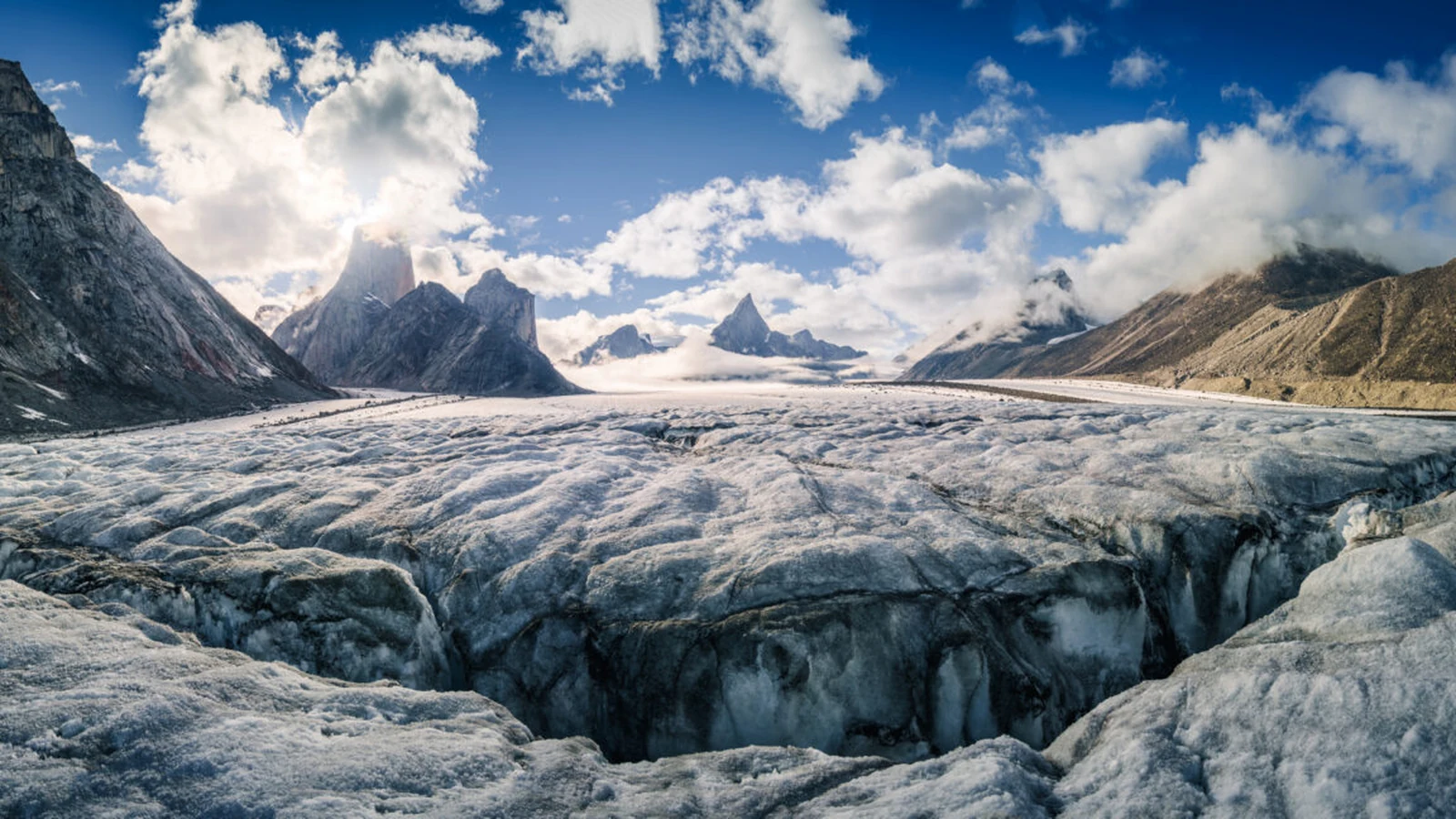
The Last Surviving Fragment of the Laurentide Ice Sheet
The Barnes Ice Cap sits on the central plateau of Baffin Island in the Canadian Arctic, serving as the last surviving fragment of the massive Laurentide Ice Sheet. At its peak during the Pleistocene, this colossal ice sheet buried most of Canada under two miles of ice and locked away approximately 80 meters of sea level. According to a recent study published in Science, this remnant has yielded direct physical evidence indicating that ice sheets reversed their retreat and began to grow thousands of years ago. Further details are available from Ars Technica in the original source material.
Nicolás Young, a geologist at Columbia University’s Lamont-Doherty Earth Observatory and lead author of the study, explains that Barnes is the deflated core of a once-massive dome. As the immense dome thinned through the Holocene, its margin withdrew up onto Baffin Island. The reason Barnes preserves its own history comes down to the temperature at its base. Further details are available from Learn more in the original source material.
Cold-Based Ice Preservation and Dating Methods
Most glaciers are warm-based, meaning meltwater at the bed allows them to slide and grind up everything beneath them, erasing historical records. In contrast, the Barnes Ice Cap is cold-based, meaning it is frozen directly onto the bedrock beneath it and prevents sliding. Nicolás Young compares this to ice plastered to a car windshield, which stays stuck and preserves what is underneath rather than eroding it.
To pinpoint the timing of the ice sheet's turnaround, the research team used two independent dating methods. The first method measured beryllium-10, an isotope accumulating in the top few centimeters of rock exposed to the sky, which helped date the ice sheet's retreat to within today's ice margin by 3,600 years ago. The second method involved radiocarbon dating dead mosses that were smothered and held intact when the ice returned.
Mapping the Advancing Ice Margin
By stringing together multiple kill dates of moss samples taken from different spots, scientists reconstructed a map of the advancing ice margin. About 70 percent of the team's radiocarbon dates cluster around 1800 CE at the culmination of the Little Ice Age. While the Little Ice Age marks the point where Northern Hemisphere glaciers were at their most extensive in recent millennia, researchers argue it was just one late pulse within an advance that had been running for two thousand years.
Because the oldest mosses directly beneath the Barnes Ice Cap remain hidden under ice that has retreated 200 to 800 meters since 1960, the team looked at neighboring ice caps on the same plateau. Earlier studies collected nearly 200 kill dates from beneath those neighboring caps, and none are older than 2,000 years. This indicates that neighboring ice caps started re-expanding roughly 2,000 years ago, suggesting the Barnes Ice Cap did as well.
Competing Forces and the Industrial Revolution
The study explains that ice started re-expanding because two global forces pulled in opposite directions. Solar energy reaching high northern latitudes peaked about 10,000 to 11,000 years ago and declined continuously, pushing the planet toward a new ice age. Meanwhile, atmospheric carbon dioxide crept up slightly between 8,000 and 2,000 years ago, increasing the greenhouse effect.
Ultimately, the drop in insolation and temperatures overwhelmed the minor carbon dioxide increase, leading to ice sheet expansion roughly 2,000 years ago. However, this trajectory shifted dramatically with the onset of the Industrial Revolution. As human activity pumped unprecedented magnitudes of carbon dioxide into the atmosphere, the Barnes Ice Cap's mass balance went negative by 1960, ending its advance and leaving the ice cap in a dying state today.
Sources
- Ars TechnicaIce sheet expansion may have started 2,000 years ago, but we canceled that
Continue chronologically


Related stories
Why Opportunity Charging is Winning as Robot Fleets Scale
Explore how wireless charging and fleet management solutions are helping autonomous mobile robots scale efficiently and maintain operational uptime.

Corals Use Microscopic Cilia to Breathe, but Heat Impairs Function
New research reveals that coral reefs rely on tiny hair-like structures to circulate oxygen, a mechanism that may fail as global ocean temperatures rise.

Meta Removes Language That May Have Allowed AI News Scraping
Following public backlash and legal expert interpretation, Meta is updating its terms again to remove controversial language about web crawling and AI training.

Hadrian Raises $40 Million for AI Security Expansion
Amsterdam-based Hadrian secures $40 million in Series B funding to expand its autonomous offensive security platform across the US and EMEA.