HiRO-ACEv2 Simulates Extreme Weather at 3 km Resolution
Introduced by the [Hugging Face Blog](https://huggingface.co/blog/allenai/hiro-acev2), HiRO-ACEv2 is an updated climate emulator system designed to replicate extreme weather events at a high resolution while significantly cutting computational expenses.
 Radwan AbdulhadiEditor and technology writer
Introduction to HiRO-ACEv2 and Cost-Efficient Climate Simulation
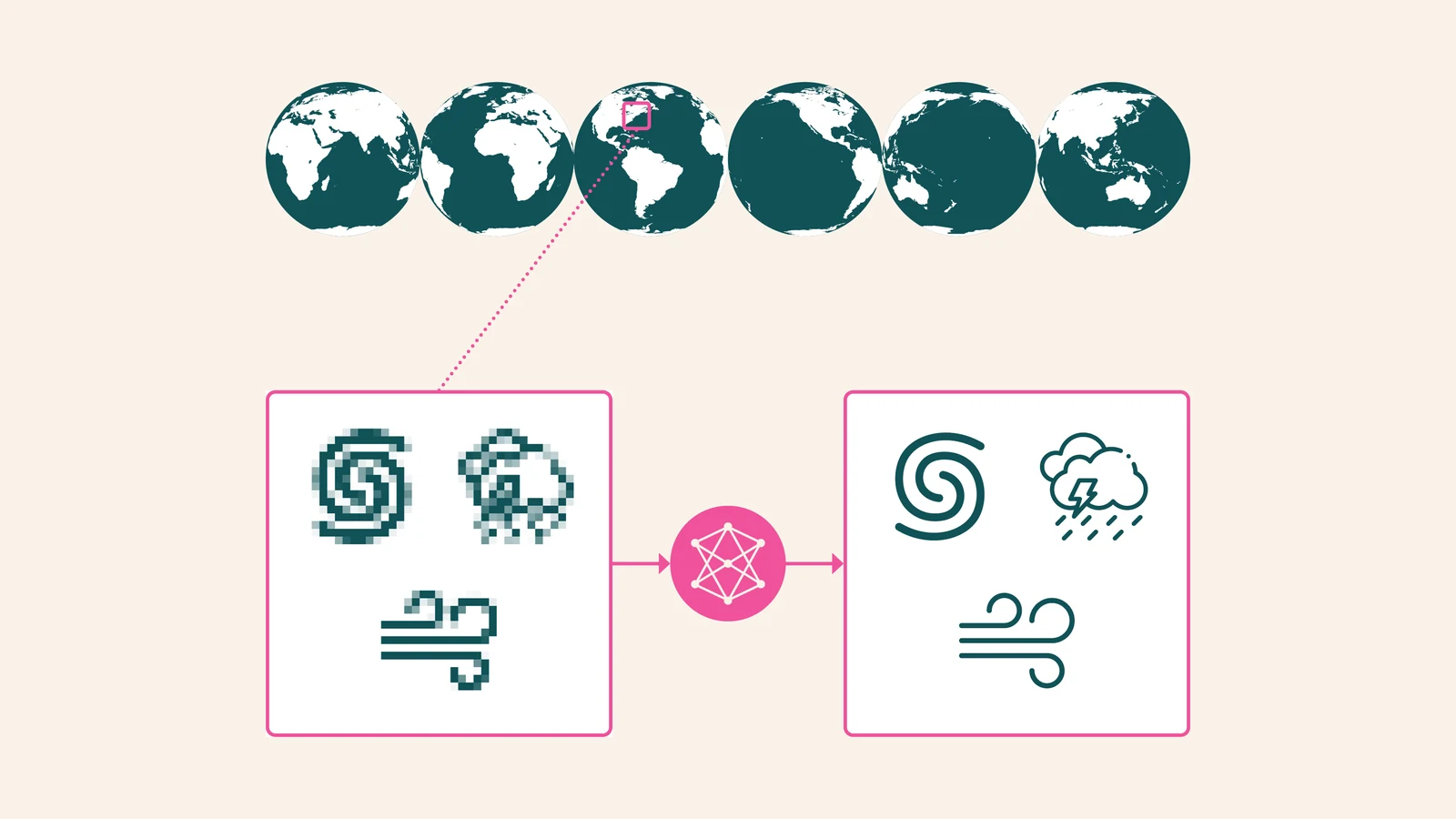
The [Hugging Face Blog](https://huggingface.co/blog/allenai/hiro-acev2) has detailed the release of HiRO-ACEv2, the latest iteration of the High Resolution Output Ai2 Climate Emulator system. This advanced configuration aims to solve a long-standing challenge in climate science: producing high-resolution atmospheric simulations without incurring massive computational expenses. By combining coarse AI predictions with specialized downscaling, the platform achieves fine-scale detail at a fraction of the cost associated with traditional physical models.
According to the details published on the [Hugging Face Blog](https://huggingface.co/blog/allenai/hiro-acev2), the full system can generate global 3 km climate data at approximately 1/300th of the cost required by X-SHiELD, a high-resolution global atmospheric model explicitly designed to simulate storms and small-scale weather phenomena. For single-region requirements, the financial and computational savings can multiply further depending on the geographical scope.
The Architecture Behind ACE and HiROv2
The HiRO-ACE architecture, originally introduced earlier in the year, consists of two core components. The first is ACE, an artificial intelligence model operating at a coarser 100 km resolution to capture large-scale climate patterns. The second is HiRO, a downscaling model responsible for sharpening those coarse outputs into intricate 3 km details. Developers can explore the underlying code and documentation directly via the [HiRO-ACEv2](https://huggingface.co/allenai/hiro-acev2) repository.
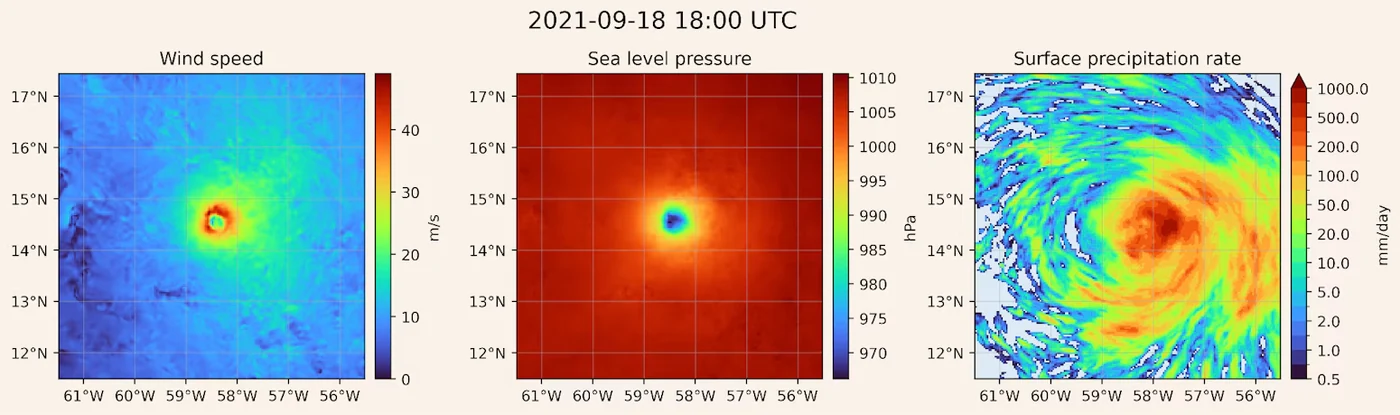
The most significant upgrade in the v2 release is the improved HiROv2 downscaling model. Unlike its predecessor, which primarily focused on rainfall, HiROv2 can predict several high-resolution fields simultaneously. This capability allows the system to capture a much wider range of extreme weather phenomena, including severe wind and pressure anomalies, with significantly enhanced predictive skill.
Capturing Extreme Weather and Rare Events
Simulating extreme events accurately was a primary design focus for the engineering team. Modifications to the training methodology of HiROv2 substantially improved its ability to reproduce intense rain, wind, and pressure values. When supplied with coarsened data from X-SHiELD, the model matches the target simulation's high-resolution statistics to within 3%, even when evaluating rare occurrences that typically manifest only once in a million data points.
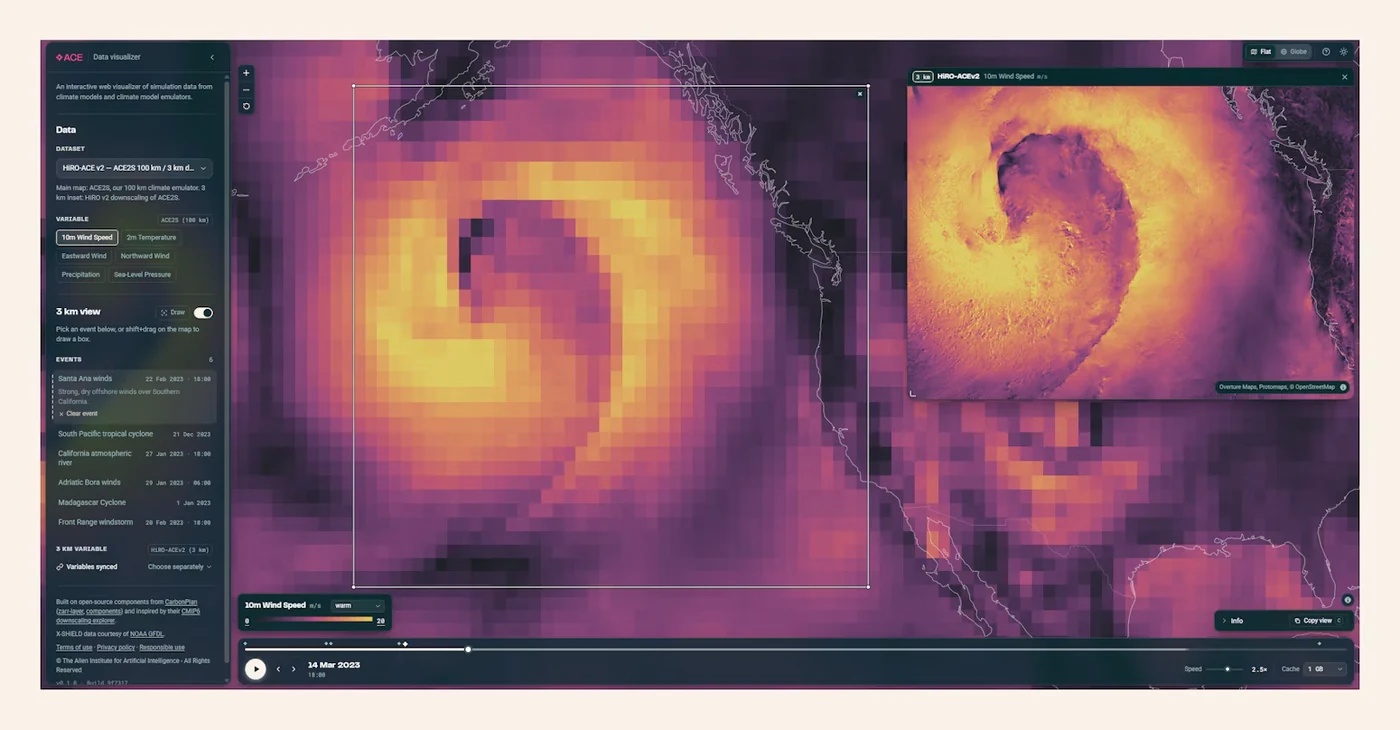
Furthermore, the model accurately estimates the total energy of tropical cyclones—including storms it never encountered during training—and generates hurricanes featuring realistic eyes and rain bands. It also realistically produces strong winds flowing down mountain slopes. Researchers interested in the theoretical foundation can read the research details in the [Paper](http://arxiv.org/abs/2610.17693).
Long-Term Simulation Performance and Validation
To test the foundational stability of the system, researchers trained an updated version of ACE for long-term evaluations. Over a continuous 10-year simulation, the model's hurricanes, average climate patterns, and overall distributions of rain, wind, and pressure aligned closely with X-SHiELD benchmarks. This alignment confirms that ACE provides a reliable coarse-resolution foundation for generating long-term, high-resolution climate datasets.
When combining ACE and HiROv2 for a full year of global 3 km data, the resulting statistics mirrored X-SHiELD closely, despite HiRO operating on ACE's autonomous simulation rather than direct X-SHiELD data. Across a decade-long run, hurricane energy remained comparable to the reference model, and generated snapshots displayed a rich variety of extreme weather events.
Interactive Demos, Notebooks, and Future Outlook
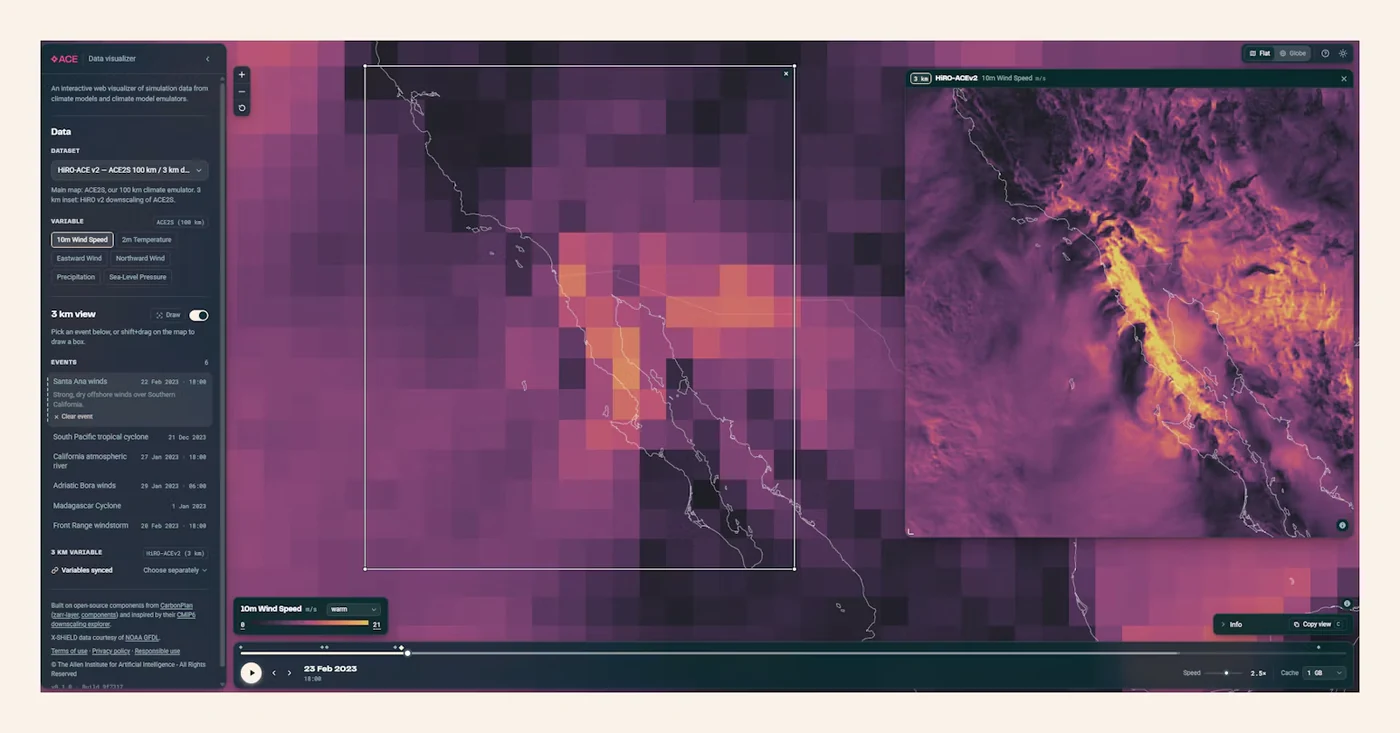
To help users evaluate the system without running heavy inference tasks locally, the creators developed a web interface. The interactive [Demo](http://ace.allen.ai) displays pre-generated precipitation, wind, and sea-level pressure outputs from both HiROv1 and HiROv2 side-by-side with X-SHiELD data, allowing users to visually inspect performance and zoom into specific regions of interest.
For practitioners wishing to conduct deeper technical evaluations, the [Models](https://huggingface.co/allenai/HiRO-ACEv2) are publicly available for download, accompanied by [Tutorial notebooks](https://ai2cm.github.io/ace/) that guide users through running the inference pipelines step-by-step.
Looking ahead, the development team plans to expand the system's flexibility. Because HiRO currently relies on training data derived from X-SHiELD, it cannot yet generate high-resolution data for alternative climates, such as historical records or future warming scenarios. Future milestones include training on datasets that simulate a world 4°C warmer and incorporating variables like snow, ice, and near-surface temperatures to broaden the system's environmental modeling applications.
Sources
- Hugging Face BlogHiRO-ACEv2: Simulating extreme weather at 3 km resolution for a fraction of the cost
Continue chronologically

Related stories
CWE-bench v2 Launches With 100 Tasks to Test AI Cyber Capabilities
CWE-bench v2 has been released by Collinear AI, offering a public set of 100 tasks designed to evaluate frontier AI models on security workflows.
StateBench Released to Test Long-Document State Tracking
A new benchmark evaluates how well language models track changing entity states across long documents, revealing limitations in current architectures.
Hugging Face Crypto-Mining Malware Campaign Returns
A cryptomining and backdoor campaign abusing Hugging Face model repositories has quickly returned following an initial takedown.

Project ProtoStar Unveiled to Make Public Science AI-Ready
Project ProtoStar brings together universities and open science communities to make publicly funded research datasets and models AI-ready.