Google Introduces Gemini 4 Carbon for Cyber Defense
Google has announced Gemini 4 Carbon, a frontier AI model that outperforms rival systems on vulnerability detection, exploitation, and patching benchmarks.
 Radwan AbdulhadiEditor and technology writer
Introduction to Gemini 4 Carbon
Google has officially announced Gemini 4 Carbon, a new frontier artificial intelligence model that the company claims surpasses rival systems on benchmarks for detecting, exploiting, and patching software vulnerabilities. According to details shared by Google, the model is not yet broadly available to the public.
The release follows the introduction of Gemini 4 Argon, which Google launched two weeks prior. While Argon laid initial groundwork, Carbon arrives with significantly enhanced capabilities for cybersecurity tasks and secure code generation.
Benchmark Performance and Capabilities
In benchmark evaluations conducted without guardrails in place, Gemini 4 Carbon achieved notable scores. The model registered 88.2% on SEC-bench Pro, a test measuring the ability to uncover flaws in real-world software. Furthermore, it achieved 54.8% on the ExploitGym exploitation benchmark and 71.0% on Collinear’s CWE-bench patching benchmark.
Google's internal comparisons indicate that Carbon outperformed major competing systems, including OpenAI’s GPT-6 Astra and Anthropic’s Claude Opus 5.5 and Claude Fable 5.1. Additionally, internal metrics suggest Carbon is more than twice as successful as Argon at writing secure code.
Rollout via the Fairwind Program
Access to Gemini 4 Carbon is strictly controlled during its initial phase. Google is providing access to a select group of cyber defenders before expanding availability in stages to a wider pool of approved partners through its Fairwind Program.
The Fairwind initiative offers early access to advanced cyber defense models specifically for governments, critical infrastructure operators, and major technology platforms. Google reports that more than 650 organizations currently participate in the program.
Exploitation as a Defensive Strategy
Google frames vulnerability exploitation as a necessary defensive step that helps security teams determine which issues require urgent remediation. Cyber defenders increasingly rely on AI models to check whether discovered vulnerabilities are realistically exploitable in order to prioritize patch management.
Testing by Google’s Chrome team demonstrated that Carbon generated high-quality patches more than 10 times more effectively than a comparable frontier model from a rival lab. Meanwhile, Google-owned cloud security firm Wiz noted that Carbon has claimed the top spot on web penetration testing benchmarks.
Safety Assessments and Pricing
On safety evaluations, Gray Swan’s indirect prompt injection benchmark recorded zero successful attacks against Carbon, compared to a 0.7% success rate for Argon. Google also noted that the new model produced roughly half as many unsupported claims as its predecessor.
Google is also participating in the United States government's voluntary effort to test models prior to public release. The company plans to gather ongoing feedback and refine safety guardrails before making Carbon available to general developers, businesses, and consumers.
Gemini 4 Carbon will debut at the same introductory rates established for Argon: $2 per million input tokens and $10 per million output tokens. Once the introductory period concludes, pricing will increase to $4 per million input tokens and $20 per million output tokens.
Sources
- SecurityWeekGoogle Says Gemini 4 Carbon Leads in Finding, Exploiting and Fixing Vulnerabilities
Continue chronologically

Related entity coverage
Related stories
Google Unveils Gemini 4 Carbon AI Model
Google has released its new Gemini 4 Carbon AI model, topping intelligence rankings and leading benchmarks in hallucination resistance.
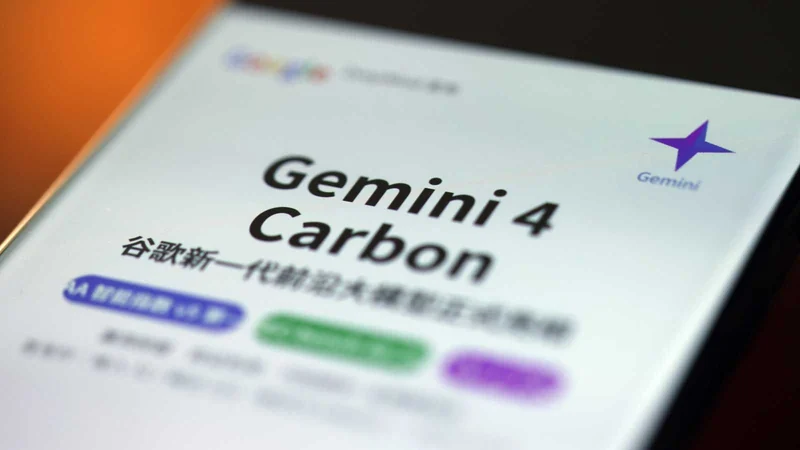
Google Launches Gemini 4 Carbon Model With Cybersecurity Focus
Google has announced Gemini 4 Carbon, its latest frontier model featuring significant gains in coding, agentic tasks, and cybersecurity defense.

Google Announces Gemini 4 Carbon Frontier AI Model
Google has announced Gemini 4 Carbon, its latest frontier AI model featuring performance improvements over Argon, though it is not yet widely available.

Google Launches Gemini 4 Argon Without Guardrails
Google has announced Gemini 4 Argon, a new frontier AI model providing guardrail-free cybersecurity access to trusted defenders through the Fairwind Program.