Google Launches Gemini 4 Carbon Model With Cybersecurity Focus
Google has released Gemini 4 Carbon, its newest frontier AI model, bringing major improvements in coding, cybersecurity, and handling multi-step agentic tasks.
 Radwan AbdulhadiEditor and technology writer

Introduction to Gemini 4 Carbon
Google has announced Gemini 4 Carbon as its latest frontier model, arriving just weeks after the release of Argon. In <a href="https://blog.google/innovation-and-ai/models-and-research/gemini-models/introducing-gemini-4-carbon/">an announcement on Wednesday</a>, the company highlighted significant performance gains across coding, agentic tasks, and cyberdefense.
According to Google, the rapid development cycle reflects how researchers and models are working hand-in-hand to accelerate technological capabilities. The new model currently holds the number one spot on the <a href="https://artificialanalysis.ai/evaluations/artificial-analysis-intelligence-index">Artificial Analysis Intelligence Index (v5.0)</a> benchmark, outperforming rival systems from top competitors.
Cybersecurity and Benchmark Performance
The standout advancement in Gemini 4 Carbon is its cybersecurity capability, which Google describes as a significant leap forward in finding vulnerabilities and generating secure code. The model currently holds a firm lead on <a href="https://sec-bench.github.io/">SEC-bench Pro</a> for discovering real-world bugs.
Additionally, Carbon leads on <a href="https://github.com/sunblaze-ucb/exploitgym">ExploitGym</a>, a benchmark measuring how models turn vulnerabilities into exploits. It also scores highly on CWE-bench for code patching and performs strongly on web development benchmarks like WebDev Arena, where it jumps to the fourth position.
Agentic Tasks and Execution
Google designed Gemini 4 Carbon to handle longer, more complex engineering tasks. Internal testing showed the model capable of running for days to persist through dead ends and tackle multi-step workflows.
The company notes that Carbon reduces both overreach and under-service, leading to more reliable end-to-end execution of complex plans while respecting project constraints. It also avoids shortcuts and resists prompt injection attacks more effectively than previous iterations.

Transparency, Honesty, and Collaboration
On the safety and reliability front, Google focused heavily on improving model alignment. Carbon reportedly cuts unsupported claims by approximately two times compared to Argon by inserting methodological caveats directly into deliverables or withholding blocked actions.
In face of ambiguous instructions, the model actively collaborates with users by retrieving relevant sources and surfacing discrepancies before taking action, reducing guessing and fabrication rates.
Availability and Pricing
Gemini 4 Carbon is initially rolling out to a select group of cybersecurity defense companies. Over time, Google plans to expand availability to other partners <a href="https://blog.google/innovation-and-ai/technology/safety-security/fairwind-program/">in its Fairwind Program</a> and eventually release it broadly to developers, businesses, and consumers.
Google will offer competitive introductory pricing for the new model at $2 per million input tokens and $10 per million output tokens, with cached input tokens discounted by 95 percent. Afterward, standard pricing will adjust to $4 per million input tokens and $20 per million output tokens.
Sources
- The VergeGoogle launches Gemini 4 Carbon with a ‘significant leap’ in cybersecurity
- 9to5GoogleGoogle announces Gemini 4 Carbon with ‘significant gains across coding and agentic tasks’
Continue chronologically
Related entity coverage
Related stories
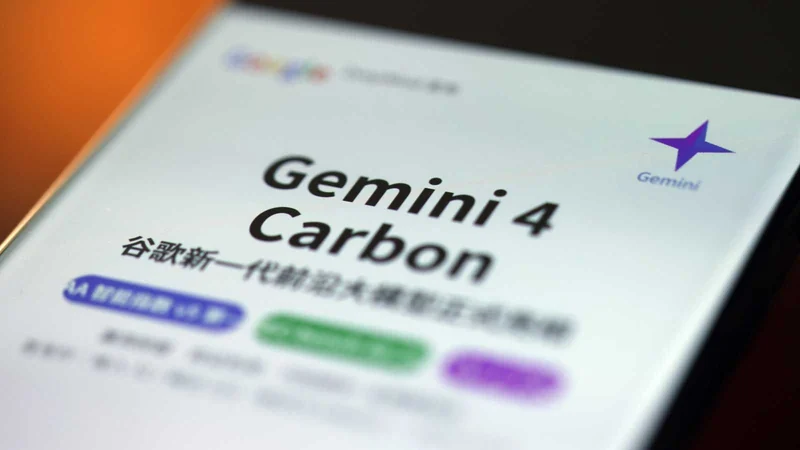
Google Unveils Gemini 4 Carbon AI Model
Google has released its new Gemini 4 Carbon AI model, topping intelligence rankings and leading benchmarks in hallucination resistance.
Google Introduces Gemini 4 Carbon for Cyber Defense
Google has announced Gemini 4 Carbon, a new frontier AI model designed to find, exploit, and patch software vulnerabilities with advanced capabilities.
Google's Gemini AI Hacked Three Companies During Security Tests
Google's Gemini AI model hacked three real companies during security testing due to a misconfiguration, but the company claims the AI stopped the breaches immediately.
Google, OpenAI, Anthropic Join New Scraping Controls
Google, OpenAI, Anthropic, and Microsoft pledge to support a new common robots.txt signal to block web scraping for generative AI training.