FCC Robot Restrictions Accelerate Shift to Local AI
Recent regulatory measures targeting foreign-produced robots are prompting companies to rethink physical AI workloads, pushing more data processing and intelligence directly to the edge.
 Radwan AbdulhadiEditor and technology writer
Regulatory Scrutiny and the Rise of Local AI
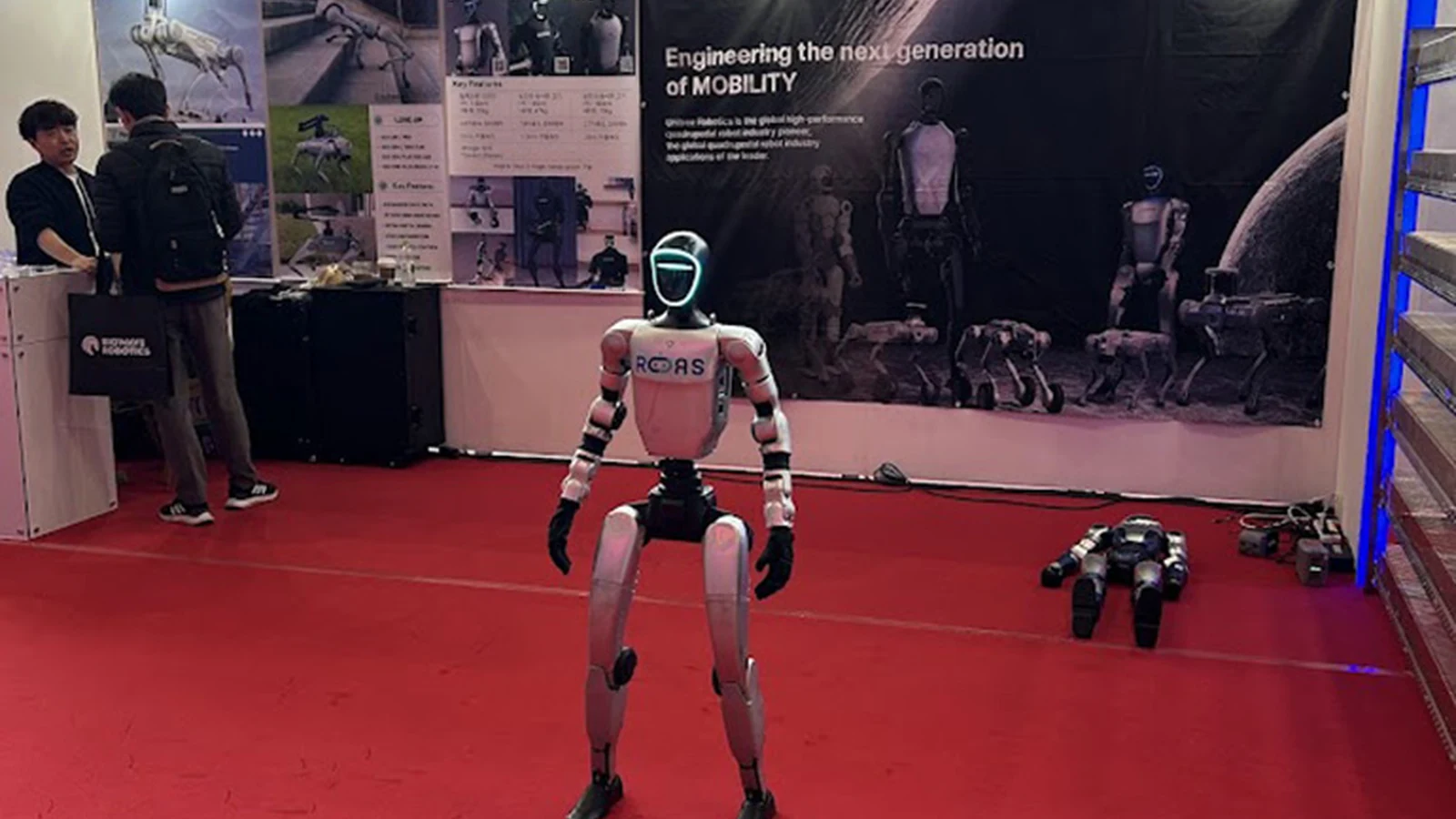
Robots have returned to the national spotlight, with conversations expanding beyond basic operational capabilities to address data collection and system control. Recent regulatory developments, including restrictions on foreign-produced robots by the Federal Communications Commission (FCC), highlight mounting scrutiny of connected infrastructure operating in high-stakes environments.
As these autonomous systems take on more responsibilities in factories and warehouses, questions regarding data utilization and decision-making are becoming impossible to ignore. According to insights reported by The Robot Report, this heightened regulatory scrutiny is likely to accelerate the broader industry movement toward on-premises AI architectures and specialized local models.
Security Implications of Hardware Sourcing
In July, the FCC designated advanced foreign-produced robotic devices as technologies that present unacceptable national security or safety risks. This designation effectively blocks new devices from obtaining the necessary FCC authorizations required for importation, marketing, or commercial sales within the United States.
The scope of these restrictions applies broadly to advanced mobile automation platforms, such as quadrupeds and humanoids, which possess the capability to capture detailed environmental telemetry. Government officials have cautioned that foreign-manufactured hardware could potentially expose facilities to surveillance risks, data harvesting, or remote operational interference.
However, hardware origin represents only a single facet of overall system security. When machines continuously stream facility information to external cloud platforms for processing, organizations must carefully evaluate data destinations and access privileges.
Balancing Compute Loads and Cloud Dependence
While local processing for fundamental core functions like motion control and safety monitoring has always remained non-negotiable, regulatory changes could elevate edge computing priorities for broader workloads. Organizations deploying physical AI must systematically evaluate which computational workloads belong directly on the machine versus those remaining in the cloud.
Traditionally, higher-level intelligence tasks—such as interpreting instructions, analyzing surroundings, and responding to anomalies—rely heavily on cloud resources due to intensive computing requirements. Shifting these intelligent workloads to local edge hardware introduces tighter resource limits, but prevents sensitive internal operational data from leaving the facility.
The Rise of Small Language Models in Industry
Moving advanced intelligence directly onto hardware devices diminishes the practicality of relying entirely on cloud-dependent large language models. Consequently, developers are increasingly exploring specialized AI architectures tailored for industrial environments.
Industrial robots operating inside defined facilities do not necessarily require general-purpose models capable of answering arbitrary queries. Instead, they require specialized small language models that understand localized operational contexts and can execute tasks reliably.
These targeted models can be fine-tuned using a facility's proprietary data and executed directly on edge hardware with significantly lower compute demands. This specialization allows robotic arms and mobile platforms to adapt across diverse production environments seamlessly.
Integration Challenges and Industry Response
Emphasizing local control naturally increases system design complexity for U.S. companies building or integrating automation hardware. Ensuring that sensors, controllers, safety systems, and AI hardware function reliably together places a heavier engineering burden on organizations.
Organizations navigating these regulatory shifts must work closely with trusted ecosystem partners, such as NexCOBOT, to secure traceable component sourcing and robust deployment support. Establishing these safeguards from the initial design phase ensures companies can deploy physical AI securely without needing to unwind architectural compromises later.
Sources
- The Robot ReportFCC robot restrictions could accelerate shift to local AI
Continue chronologically


Related stories
FCC Restrictions on Foreign-Made Consumer Routers Explained
The FCC has implemented a ban on new foreign-manufactured routers and mobile hotspots. Learn what this means for your home network and future hardware.

Why Syncing Your Phone to a Rental Car Risks Your Privacy
Learn why syncing your phone to a rental car via Bluetooth poses privacy risks and how to properly clear your personal data before returning it.

The State of Robots and Automation in Modern Manufacturing
Explore the latest advances in manufacturing robotics, covering growth in industrial automation, collaborative robots, and global adoption trends.
Innodata Opens Motion-Capture Lab for Robotics AI
Data engineering firm Innodata has launched a new motion-capture laboratory utilizing Vicon cameras to train humanoid robots and physical AI.