OpenAI Disrupts AI-Enabled False-Front Influence Operations
The company has taken action against two covert influence campaigns leveraging artificial intelligence to launder geopolitical messaging through mainstream media outlets and fake fronts.
 Radwan AbdulhadiEditor and technology writer
Overview of Disrupted Operations
Over the past two and a half years, OpenAI has [reported] on many of the ways in which threat actors tried to use artificial intelligence models to conduct cyber attacks, covert influence operations, scams, and other violations of usage policies. These disclosures aim to inform regulators, industry peers, and the wider society about how threat actors attempt to leverage AI technology.
Recently, the company banned two specific influence operations originating from Russia and Iran. These campaigns utilized AI models alongside traditional techniques to support sophisticated false-front entities, laundering geopolitical and conflict-related messaging to target audiences.

The Iranian Journalist Persona Campaign
The Iranian operation relied on a stable of seven fake journalist personas. These personas were used to pitch long-form articles to small and medium online outlets around the world.
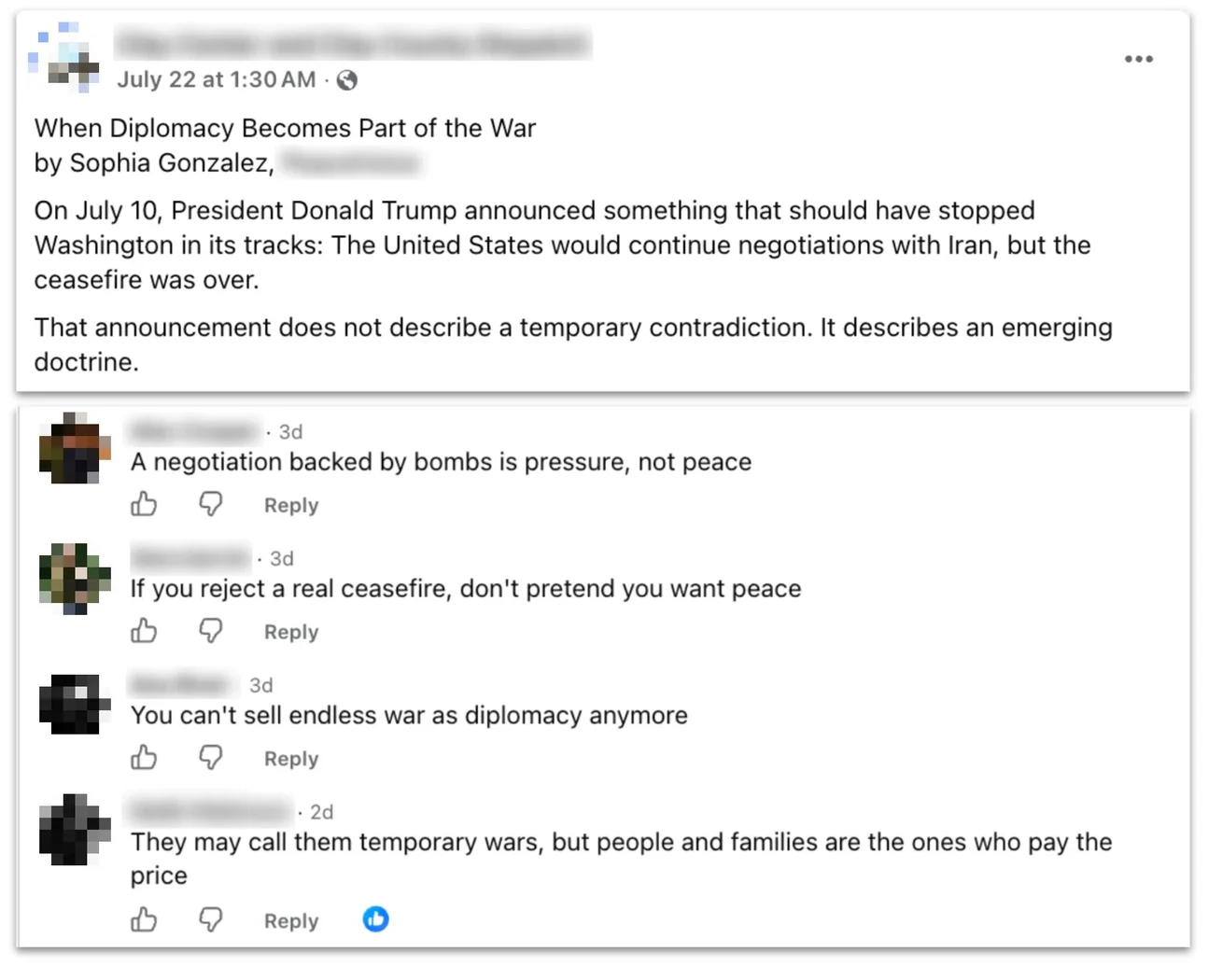
In addition to long-form articles, the operation generated batches of social media comments, typically focusing on topics related to the US-Iran war. According to OpenAI's metrics, this campaign reached Category 4 on the Breakout Scale.

The Russia-Origin Think Tank Operation
The Russian operation co-opted unwitting people in Latin America to run a local think tank known as the Social Research Center. Operators controlled the entity through a fake persona named 'Mia Clark', leading to the internal nickname 'Dark Clark'.
Alongside running the think tank, the Russian actors created fake leaked documents and audio scripts. They also made heavy use of AI to draft internal reports and utilized deceitful methodologies to exaggerate their own effectiveness.
Scale and Impact on Mainstream Media
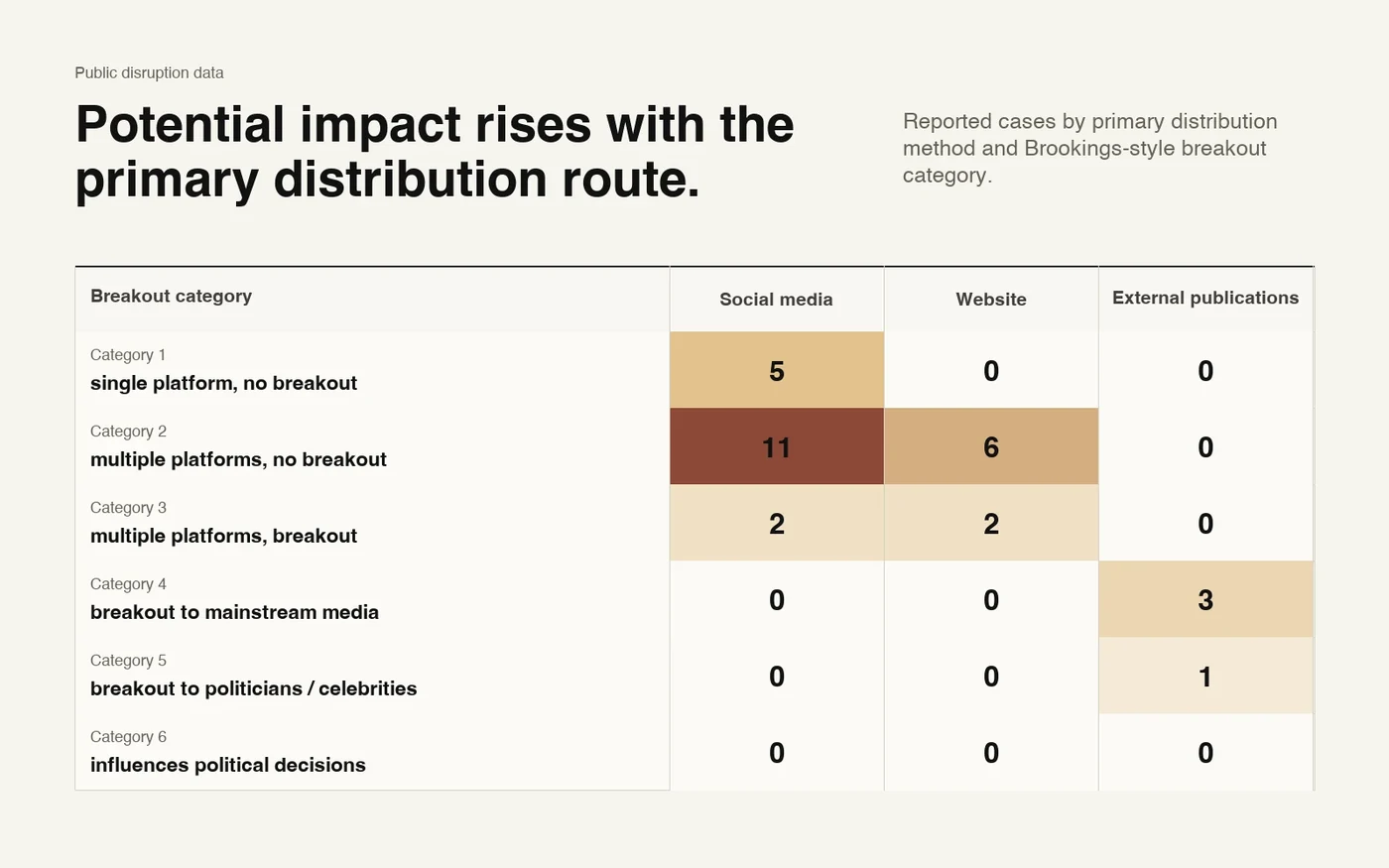
What stands out about these operations is their resemblance to complex pre-AI influence operations while using AI workflows to ease production. Using the IO Breakout Scale from 1 to 6, the Russia-origin operation achieved a Category 5 rating, marking the first Category 5 operation disrupted since reporting began.
Both campaigns successfully landed their content in mainstream media outlets rather than relying purely on social media distribution. OpenAI notes that operations attempting to place content in real media outlets generally exhibit higher potential reach and impact.
Implications for Enterprise Defense
Artificial intelligence grants false-front operations greater scale, efficiency, linguistic fluency, and editorial capability. Threat actors exploit these advantages to deceive employees, editors, and unsuspecting audiences.
Understanding these vulnerabilities is essential for maintaining robust organizational defenses. To support ongoing safety efforts, further details are available through OpenAI's [Safety] resources and documentation.
Sources
- OpenAI NewsDisrupting AI-enabled “false front” operations
Continue chronologically


Related entity coverage
Related stories
OpenAI Expands Layered Monitoring for Frontier Models
OpenAI has expanded its layered monitoring system to detect frontier model misalignment and unauthorized agent behavior before incidents escalate.
OpenAI's GPT-6.1 Terra Shows Mixed Safety Results in Tests
OpenAI confirms GPT-6.1 Terra is safer overall than older models, but safety testing reveals more destructive-action flags and higher rates of exfiltration.

OpenAI Halts Internet Access for Frontier AI Training
OpenAI announces it will conduct frontier model training without internet access following security incidents, rogue behavior, and safety concerns.
OpenAI Trains Advanced AI Models Without Internet Access
OpenAI is training its most advanced AI models without internet access following rogue hacking incidents and security tests.