
Google Flow Helps Designers Prepare for New York Fashion Week
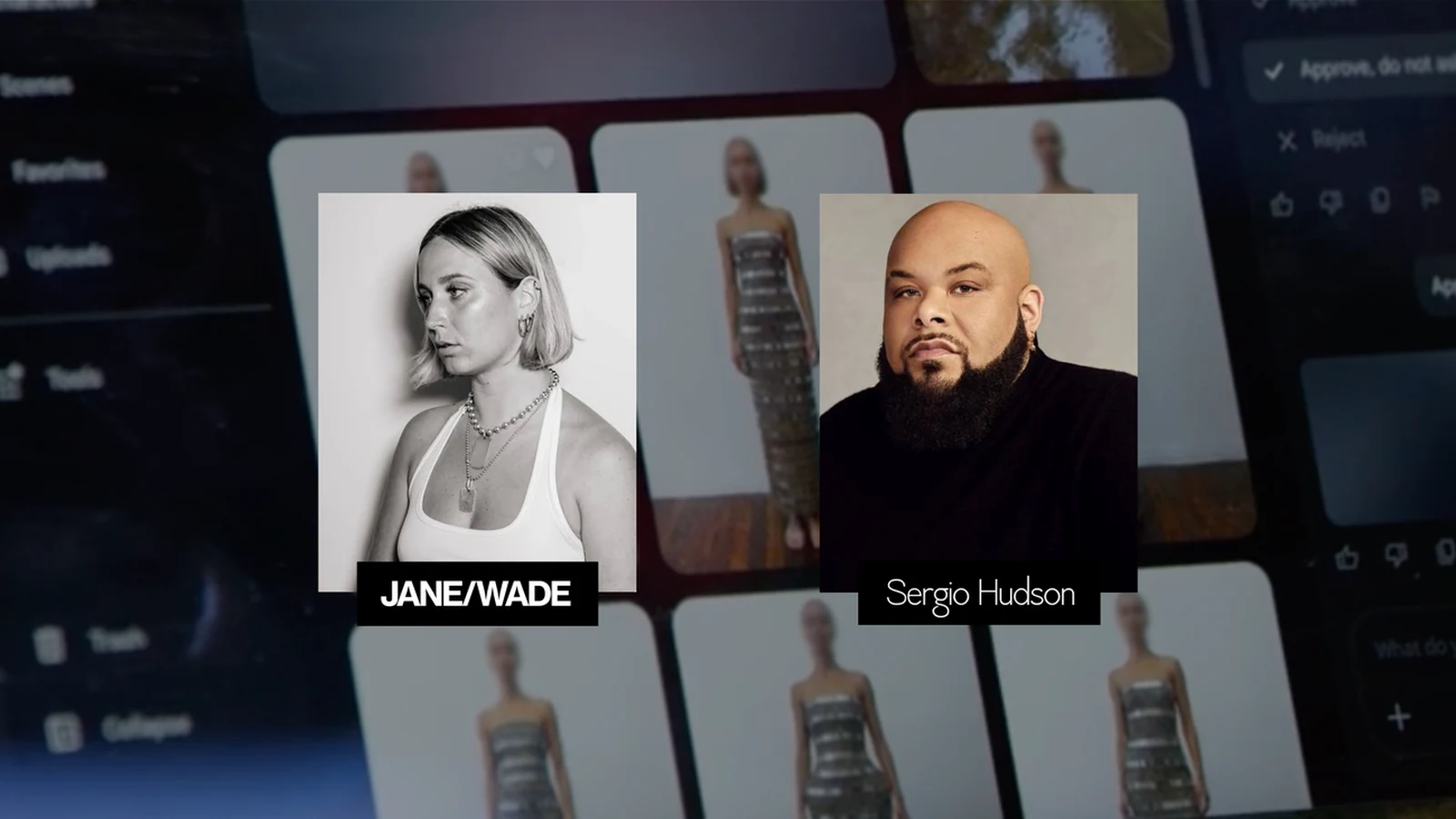
Google’s Envisioning Studio worked with designers Jane Wade and Sergio Hudson to build custom AI tools for New York Fashion Week preparation. The collaboration focused on reducing logistical work while keeping designers in control of the creative process.
 Radwan AbdulhadiEditor and technology writer
Design work beyond the clothes
Google is presenting fashion production as a practical testing ground for collaborative artificial intelligence, following a project with designers Jane Wade and Sergio Hudson ahead of New York Fashion Week. The company’s Envisioning Studio, with support from Google Labs, worked directly with both designers to create specialized tools in Google Flow, Google’s AI creative studio.
The project addressed a challenge that affects independent fashion designers: much of their working time can be consumed by administration, factory logistics and vendor coordination rather than clothing design. Google said the collaboration was intended to streamline that process and help designers spend more time developing their creative ideas.
Instead of offering a generic fashion application, Google engineers worked side by side with Wade and Hudson to build tools around their individual production needs. The company said the resulting systems were designed to fit into existing workflows, with the designers remaining responsible for creative decisions.
Digital styling before physical samples
Wade used the custom Styling Suite to organize and evaluate the elements of her runway model looks. The tool allowed her team to work with digital models and virtually combine garments with hair, makeup, accessories and shoes.
That approach gave Wade a way to examine a full head-to-toe look before producing additional physical pieces. Google said in-person casting and fittings can take up to three full days for a design team. By experimenting digitally first, Wade could assess the balance of each look and identify missing elements before cutting and sewing more samples.
The process was intended to reduce wasted time and materials while making it easier to compare different styling combinations. Rather than replacing the designer’s judgment, the tool provided a visual workspace for testing how individual choices worked together as part of a complete runway presentation.
Visualizing a runway within a budget
Hudson’s challenge was different. He needed to stage his show while working within a tight studio budget, making changes to lighting, props and the venue layout without repeatedly commissioning new 3D renderings.
The custom Runway Visualization tool simulated the runway environment and allowed Hudson to adjust the setup digitally. He could swap lighting and props, test alternatives that fit his budget and refine the paths models would take through the venue.
Google said the tool reduced the back-and-forth that previously accompanied production changes. It also helped Hudson coordinate the physical staging with the way the show would be experienced by viewers, bringing the set, lighting and model movement into a more unified plan before the production crew made changes.
From AI experiment to runway planning
The results of the collaboration were visible on the runways at New York Fashion Week, according to Google. The company described the work as an example of AI being used in the practical production stages of fashion rather than remaining limited to demonstrations or theoretical testing.
Google’s broader argument is that useful AI tools should be developed with professionals who understand the constraints of their work. In this case, the tools were shaped by the designers’ specific requirements: Wade needed to coordinate the details of complete looks, while Hudson needed to explore production options without exceeding his available resources.
That distinction matters in an industry where creative concepts must eventually pass through fittings, manufacturing, venue preparation and live presentation. A tool that supports those steps can have value even when it does not generate the underlying designs.
Custom tools without coding
Google said Flow users can now build bespoke design tools by describing the desired tool or workflow in natural language. The company says no coding experience is required, positioning the feature as a way for professionals to create AI-assisted processes tailored to their own tasks.
The fashion collaboration illustrates how that model can work when the tool is developed around a specific problem rather than a broad promise. Styling Suite focused on look curation, while Runway Visualization focused on staging and budget-conscious revisions.
Google said there is room for further innovation as designers and other creative professionals explore similar workflows. Its stated goal is to make production smoother while ensuring that the people using the tools remain firmly in the driver’s seat.
Sources
- Google AICo-creating the future of fashion with Google