ChatGPT Introduces Locked Chats Feature Backed by PIN Security
OpenAI has begun rolling out a new privacy feature for ChatGPT that allows users to protect sensitive conversations behind a four-digit PIN or device authentication.
 Radwan AbdulhadiEditor and technology writer
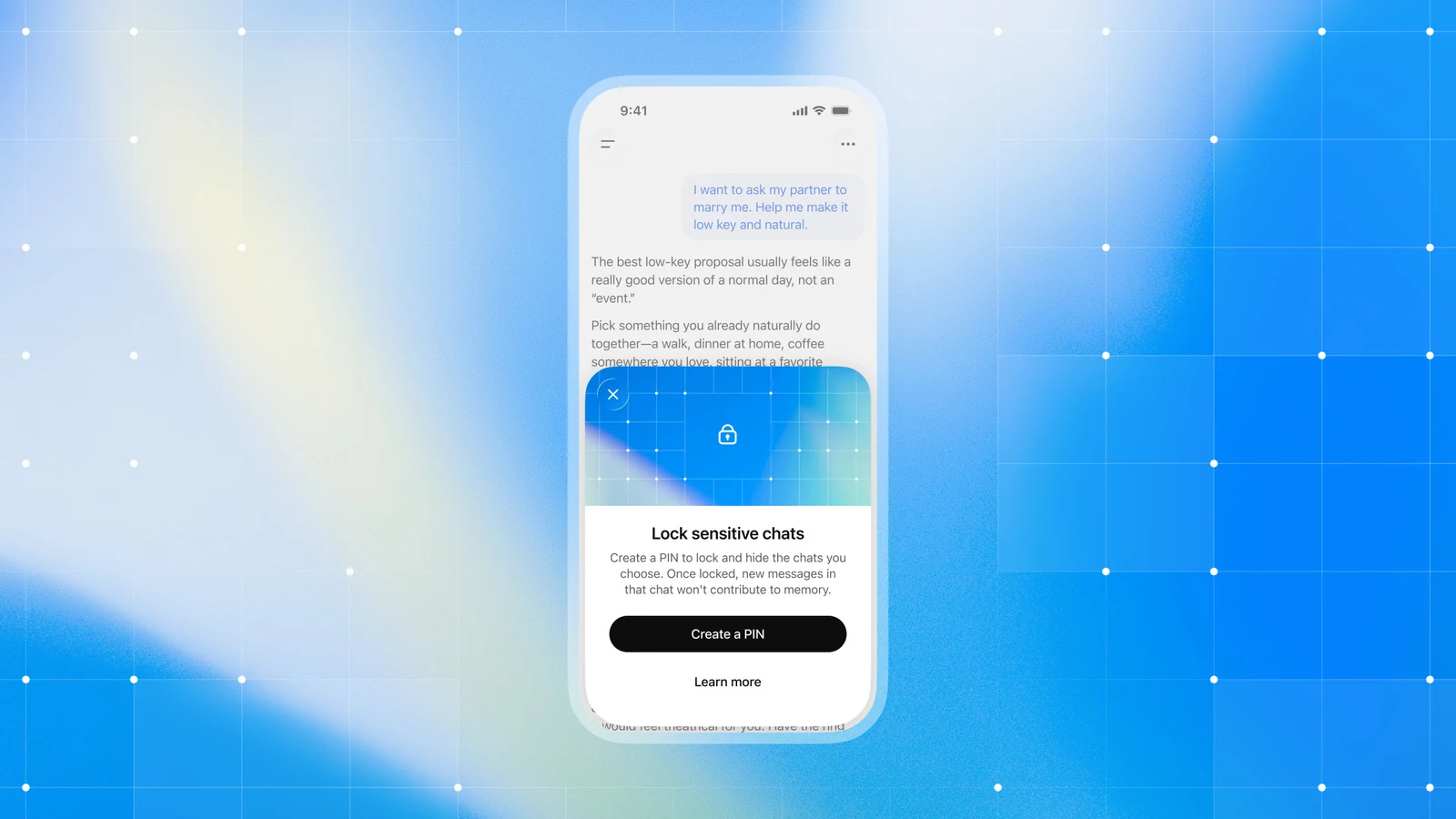
New Privacy Controls for Sensitive Conversations
OpenAI has officially introduced a new feature designed to safeguard private interactions on its AI platform. According to reports from TechCrunch, the company announced that users can now lock specific ChatGPT conversations to keep sensitive chats private when handing their devices to friends, family members, or others who might have access to their screens.
Unlike temporary chat sessions, which operate separately and leave no trace in history, locked chats allow users to return to their private exchanges at any time. When enabled, a locked conversation is hidden from the regular chat history, pinned chats, and conversation search results, relocating instead to a dedicated "Locked Chats" section.
PIN and Biometric Security Options
To open the dedicated section and view the private exchanges, users must input a 4-digit PIN. Additionally, individuals using supported mobile devices on Android or iOS can utilize built-in authentication systems like Face ID or Touch ID to access their protected conversations.
The gradual rollout spans across multiple user tiers. Availability extends to free accounts, alongside subscribers using Go, Plus, Pro, Business, Enterprise, and Edu plans. However, the option is not available on ChatGPT for Healthcare, and it cannot be applied to temporary chats, archived chats, group chats, chats created from a shared link, chats with scheduled tasks, or chats containing meeting recordings.
Memory Handling and Limitations
With the Memory feature enabled, the locked section maintains its own separate memory shared exclusively across conversations within that specific space. New messages sent after locking a conversation can update that isolated memory, but they do not leak into or update regular user memory.
Detailed insights published by Engadget note that OpenAI envisions the feature primarily as a preventive measure against prying eyes in public spaces or when sharing a device. Details regarding the capability are outlined further on a newly published support page.

Encryption and Data Retention Realities
OpenAI explicitly emphasizes that locked chats do not constitute end-to-end encryption or establish a separate encrypted vault. Furthermore, the feature does not alter model training settings, change how long OpenAI retains private conversations, remove information already remembered by ChatGPT prior to locking, or skirt any legal obligations.
Users must also exercise caution regarding account administration. If an account PIN requires a reset for any reason, the action will permanently delete all locked chats alongside any files uploaded to that project space. OpenAI explicitly warns that this action cannot be undone and that support teams cannot recover the deleted data.
Sources
- EngadgetChatGPT now lets you lock sensitive chats behind a PIN
- TechCrunchChatGPT now lets you lock your chats
Continue chronologically


Related entity coverage
Related stories
OpenAI Launches Visual Ads for ChatGPT Image Results
OpenAI is rolling out visual display ads alongside ChatGPT image generation results in the U.S. as part of its ad-supported tiers.

OpenAI Details the Evolution of Its AI Assistant, Dots
OpenAI executive Alexander Embiricos explains how the company evolved its coding tools into dots, its always-on AI personal assistant.
Eight US States Sue OpenAI Over Child Safety Concerns
Attorneys General from eight US states have filed coordinated lawsuits against OpenAI, alleging that the company's AI products endanger children.
OpenAI Introduces Visual Ad Format for ChatGPT
OpenAI is expanding advertisements in ChatGPT with a new visual format showing sponsored products and services when generating images.