AWS Launches Open-Source Physical AI Toolchain for Robotics
Amazon Web Services has introduced an open-source development workflow that integrates AWS services with NVIDIA's software stack to help roboticists build and deploy AI-powered systems.
 Radwan AbdulhadiEditor and technology writer
Bridging Development and Real-World Deployment
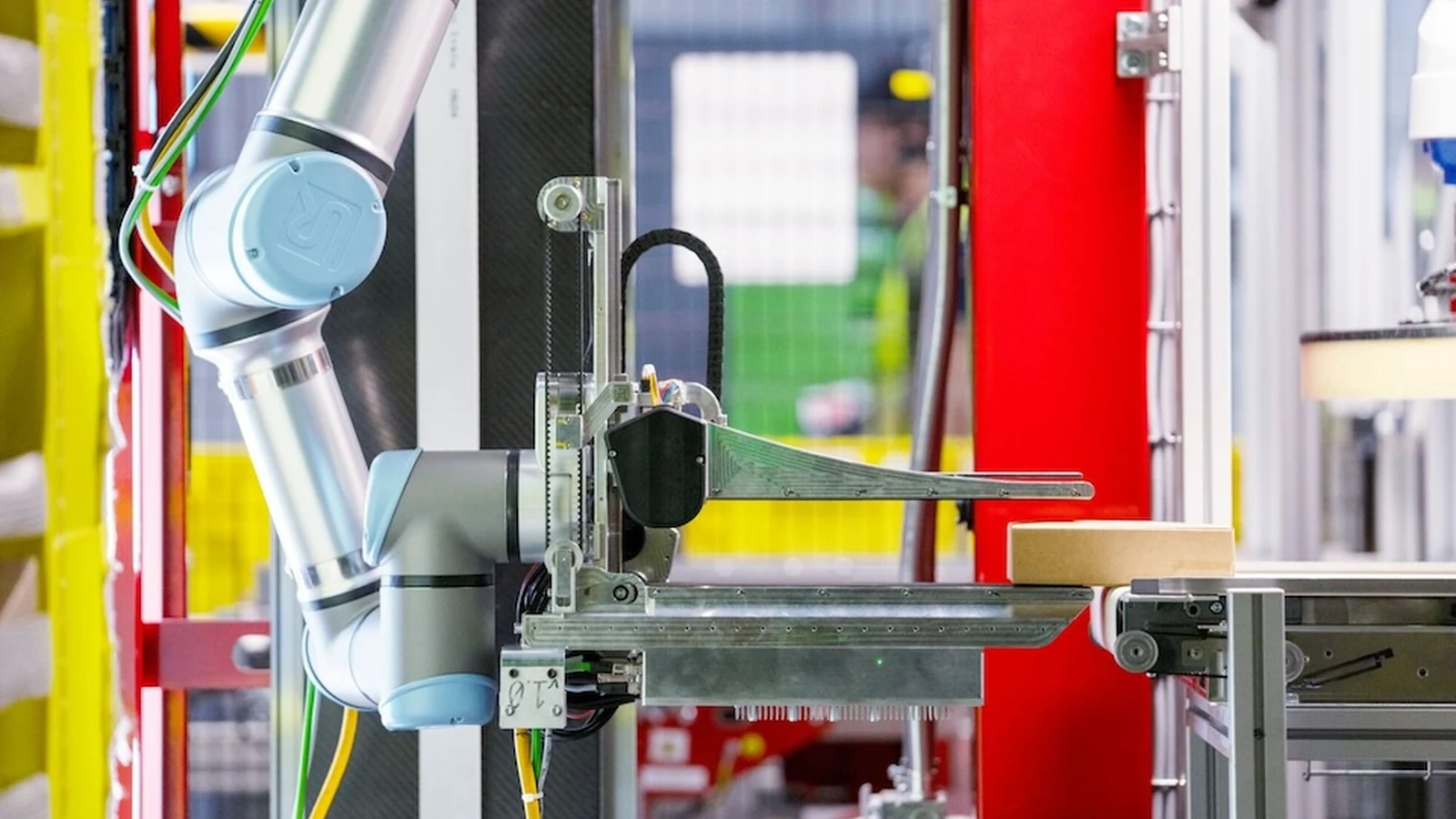
Amazon Web Services (AWS) has launched an open-source development framework aimed at helping roboticists transition smoothly from data collection to training, simulation, validation, and deployment. The newly released Physical AI Toolchain combines various AWS capabilities with NVIDIA’s software stack to establish a cohesive workflow. According to the company, the primary objective is to resolve one of the most persistent hurdles in robotics development: connecting disparate components to turn a trained model into a reliable real-world system.
Sri Elaprolu, director of Frontier AI Science and Engineering at AWS, explained that the platform functions as an easy-to-use solution designed to alleviate infrastructure burdens. By minimizing these technical overheads, engineering teams can direct their focus squarely onto solving their core robotics challenges.
Workflow Components and Synthetic Data Generation
The development framework is structured around five essential stages of the AI lifecycle: synthetic data generation, model training, simulation and validation, edge deployment, and continuous improvement. Developers can collect task demonstrations, generate realistic synthetic scenarios, train or fine-tune models, and thoroughly evaluate them in virtual environments before deploying them to physical machinery.
Elaprolu highlighted that securing sufficient training data remains a major bottleneck, contrasting robotics with large language models that benefit from vast internet datasets. To bridge this gap, the toolchain leverages synthetic data generation to mimic real-world conditions. For model training, AWS utilizes Amazon SageMaker, while model distribution to edge hardware is managed through AWS IoT Greengrass. Meanwhile, NVIDIA’s contributions to the ecosystem include Isaac Sim, Isaac Lab, Isaac GR00T, and Cosmos.
Context Within AWS's Robotics History
Industry observers have noted how this new offering fits into the broader AWS technology lineup. Elaprolu clarified that the platform is not a direct substitute for RoboMaker, which was shut in 2025. Instead, RoboMaker served as a single component of past architectures, whereas the new framework consolidates a much wider array of modern development technologies.
The toolchain is designed to be entirely hardware-neutral, allowing developers to apply the framework across varied mechanical designs and hardware components without being restricted to specific robot configurations.
Real-World Scaling and Operational Feedback Loops
The engineering insights embedded within the framework draw partially from Amazon's own large-scale automation efforts, which currently incorporate more than 1 million robots. However, AWS recognizes that tightly managed fulfillment centers do not encompass every environment where physical AI must operate.
To illustrate different operating conditions, Elaprolu pointed to companies deploying humanoids in convenience stores, where variable layouts demand rapid responses and higher precision. As commercial deployments expand, the toolchain facilitates a continuous feedback loop. Local performance data gathered in the field can be routed back to the cloud to retrain and iteratively refine the robot's operating logic.
Specialized Sensing and Diverse Applications
Advanced applications of physical AI frequently demand specialized capabilities, such as tactile sensing for multi-finger dexterity. AWS has collaborated with external developers to handle complex gripping and manipulation tasks, echoing internal advancements like Amazon's Vulcan robot, which recently earned recognition as the 2026 Robot of the Year for its touch-sensitive picking and stowing functions.
Beyond warehouses, the framework extends to varied industrial sectors. For instance, developers are utilizing cloud-based AWS training infrastructure to power autonomous construction robots operating heavy machinery in real-world job sites.
Sources
- The Robot ReportAWS launches open-source Physical AI Toolchain for robotics
Continue chronologically


Related entity coverage
Related stories
NVIDIA Expands Agent Toolkit to Ground Enterprise AI
NVIDIA expands its open-source Agent Toolkit with the Agent Knowledge Foundation, integrating company data to build trustworthy enterprise agents.
Amazon Launches TorchNeuron to Challenge Nvidia in AI
Amazon Web Services has released TorchNeuron, a new development tool designed to help AI startups run applications on custom Trainium chips.
Amazon SageMaker AI Releases 13 Inference Capabilities in 2026
Amazon SageMaker AI has expanded its infrastructure offerings with 13 new launches, focusing on managed endpoints and HyperPod inference efficiency.
Amazon Closes AI Creator Account After Ordering DGX Sparks
An AI creator says Amazon closed his account after he tried to purchase seven Nvidia DGX Spark mini-PCs, sparking discussion among tech leaders.