Arm AGI CPU Delivers Nearly 2X Rack Performance Over AMD EPYC
Arm has released performance figures for its data center processor, claiming nearly double the rack performance of rival hardware in agentic AI tasks.
 Radwan AbdulhadiEditor and technology writer
Agentic AI CPU Evaluation
Arm recently announced that its data center processor designed for agentic AI workloads delivers roughly twice the performance per rack compared to competing hardware, specifically citing the AMD EPYC 9755. This comparison is calculated from chip performance and server-power assumptions measured across seven distinct workloads.
The performance claims stem from modeled rack results aligned with a newly established evaluation methodology. This framework was developed with support from prominent technology organizations, including Fujitsu, Meta, and OpenAI, to better gauge CPU performance as artificial intelligence architectures evolve.
The Shifting Role of CPUs in AI Workflows
Agentic AI is actively transforming the role of central processing units in modern data centers by demanding support for complex, multi-step workflows. Beyond traditional inference handled by specialized accelerators, AI agents must execute tools, retrieve data, and maintain state within isolated environments to operate effectively.
The CPU is responsible for handling these surrounding workloads, managing database requests, serving APIs, and preparing data while coordinating tasks for accelerators. As these operations scale, evaluating processors based solely on concurrent agent capacity is no longer sufficient; the overall volume of useful, sustained work becomes paramount.
Evaluation Methodology and Testing Framework
To address the need for repeatable measurements, Arm's proposed methodology relies on representative agent workloads and validation against end-to-end task outcomes. Because active agents can select different commands or execution paths during a run, the framework involves replaying recorded actions to isolate CPU performance from external variability.
Arm tested seven distinct workloads—spanning tooling, agentic workflows, reasoning and planning, and sandbox-creation overhead—on both its own processor and AMD's competing hardware. The specific configuration details and benchmarking tools are structured to assess how efficiently a system sustains these operations under load.
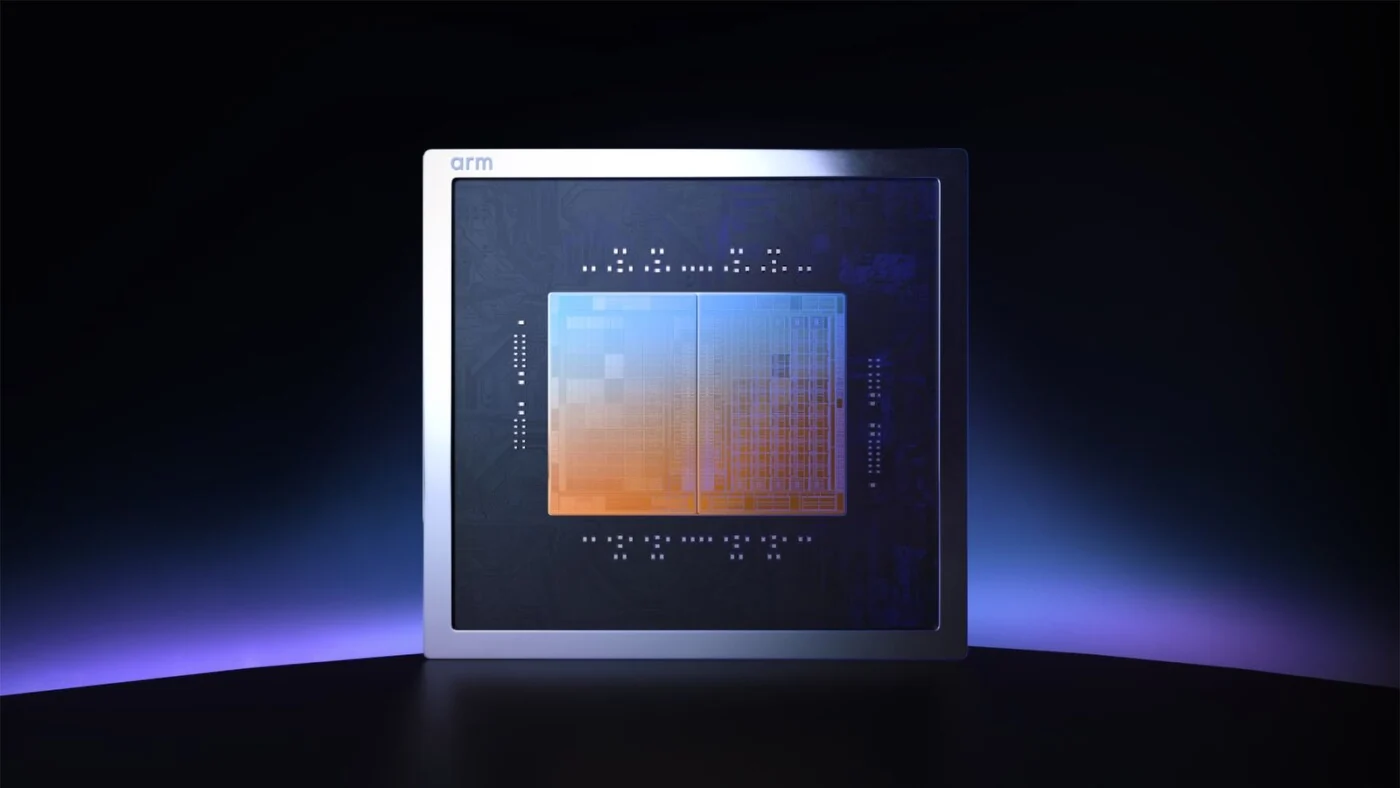
Chip-Level and Rack-Level Comparisons
In chip-level evaluations, Arm's processor won the majority of head-to-head comparisons across five of the seven tests, securing a 20% average per-chip advantage over the baseline AMD platform. Performance margins varied by workload, showing leads in terminal and software-engineering benchmarks alongside variations in database throughput.
When scaling these findings to the rack level, Arm's modeled performance reached approximately 1.99 times that of AMD's setup across all seven workloads. This larger gain is driven largely by differences in rated server-power estimates, which allow data center operators to fit a higher density of servers into a standard rack power budget.
Independent Verification and Analysis
To ensure transparency and validity, Signal65 conducted an independent analysis commissioned by Arm. The review team remotely observed test executions, examined original log files, and rebuilt calculations using their own code, successfully reproducing all seven reported results within a tight margin.
While the analysis demonstrates significant modeled advantages under specific parameters, industry observers note that real-world deployment outcomes can depend heavily on workload memory demands, software environments, and exact operational configurations chosen by data center operators.
Sources
- Tom's HardwareArm says its AGI CPU delivers nearly 2X the performance per rack of AMD EPYC 9755 in new agentic AI CPU tests
Continue chronologically


Related entity coverage
Related stories
OpenAI Deploys Jalapeño ASICs with AMD EPYC Turin Hosts
OpenAI's hardware leadership explains why AMD EPYC Turin CPUs were chosen over Nvidia's Vera for the rack-scale deployment of Jalapeño ASICs.
Testing Major AI Agents: Performance, Pricing, and Features
An evaluation of major personal AI agents highlights their capabilities, varying monthly prices, and performance across daily tasks.

1Password for Agents Integrates With Major AI Platforms
1Password introduces a new platform for AI agents, allowing models like Muse from Meta and OpenAI's Dots to complete tasks securely without exposing credentials.

Websites Move to Block Autonomous AI Agents
Major websites, airlines, and financial institutions are blocking AI agents from OpenAI, Meta, and Google, undermining their utility.