ADI Examines the Race to Make AI Physical in New Report
A new whitepaper examines the technical hurdles and opportunities involved in transitioning physical AI from digital lab environments into real-world production machinery.
 Radwan AbdulhadiEditor and technology writer
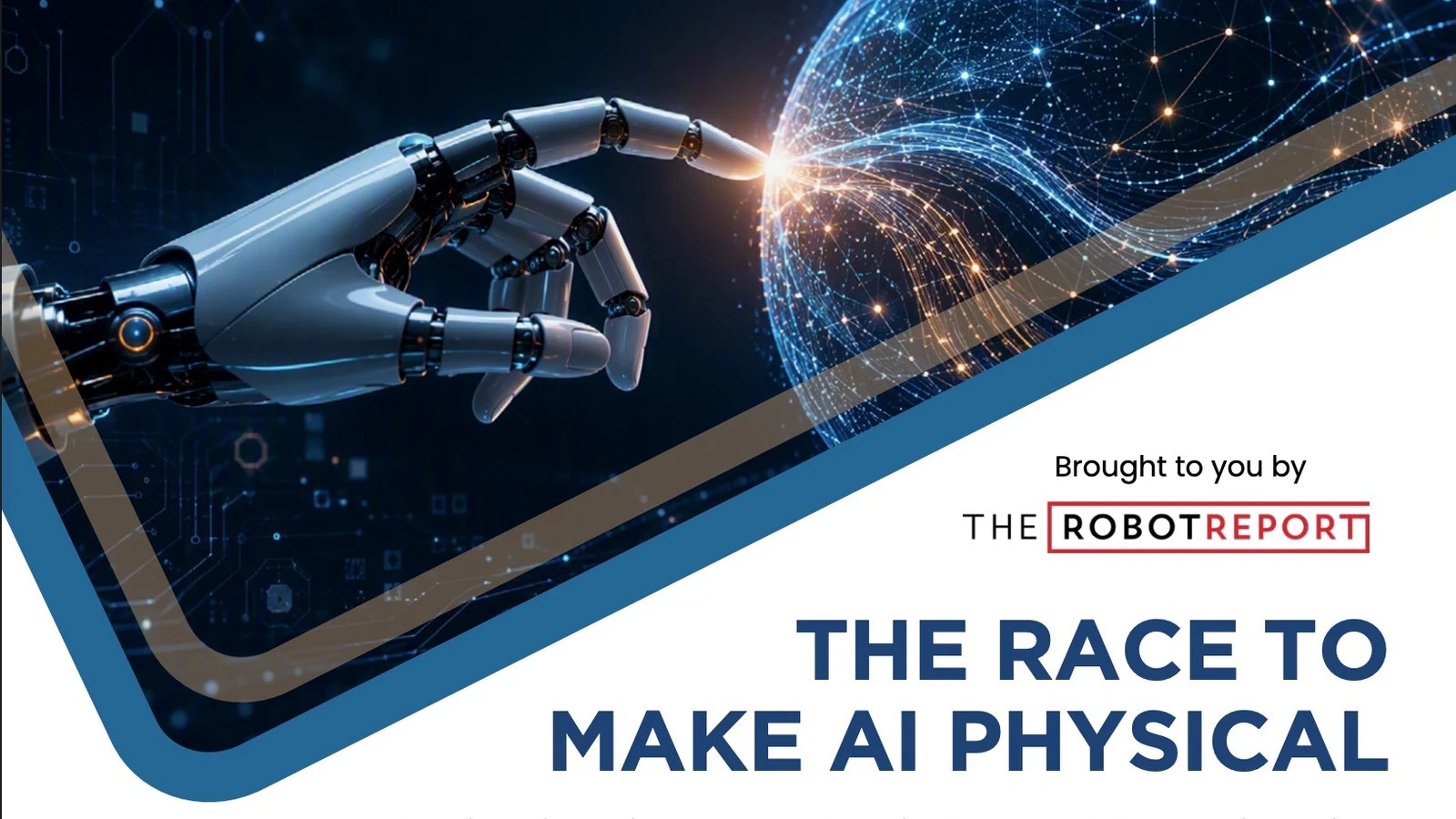
Moving Intelligence From Digital Environments Into Physical Machines
Artificial intelligence has achieved significant success in understanding language, images, and code. However, according to Analog Devices Inc. (ADI), the next major challenge is considerably harder: understanding reality. This transition involves moving intelligence out of digital environments and into physical machines that must actively sense, decide, and act in the world.
Unlike purely software-based applications, these physical systems face unique hurdles, including imperfect measurements, timing constraints, changing conditions, and the real-world consequences of their actions, the company stated in its new report. Achieving success in this space will require more than just improvements in model performance; it demands coordinated advancements across sensing, simulation, computing, connectivity, and control.
Redefining Machine Judgment Below the Application Layer
In many operational scenarios, the core technologies determining whether a system succeeds reside beneath the application layer itself. Traditional systems often rely on rigid rules, such as a machine shutting down only when vibration crosses a preset limit.
In contrast, more advanced physical AI can monitor multiple variables simultaneously—including vibration, temperature, current, and motor behavior. By recognizing the specific signature of bearing wear and adjusting parameters before a failure occurs, these systems begin to exhibit a form of machine judgment.
Growing Interest in Manufacturing and Intelligent Automation
This operational distinction helps explain why physical AI has rapidly emerged as one of the most closely watched areas in technology for manufacturing. These modern systems do much more than simply analyze information; they actively interact with their surrounding environment, adapting to shifting conditions and responding to complex scenarios that cannot be fully predicted in advance.
The next phase of physical and embodied AI is not just about producing better computational answers. According to ADI, it is fundamentally about predicting and executing useful actions when operating under conditions of imperfect information.
Industry Insights and Whitepaper Access
Founded in 1965 and based in Wilmington, Massachusetts, ADI combines analog, digital, AI, and software technologies to bridge the physical and digital worlds, enabling breakthroughs at the intelligent edge. The company notes that its semiconductors help drive major advancements across automation, robotics, mobility, healthcare, energy, and data centers.
Readers interested in exploring the complete technical analysis can access the document by reviewing the full whitepaper, available via the link provided at The Race to Make AI Physical.
Upcoming Industry Participation at RoboBusiness
As part of its ongoing engagement with the broader robotics community, ADI is participating in the upcoming Robotics Startup Boot Camp Part 2. This session will take place at RoboBusiness, where various industry leaders are scheduled to gather and discuss the key opportunities and challenges of working together in the sector.
Professionals interested in participating in the upcoming event can secure their spot by choosing to Register now to attend.
Sources
- The Robot ReportADI explains the race to make AI physical
Continue chronologically

Related stories
Eli Lilly and Purdue to Share HRI Field Learnings at RoboBusiness
Experts from Eli Lilly and Purdue University will present early findings on human-robot interaction and worker perceptions on the manufacturing floor at RoboBusiness.
Will 'Boring' Robots Win in the Real World?
Explore why physical AI and robotic form factors must follow specific industrial workflows rather than relying on viral social media demonstrations.
F-Prime Capital to Present Robotics Investment Report at RoboBusiness
F-Prime Capital's Sanjay Aggarwal and Betsy Mulé will unveil their latest State of Robotics Investments report at the upcoming RoboBusiness 2026 event.

Why Dexterity Is Physical AI's Real Bottleneck
Explore why achieving true robotic reliability and system dexterity is physical AI's greatest challenge for real-world autonomous deployment.