
OpenAI argues execution, not just insight, drives progress
OpenAI has published a new essay arguing that the bottleneck for human progress is no longer the generation of ideas, but the capacity to execute them. The piece posits that advanced AI will serve as a critical complement to human genius by handling the monotonous work required to bring innovations to life.
 Radwan AbdulhadiEditor and technology writer

The Mismatch Between Insight and Execution
Humanity has developed a coherent understanding of the universe from its earliest moments, yet no human has traveled beyond the Moon. This disparity highlights a fundamental mismatch: our minds venture far beyond the reach of our hands. OpenAI has released a new essay titled "The eternal complement," which explores how this gap between imagination and execution could shape the next economy. The article is the first in a series on the next economy, part of a new platform to host independent voices exploring an AGI future. Further details are available from OpenAI News in the original source material.
The essay argues that this mismatch may indicate that our minds have outrun our execution capacity. While we have no shortage of dreams, we lack the manpower to realize them. The authors suggest that the deepest truths might be fathomed from a single planet, but only if we can efficiently bridge the gap between theoretical knowledge and physical implementation.

The Rising Cost of Scientific Progress
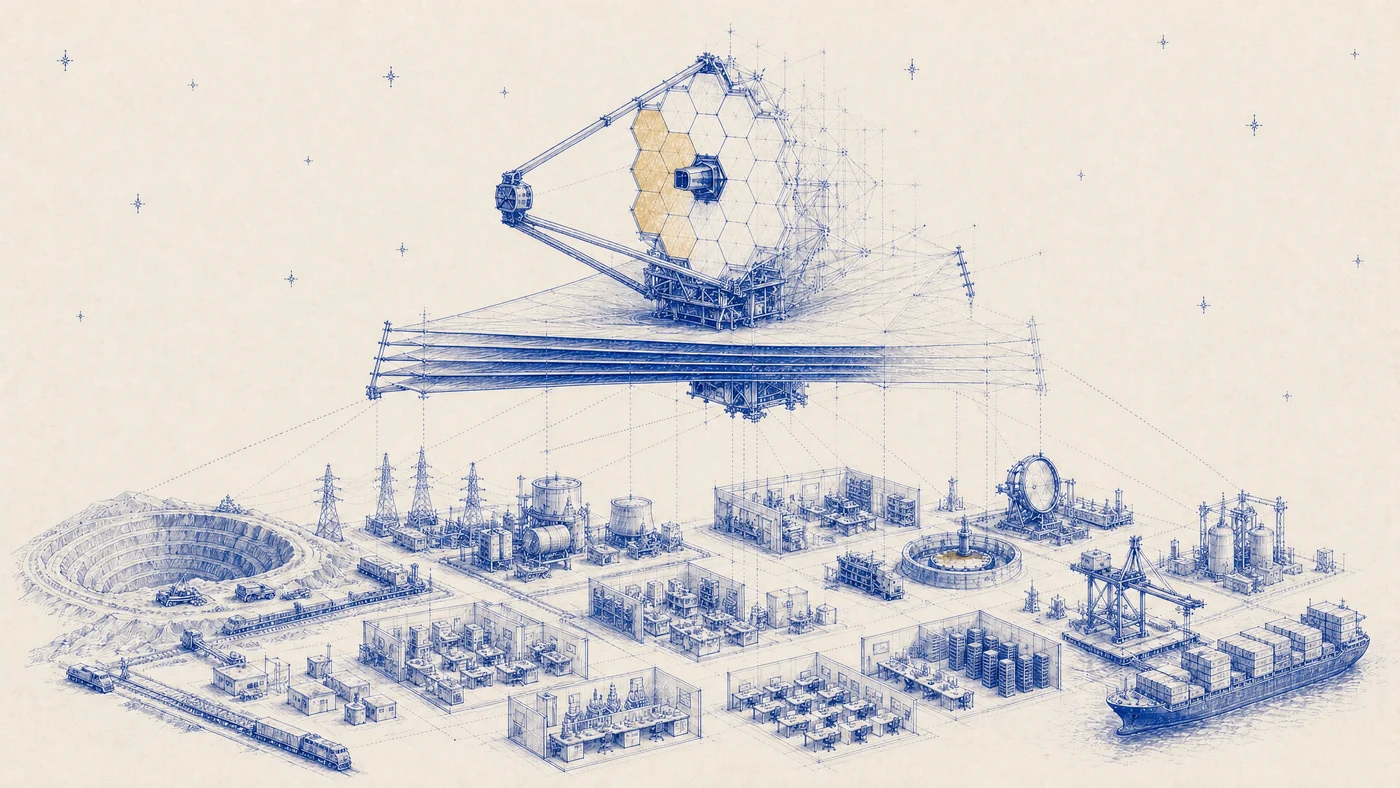
The complexity of modern scientific endeavors has increased dramatically. Galileo’s telescope required a few dozen hands, whereas the James Webb Space Telescope, a ten-billion-dollar observatory, was built by three hundred organizations across fourteen countries. This shift illustrates that it takes more than brighter minds to see farther; it requires a larger bureaucracy and a global economy behind it.
Research by Nick Bloom and his coauthors indicates that sustaining Moore’s law now requires more than eighteen times as many researchers as in the early 1970s. Furthermore, the technician workforce is growing twice as fast as the scientists, and the use of specialized equipment in science has doubled over four decades. These statistics point to a rising cost for further progress, where the economy advances only because a vast increase in research enterprise compensates for declining productivity per unit.
Institutional Intelligence as a Complement
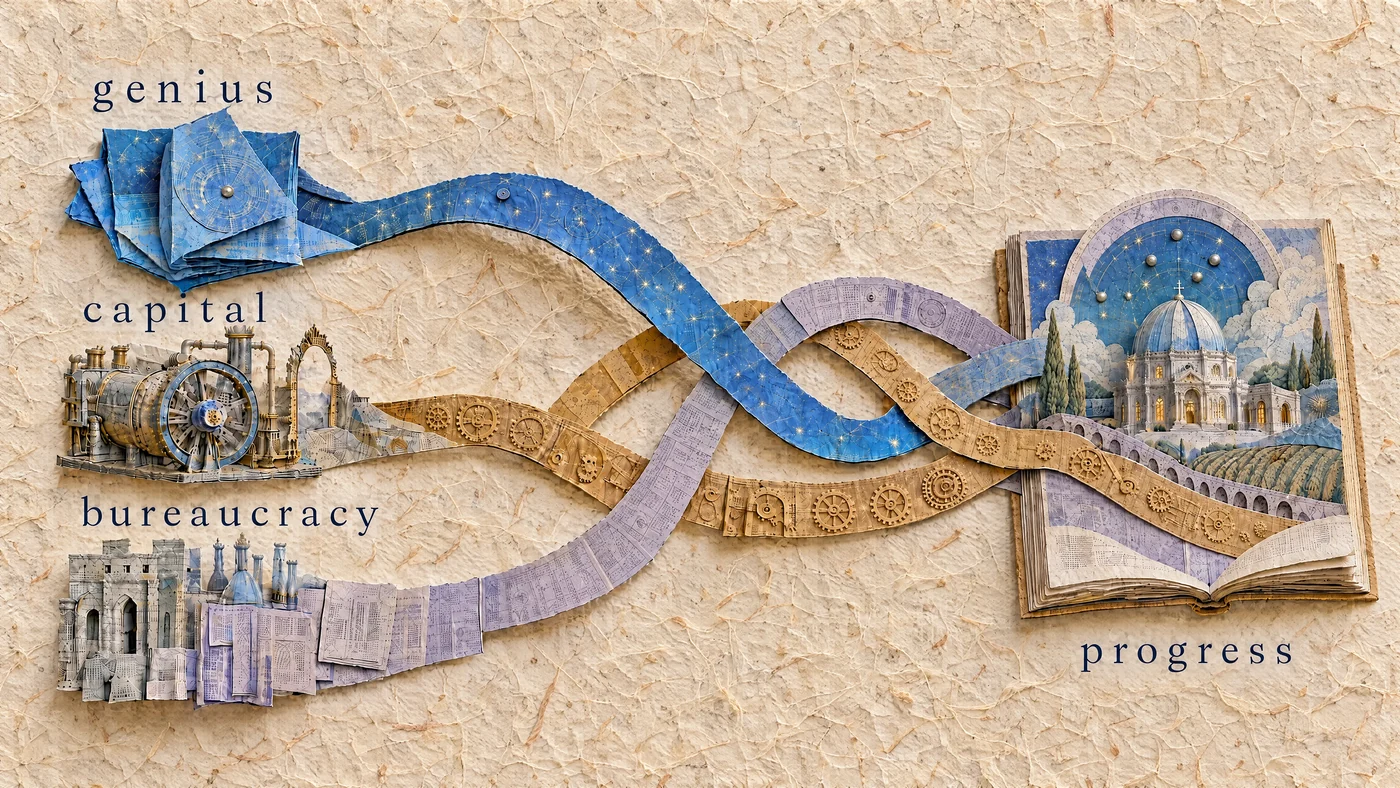
Economists describe two inputs as complements when an increase in one raises the value of the other. The essay posits that frontier intelligence and the capacity to realize its ideas are complements. A brilliant hypothesis requires evidence, instruments, and the means to carry it out. The authors introduce the concept of "institutional intelligence," defined as the uncelebrated intelligence of execution that involves laws, bureaucracy, funding mechanisms, and supply chains.
A great idea must survive a long chain of correct local actions across these institutions. While genius designs the monument, institutions lay the stone. Progress depends on everyone, from the welder of a screw in a telescope to the insurer for a school that educated a nurse who treated an astronomer. This humming economy is often ignored in narratives of great feats, but it is absolutely crucial.
AI as a Democratizer of Execution
Advanced AI is already making execution less scarce by writing code, searching unfamiliar literature, and turning sketches into working prototypes. This capability allows ideas that once required a whole organization to be pursued by a single ambitious person. The essay suggests that the intelligence age begins by complementing human ingenuity, giving more people the support staff to build their own ideas.
This shift could lead to a profusion of idiosyncratic projects, with more creative work produced outside traditional gatekeeping institutions. The scarce input may move from execution towards taste—the ability to decide what is worth making and which question is worth asking. This change could allow for a broader range of creative and scientific pursuits to be realized.
Future Challenges in an Idea-Rich World
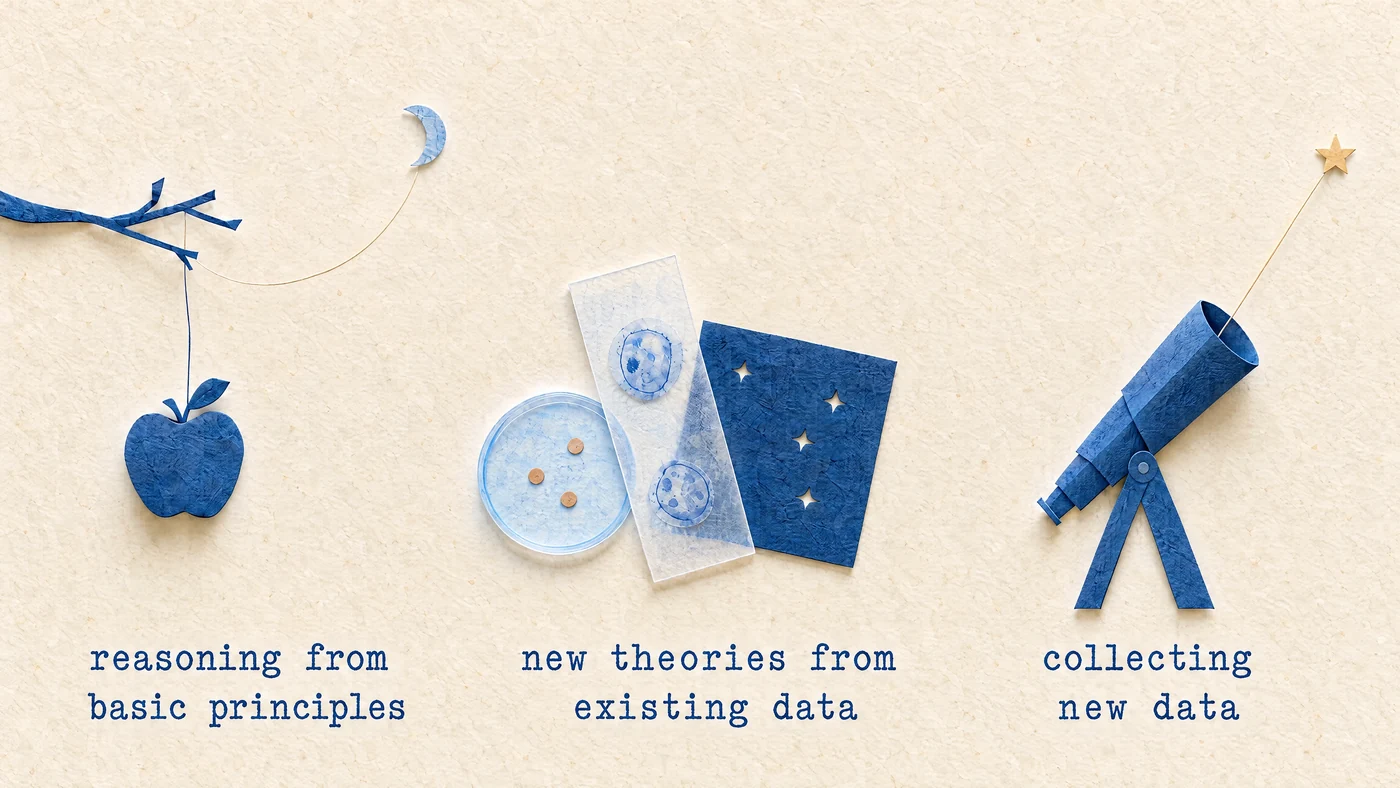
As AI becomes capable of generating brilliant new insights on its own, it may supply agendas as well as labor. Rather than implementing one human research program, AI could design thousands of its own. This explosion of ideas may outpace the supporting infrastructure, leading to a state where we become more execution-starved than ever before.
The essay concludes that we do not yet know whether the complements needed to make productive use of new insights will grow, shrink, or remain stable. However, the current trajectory suggests that AI will channel its capabilities toward both brilliant insight and institutional competence, with the preponderance of its time likely spent on the latter to support the former.
Sources
- OpenAI NewsThe eternal complement