Terminal X GPT-6.1 Integration Matches Senior Investor Judgment
Terminal X has integrated OpenAI's models into its Capital Memory operating system, achieving high alignment with senior human reviewers during investment workflows.
 Radwan AbdulhadiEditor and technology writer
Addressing Investment Memory Debt
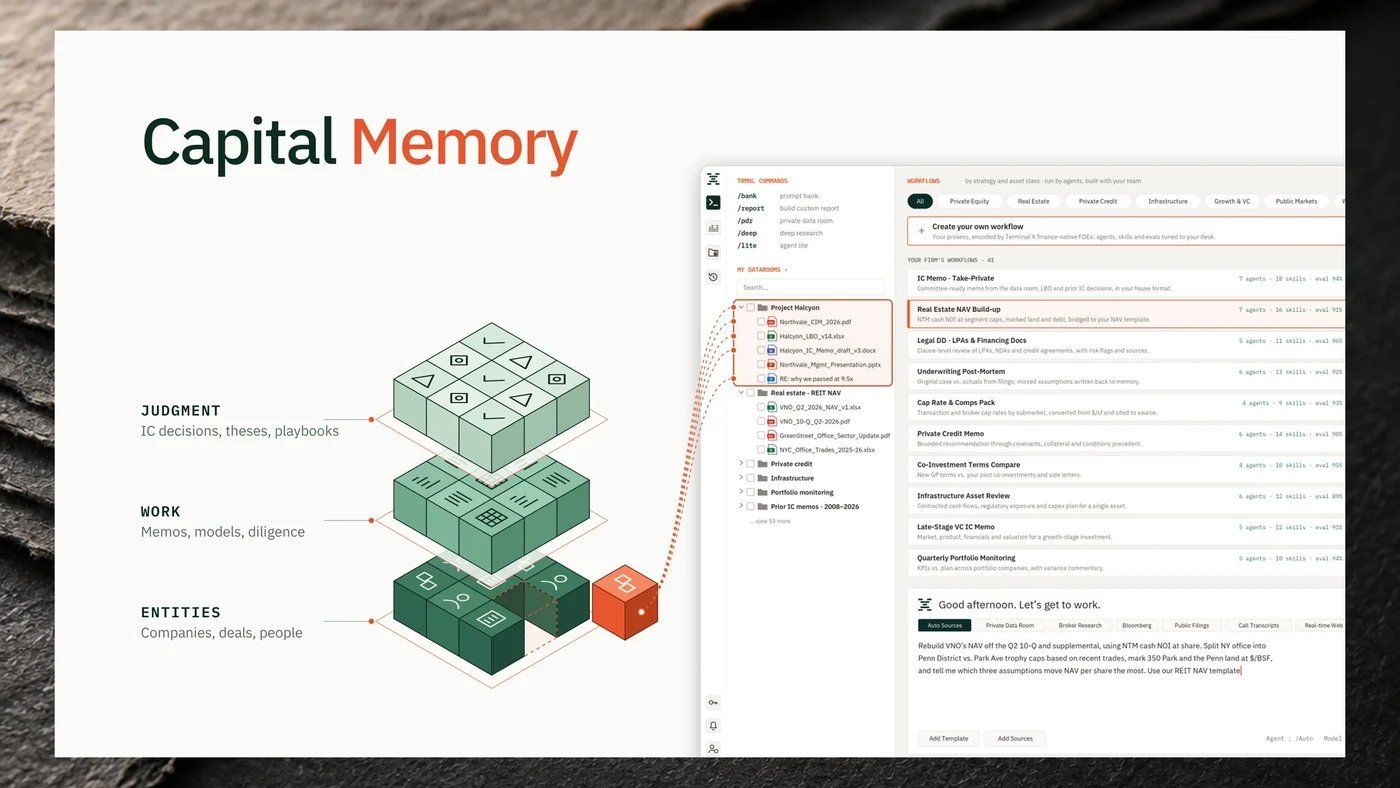
An investment firm’s edge is built deal by deal, but the reasoning behind each decision usually resides with a few senior investors. When personnel leave, firms face what Terminal X describes as memory debt: retaining documents while losing the underlying reasoning. To address this, the company developed its Capital Memory operating system. Further details are available from OpenAI News in the original source material.
The platform utilizes forward-deployed engineers—former finance and investment professionals from JPMorgan and Blackstone—to collaborate directly with customer investment teams. Together, they design agentic architecture that encodes how a firm invests into proprietary agents deployed on-premise or within the firm's private cloud environment.
Encoding Investor Reasoning With OpenAI Models
OpenAI models power the reasoning engine inside these agents. Specifically, GPT-6.1 Sol and GPT-6 Luna handle distinct layers of the investment workflow. Engineers spend weeks onsite reverse-engineering trusted memos and capturing unwritten processes, such as how credit desks screen borrowers or which sources co-investment teams consult.
Once captured, these workflows are organized across hundreds of agents customized by asset class and investment stage. GPT-6.1 Sol handles complex steps requiring deep context windows, such as synthesizing investment theses and assessing mandate fit. Meanwhile, GPT-6 Luna manages high-volume steps where token efficiency is paramount.
Evaluating Outputs With a 54-Criterion Rubric
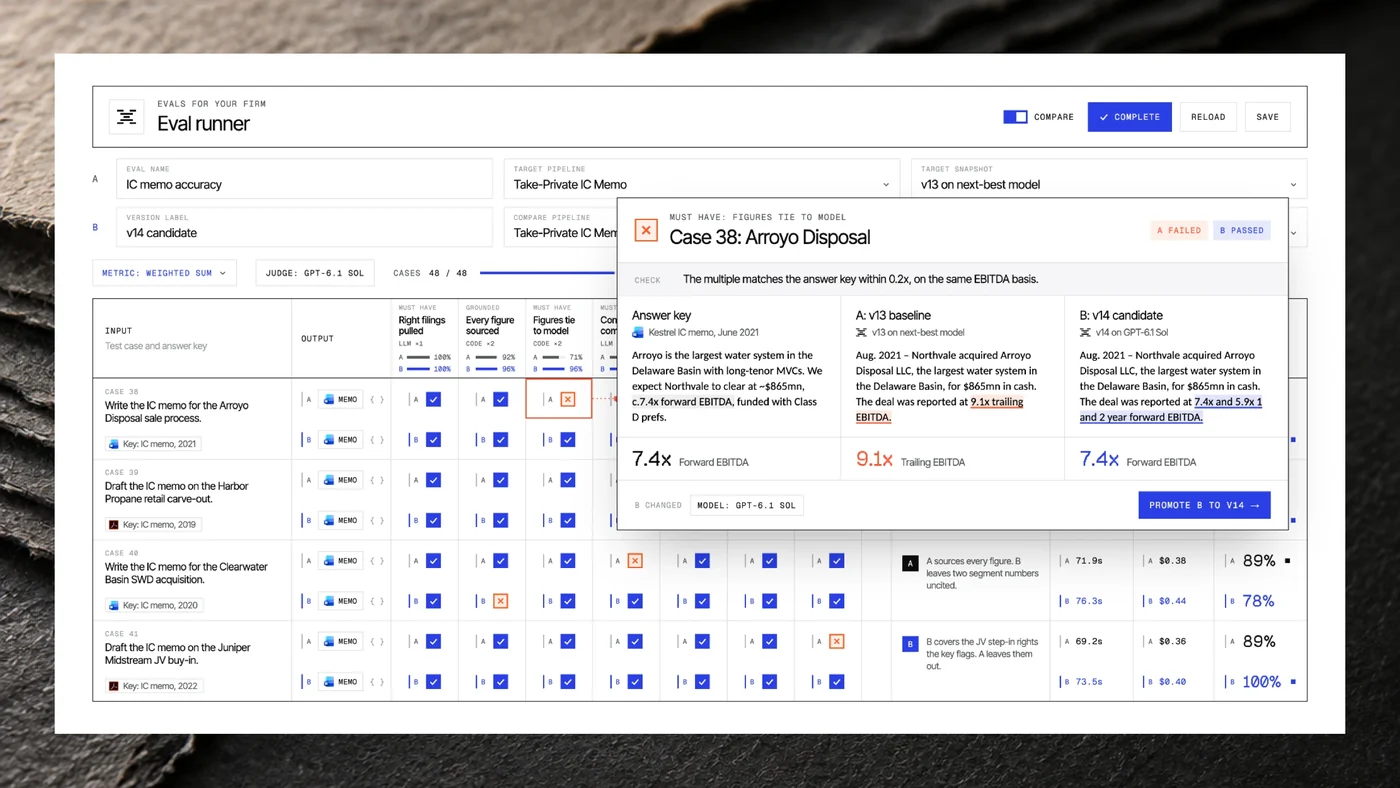
To verify agent accuracy against firm standards, Terminal X created an Eval Agent. This orchestrated workflow reads agent outputs similarly to a vice president reviewing an analyst's work, scoring each output against a 54-criterion rubric that inspects numbers, comparables, consensus figures, and underlying narratives.
Ken Lee, co-founder and CTO of Terminal X, notes that every evaluated answer and subsequent human correction teaches the system more about the firm's operational standards. Over time, the platform adapts to mirror the internal decision-making process of the client's team.
Performance Benchmarks and Cost Efficiency
According to evaluation results across 500 scored judgments, the Eval Agent running on GPT-6.1 Sol agreed with senior human reviewers 88.6% of the time, compared to 86.4% for the next-best model. This represents an improvement of 220 basis points in decision alignment.
Furthermore, the system caught approximately 25% more style drifts—instances where recommendations diverged from a fund's core mandate—than competing models. In addition to higher detection rates, GPT-6.1 Sol executed identical workflows at roughly 30% lower cost per query.
Operational Impact and Future Roadmap
By deploying GPT-6.1 Sol and GPT-6 Luna, Terminal X has established 1,700 firm Memories and processed over one million custom workflows. Customers have reported substantial financial benefits, including a private equity firm that documented $2.4 million in annualized savings resulting from automated due diligence and investment memo processes.
Looking ahead, Terminal X plans to extend firm Memories from general desks to individual professionals. This expansion aims to capture the specific standards of individual investment team members as they practice them daily, furthering the company's goal to turn institutional judgment into measurable, reusable data.
Sources
- OpenAI NewsTerminal X matches senior investor judgment 88.6% with GPT-6.1
Continue chronologically

Related entity coverage
Related stories
OpenAI's GPT-6.1 Terra Shows Mixed Safety Results in Tests
OpenAI confirms GPT-6.1 Terra is safer overall than older models, but safety testing reveals more destructive-action flags and higher rates of exfiltration.

CodeRabbit Adopts GPT-6.1 Sol for Code Security
CodeRabbit leverages GPT-6.1 Sol as the primary model for its security agent, helping developers investigate risks across complex codebases.
OpenAI Launches GPT-6.1 Terra With 3x Faster AI Agents
OpenAI has officially launched GPT-6.1 Terra, a new model focused on computer use, visual reasoning, coding, and everyday work with 50% lower pricing.
GPT-6.1 Terra Launches in GitHub Copilot for Coding
OpenAI's GPT-6.1 Terra model is now generally available in GitHub Copilot, bringing everyday agentic coding and terminal work at a lower cost.