OpenAI Builds Pando to Scale Git for Agent Workflows
OpenAI has introduced Pando, a horizontally scalable, Git-compatible backend built to support massive monorepo workloads and concurrent development driven by Codex.
 Radwan AbdulhadiEditor and technology writer
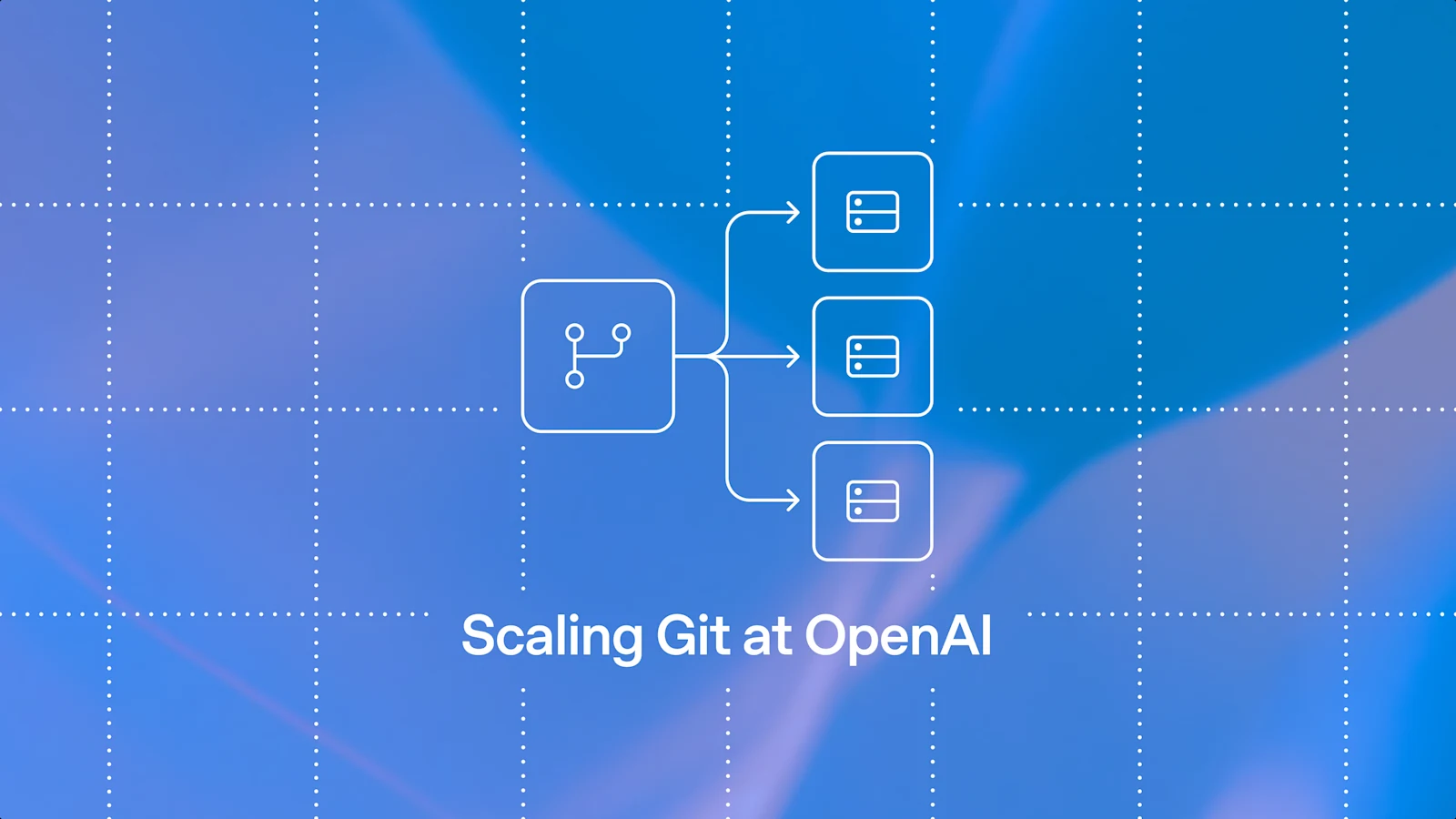
Scaling Source Control for Codex Development
Over the past year, the size of and demands placed on OpenAI's monorepo have grown at a staggering pace. Members of the technical staff—Aaron Friel, Taylor Blau, and Ted Nyman—noted that the organization needed to overhaul its source control system to properly scale with the heavy concurrent work enabled by Codex.
To solve these infrastructure challenges without disrupting ongoing engineering workflows or altering how teams interact with standard version control, OpenAI built Pando. Detailed further by the team at OpenAI News, Pando serves as a new backend designed specifically for Git repositories operating at massive operational scales.
Performance Goals and Production Metrics
Pando was engineered to achieve two critical goals: horizontally scalable writes optimized for concurrent pushes across multiple branches, and maximized read throughput so that clients can quickly download data to saturate available network bandwidth.
By retaining complete compatibility with the traditional Git protocol and its standard client, both human engineers and automated agents can adopt Pando seamlessly into their existing routines. In live production environments, Pando successfully cut median push latency by nearly five times, while currently serving nearly a petabyte of Git data every single day.
Overcoming Monorepo Friction
The development pace unlocked by Codex drastically shifted the volume and velocity of code changes at OpenAI. This shift brought a dramatic increase in concurrent branches, active pushes, fast merges, frequent fetches, and intensive clones across various development environments, research jobs, and continuous integration pipelines.
By the end of the previous year, the existing legacy systems supporting the monorepo began struggling to keep pace. Developers encountered slow fetches, sluggish pushes, and recurring merge failures, with system reliability occasionally dropping below ninety percent.
Preserving Compatibility with the Git Ecosystem
Rather than discarding decades of established tooling, OpenAI chose to preserve standard workflows by rebuilding the underlying storage backend. This architecture allows the system to handle parallel pushes to different branches while simultaneously serving identical commit histories to multiple concurrent readers.
Maintaining Git as the core foundation of the source control workflow ensures that client-side enhancements remain broadly useful. OpenAI intends to share these improvements from its ecosystem contributions back to the wider community.

Optimizing Writes and Reads Independently
Scaling a modern source control infrastructure requires managing two core dimensions: numerous writers pushing changes to distinct branches, and high volumes of readers fetching the same underlying history. Pando addresses these dimensions through independent optimization strategies.
First, the backend coordinates updates for each branch independently so that unrelated branches process in parallel. Second, Pando reuses Git packfiles across multiple fetches instead of dynamically generating unique packfiles for every individual client connection, significantly reducing computational overhead on the server.
Sources
- OpenAI NewsScaling Git at OpenAI
Continue chronologically


Related entity coverage
Related stories
OpenAI and ServiceNow Expand Enterprise AI Workflows
OpenAI and ServiceNow have announced an expanded partnership to bring advanced AI models and agents into enterprise workflows, ChatGPT, and Codex.
Heimstaden Transforms Real Estate Management With OpenAI
European real estate operator Heimstaden is transforming property management, cutting costs, and empowering employees using OpenAI technology.
OpenAI Prepares New Security Sprint With Cathedral Systems
OpenAI announces its next internal security sprint in partnership with Cathedral Systems to test and strengthen its AI defenses and systems.
OpenAI Doubles Pro Limits and Brings Work Features to Chat
OpenAI is doubling Pro usage limits, rolling out ChatGPT Work capabilities into regular Chat, and combining usage allowances across ChatGPT and Codex.