
Positron IDE Now Available on Amazon SageMaker AI
Posit’s data science IDE is now compatible with Amazon SageMaker AI, allowing teams to consolidate their development, training, and reporting workflows within a single governed environment.
 Radwan AbdulhadiEditor and technology writer
Bridging Development and Deployment
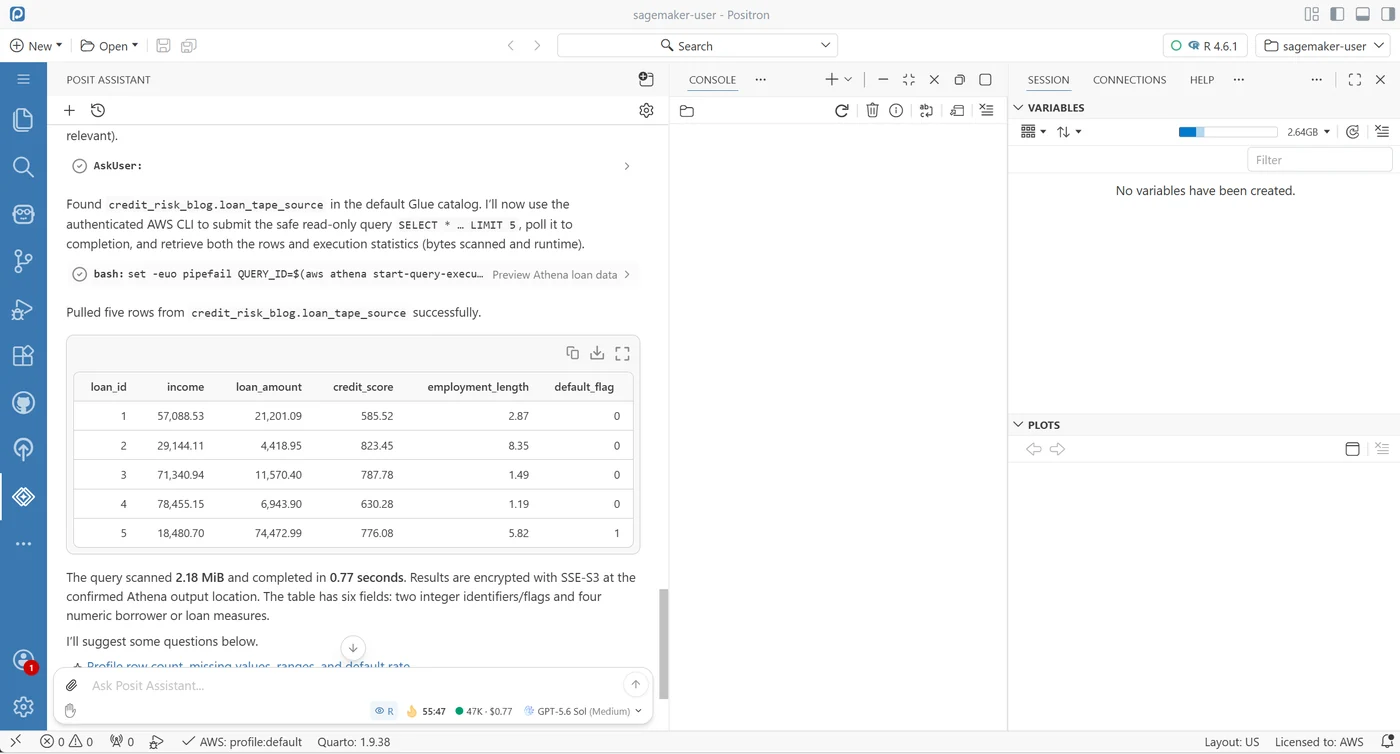
Data science teams frequently struggle with fragmented tooling, often switching between separate platforms for data discovery, language-specific analysis, and model deployment. To address these operational silos, Posit has announced that Positron, its integrated development environment (IDE) for data science, now runs on Amazon SageMaker AI. This integration aims to unify governed data access, R analysis, Python model development, and real-time reporting under one cohesive platform, as detailed in the official AWS Machine Learning Blog.
By operating within a SageMaker Studio Space, developers can leverage the existing infrastructure of Amazon SageMaker Studio documentation to maintain governance. This architecture allows organizations to run data-heavy tasks, such as querying Amazon Athena or interacting with the AWS Glue Data Catalog, directly from the IDE without the need for manual credential management. The environment relies on the Space execution role to handle permissions, effectively eliminating the risk associated with storing or rotating access keys.
Implementation and Configuration
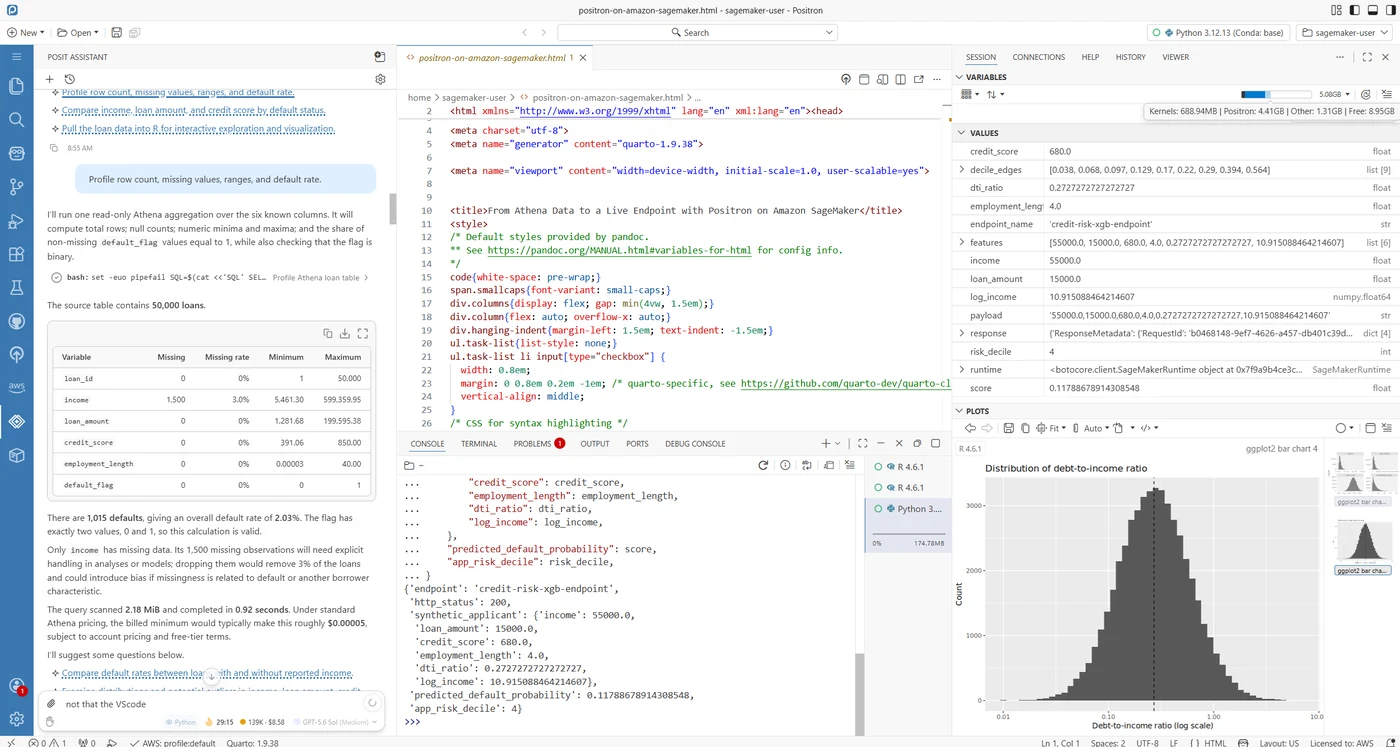
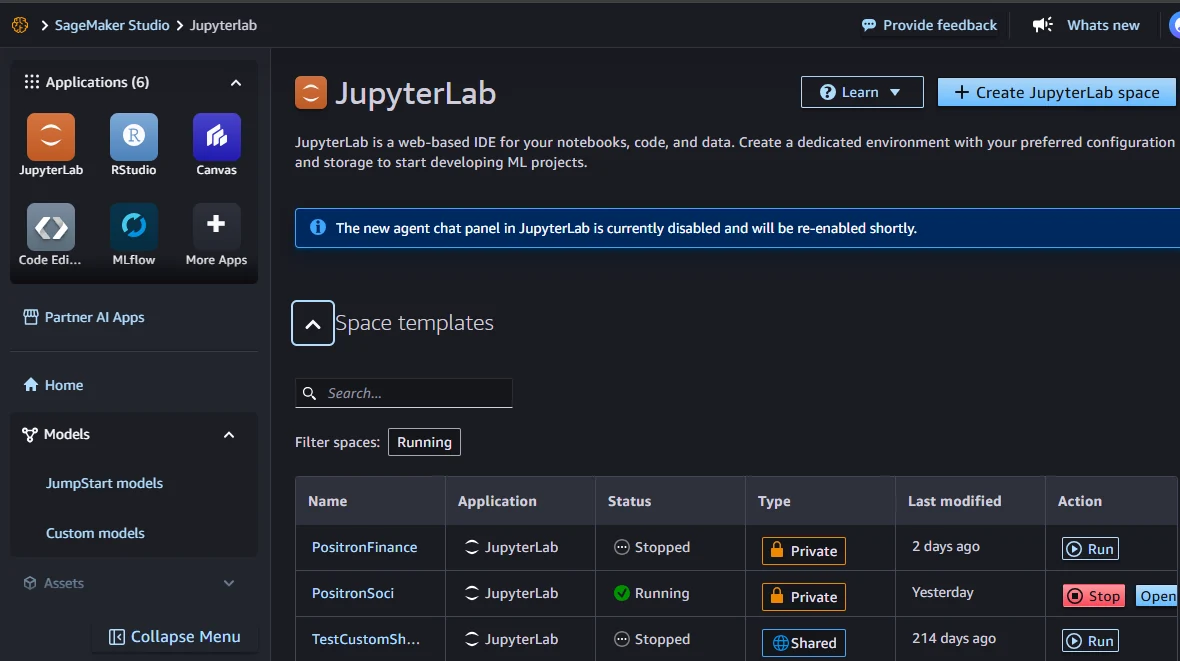
The deployment process for Positron on SageMaker requires platform administrators to manage container images. Administrators are tasked with building a custom image based on the Positron SageMaker Containerfile, pushing it to an Amazon Elastic Container Registry (Amazon ECR) repository, and registering it with SageMaker AI. Once attached to a Studio domain, data scientists can select the environment when initiating a new Space. Detailed instructions for this setup are available via the official Positron Set up Guide on SageMaker.
AI Assistance and Secure Model Integration
A key component of this integration is the inclusion of Posit Assistant, the vendor’s AI-powered coding companion. When running on SageMaker, the assistant can be configured to use Amazon Bedrock as its underlying model provider. This design ensures that AI assistance remains confined to the user's own AWS account and Region, reinforcing data privacy. Users concerned with governance can consult the documentation regarding how to see Amazon Bedrock data protection protocols to ensure compliance with internal security standards.
Executing End-to-End Data Science Workflows
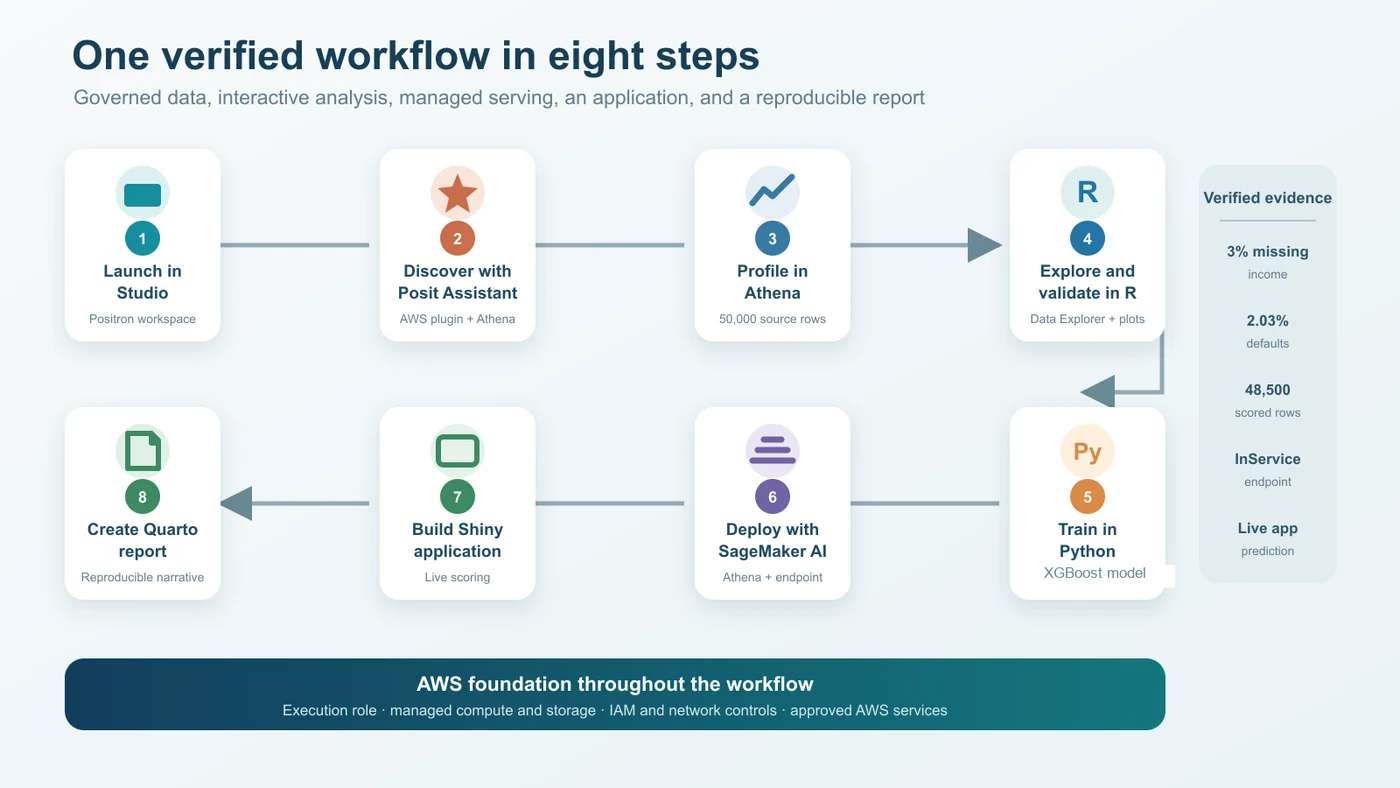
The platform enables a streamlined transition from data discovery to production. In a demonstrated workflow, a scientist might use Positron to inspect an Athena-based dataset, validate features using R, and then transition to Python for training an XGBoost classifier. The final output can be deployed as a real-time SageMaker AI endpoint. Because the application preview and project explorer exist within the same browser-based environment, developers can maintain context throughout the entire lifecycle of a project.
Furthermore, the environment is designed for collaboration. Teams can launch multiple Spaces to work on independent modules or utilize a shared Space for collective development on a single application. By leveraging the power of SageMaker, organizations can ensure that their compute resources are ready on demand, with the ability to reserve capacity for scheduled training tasks, ensuring that both independent research and production-grade model development remain efficient and scalable.
Sources
- AWS Machine Learning BlogRun Positron on Amazon SageMaker AI for data science workflows