Anthropic Launches Free OSS Scanner for Open-Source Security
Anthropic is offering open-source software projects a new way to track down security vulnerabilities through a complimentary service called OSS Scanner. The tool uses the company's most advanced AI models to conduct periodic safety checks.
 Radwan AbdulhadiEditor and technology writer

Introduction to OSS Scanner
Anthropic has announced a new initiative aimed at helping open-source software maintainers track down security vulnerabilities. According to details shared by <a href="https://www.theverge.com/ai-artificial-intelligence/1008521/anthropic-open-source-oss-scanner">The Verge</a>, the company is offering a free service known as <a href="https://www.anthropic.com/research/launching-opt-in-vuln-finding-service-for-open-source">OSS Scanner</a> to assist the developer community.
Under this initiative, projects that decide to <a href="https://red.anthropic.com/oss-scanner/#sign-up">opt-in</a> will receive thorough, periodic security scans conducted by Anthropic's strongest models at absolutely no cost. The company hopes this offering will provide open-source developers with a significant defensive advantage by alerting them to potential security issues much earlier in their development lifecycles.
Open-source software forms the foundational bedrock of much of the modern internet and software ecosystem. By extending its advanced artificial intelligence capabilities to these projects free of charge, Anthropic is positioning its models as frontline defenders against evolving cyber threats.
How the Model-Generated Reports Work
A notable characteristic of the <a href="https://www.anthropic.com/research/launching-opt-in-vuln-finding-service-for-open-source">OSS Scanner</a> service is that its outputs are completely model-generated. Anthropic has clarified that the vulnerability reports are produced without any human review or triage.
The absence of human oversight is designed to enable faster and more frequent scanning cycles. However, Anthropic acknowledges that this trade-off means it is entirely possible for some generated reports to be incorrect or invalid.
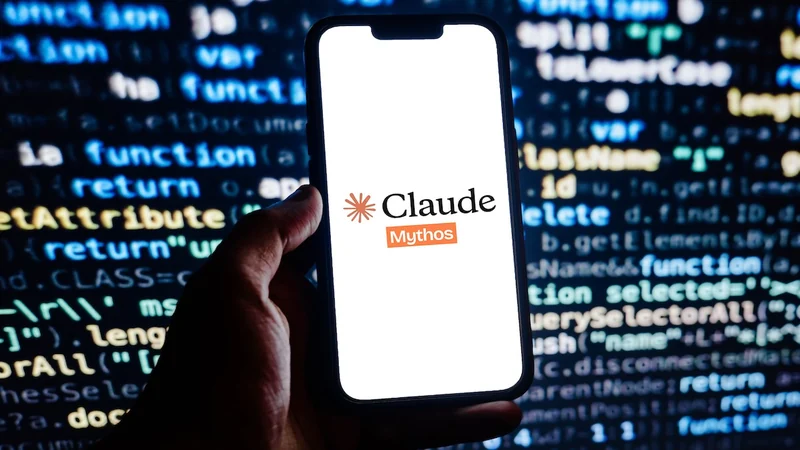
To maximize the usefulness of the tool despite the lack of human filtering, these reports are generated by Anthropic's most advanced systems, including Claude Mythos. These powerful models are intended to give participating open-source projects the largest defensive advantage possible when identifying hidden bugs.
Broader Context of AI in Security Bug Hunting
Anthropic's introduction of <a href="https://www.anthropic.com/research/launching-opt-in-vuln-finding-service-for-open-source">OSS Scanner</a> arrives within a rapidly evolving landscape where artificial intelligence tools are increasingly utilized for vulnerability discovery. AI-driven systems have previously assisted in uncovering major security flaws in critical open-source software over recent months.
Notable examples include the <a href="https://www.theverge.com/tech/922243/linux-cve-2026-3141-copy-fail-exploit">“Copy Fail” bug</a>, which impacted nearly every Linux distribution when it emerged earlier in May.
While automated bug finding offers powerful capabilities, the influx of machine-generated insights has presented distinct administrative challenges for various software maintainers across the global technology sector.
Challenges and Industry Strain from AI Submissions
Despite the potential security benefits, the sudden surge of automated and AI-generated security reports has created operational friction for maintainers. Prominent open-source figures, <a href="https://www.theverge.com/tech/932312/linus-torvalds-linux-ai-security-bugs">including Linus Torvalds</a>, have spoken out about the difficulties of managing an onslaught of bug submissions.
The strain is not limited to individual projects. Major industry entities, <a href="https://www.theverge.com/ai-artificial-intelligence/1004634/google-pauses-open-source-bug-bounty-over-ai-slop-submissions">including Google</a>, have previously had to pause open-source bug bounty programs due to an overwhelming volume of low-quality or AI-slop submissions.
Anthropic's approach with <a href="https://www.anthropic.com/research/launching-opt-in-vuln-finding-service-for-open-source">OSS Scanner</a> attempts to address participation through an opt-in model, ensuring that only projects willing to receive automated, un-trioaged insights will take part in the scanning cycles.
Future Outlook for Open-Source Vulnerability Scanning
As artificial intelligence models continue to grow in capability and scale, the intersection of automated code analysis and open-source software maintenance will remain a critical area of focus. Services like <a href="https://www.anthropic.com/research/launching-opt-in-vuln-finding-service-for-open-source">OSS Scanner</a> demonstrate both the immense promise and the inherent operational hurdles of relying on machine-generated intelligence for software safety.
Maintainers and developers will need to balance the speed and depth of advanced models against the reality of false positives and triage requirements. Whether opt-in services can successfully streamline security without overwhelming human maintainers remains a key question for the open-source community moving forward.
Sources
- The VergeAnthropic launches free AI security scans for open-source projects
Continue chronologically


Related entity coverage
Related stories
Anthropic Fast-Tracks AI Bug Reports and Taps OT Firms
Anthropic launched an unreviewed open source vulnerability scanner and partnered with eleven firms to improve operational technology security.
Google, OpenAI, Anthropic Join New Scraping Controls
Google, OpenAI, Anthropic, and Microsoft pledge to support a new common robots.txt signal to block web scraping for generative AI training.

Google and Meta Challenge OpenAI and Anthropic in AI Race
Google and Meta have unveiled powerful new frontier models, challenging Anthropic and OpenAI and completely reshaping the competitive AI landscape.

Anthropic Report Claims GLM-5.3 Has Mythos Hacking Abilities
Anthropic's new frontier red teaming report claims Zhipu AI's GLM-5.3 model has Mythos-class hacking capabilities and weak safeguards.