
GitHub Introduces External Custom Properties in Preview
GitHub has announced the public preview of external custom properties, allowing organizations to synchronize repository business context directly from external systems of record.
 Radwan AbdulhadiEditor and technology writer
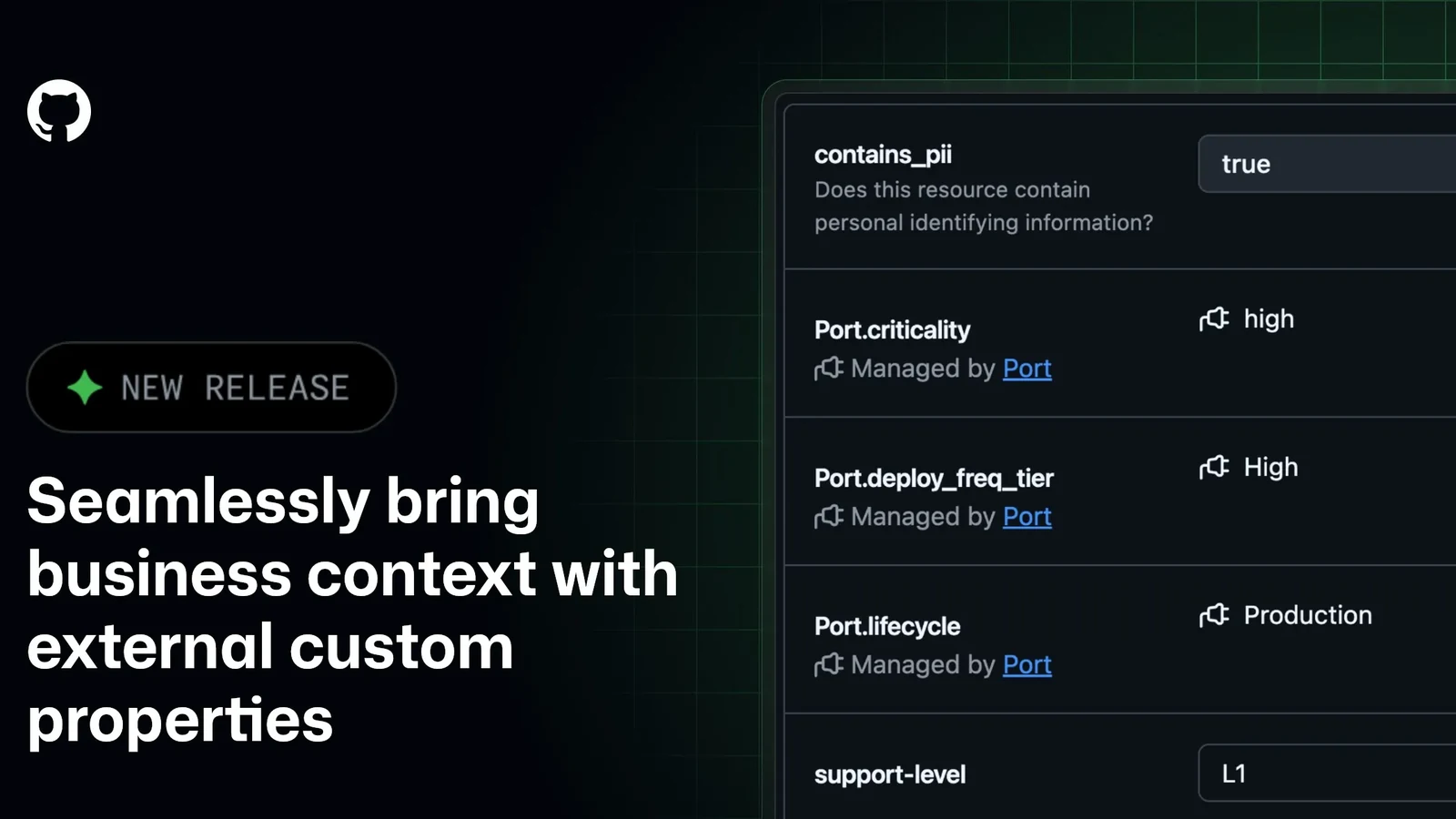
Bringing External Business Context to Repositories
GitHub has announced the launch of external custom properties, a new feature currently available in public preview. This functionality allows teams to seamlessly bring critical business context about their repositories from an external system of record—such as an internal developer portal, a configuration management database (CMDB), or an in-house system—directly into GitHub.
The new feature is designed to keep business context completely aligned with its original source, with ongoing updates managed directly by the external system. This includes essential tracking information such as repository ownership, service tier, lifecycle stage, and compliance status.
Understanding Custom Properties vs. External Custom Properties
While standard custom properties are ideal when organizations want to manage context directly within GitHub through the user interface or APIs, external custom properties are built specifically for scenarios where an external system should exclusively own and continuously update that context.
To maintain data integrity and prevent conflicting updates across multiple systems, values managed through this feature are strictly read-only in the GitHub UI. Developers and users cannot manually edit these specific values inside GitHub.
Synchronization and Dedicated Namespaces
The integration relies on ongoing synchronization, using external custom properties APIs to keep values current automatically as source data changes. Furthermore, each integration manages properties under its own dedicated namespace prefix, keeping them completely separate from properties managed by other sources.
Organizations can utilize external custom properties everywhere standard custom properties are currently supported. This includes repository views, repository filtering, and ruleset targeting, ensuring that existing governance models can leverage the synced business context while the external system remains the authoritative source of truth.
Partner Integrations and Custom Enterprise Solutions
Port.io stands out as the first official partner to integrate with GitHub's external custom properties. Developers and administrators can read Port.io’s announcement for a high-level overview or follow the Port.io integration guide to begin syncing their organization's business context to GitHub.
Enterprises are not restricted solely to partner integrations. Any organization can choose to build its own custom integration using the dedicated external custom properties APIs, backed by fine-grained permissions to control access safely and securely.
Getting Started and Community Engagement
Teams looking to implement their own workflows can review official documentation covering integrating custom properties with an external system to get started with the setup process and API configurations.
GitHub has also invited users to share feedback, ask questions, and join the conversation by visiting the GitHub Community announcements category.
Sources
- GitHub ChangelogBring business context with external custom properties