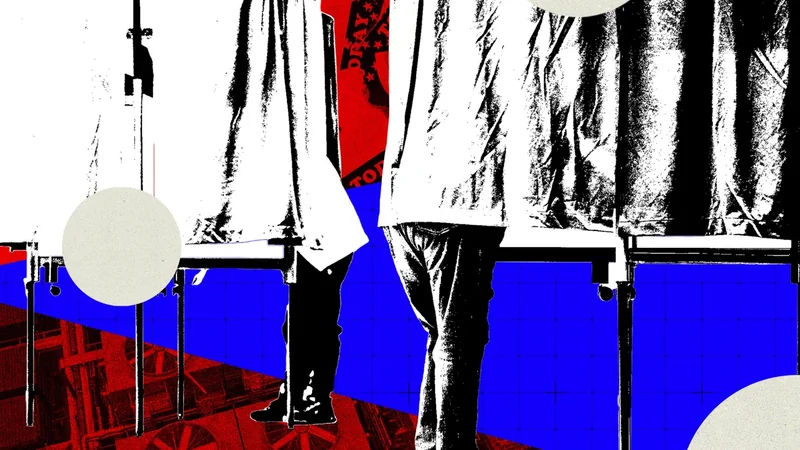
Inside the Muslim Manosphere Policing Women Online
Influencers are leveraging social media platforms to dress hypermasculinity and misogyny in religious language, creating a pervasive online policing culture directed at women.
 Radwan AbdulhadiEditor and technology writer

The Rise of the Muslim Manosphere
The digital landscape has increasingly become a battleground where prominent influencers utilize social platforms to spread misogynistic ideologies repackaged under the guise of faith. At its core, the broader manosphere centers on male grievance and antifeminist viewpoints, whether organic or engineered to sell supplements . This ecosystem encompasses diverse subcultures including incels, pick-up artists, and followers of the Red Pill .
Over time, these concepts have been adopted and rebranded by the Muslim manosphere, utilizing the language of faith to argue that feminism has destabilized society and that men must reassert control. This phenomenon crosses international borders, languages, and digital platforms, impacting prominent women who find themselves harassed online through unsolicited messages regarding how to dress and behave.
Influencers and Regional Dynamics
Researchers and content creators have closely examined how these narratives function across Arabic-speaking and Western regions. Sarah Kaddoura, a feminist researcher and creator of the YouTube channel Haki Nasawi , explored this landscape in a 2025 report . Her research highlights figures such as Jordanian relationship coach Kareem Atta’i, known online as Coach Kareem or Red Pill Arabic , whose videos frame interactions between genders as power struggles and reference violence as a means of discipline.
Beyond the Middle East, UK-based creator Ali Dawah engages in street debates and commentary concerning relationships and religious identity. Often associated with the cohort known as 'Dawah Bros,' these influencers are recognized for adopting aggressive stances when promoting content that echoes manosphere ideology, transforming traditional outreach into public surveillance.
Data on Digital Harassment and Surveillance
The real-world impact of these online ideologies is well-documented by recent studies examining abuse directed at public figures. A 2026 report by the Institute for Strategic Dialogue analyzed nearly 14,000 comments directed at 40 prominent public figures and influencers on Instagram in Jordan over a 12-month period, revealing severe gender disparities in targeted harassment.
According to the findings, 72 percent of comments classified as hate speech, harassment, or abusive language targeted women, while 11 percent involved religious or moral harassment—with 85 percent of those moral harassment comments directed specifically at female influencers. Furthermore, all comments categorized as sexual harassment were directed at women, illustrating the contradictory reality where internet users demand modesty while simultaneously subjecting women to unwanted sexual attention.
Algorithmic Amplification and Recommendation Systems
The reach of the Muslim manosphere is significantly driven by the recommendation algorithms of platforms like TikTok, YouTube, X, and Instagram. According to Kaddoura, male users quickly encounter misogynistic content soon after opening an account because engagement-based architectures frequently promote emotionally charged and polarizing videos.
When relationship coaches and internet personalities present personal opinions as absolute religious instructions, any criticism is often framed by creators as a hostile attack on the faith itself. However, researchers note that while publicly available metrics show broad visibility, tracing exact user transitions between creators remains challenging due to limited access to internal platform data.
Sources
- WIREDInside the Muslim Manosphere Policing Women Online
Continue chronologically

Related stories
Instagram Expands Long-Form Video and TV Viewing Features
Instagram is updating its platform to support 90-minute videos, horizontal viewing, and TV integration to capture the expanding clip and streaming economy.
Instagram Tests Long-Form Videos Without Payment Plan
Instagram is testing long-form horizontal videos up to 90 minutes long, but creators are complaining about a lack of monetization features compared to YouTube.
Instagram Pushes Into Longform and Widescreen Video With Features
Instagram is introducing a new longform horizontal video format called Features, shifting its strategy to compete with platforms like YouTube.
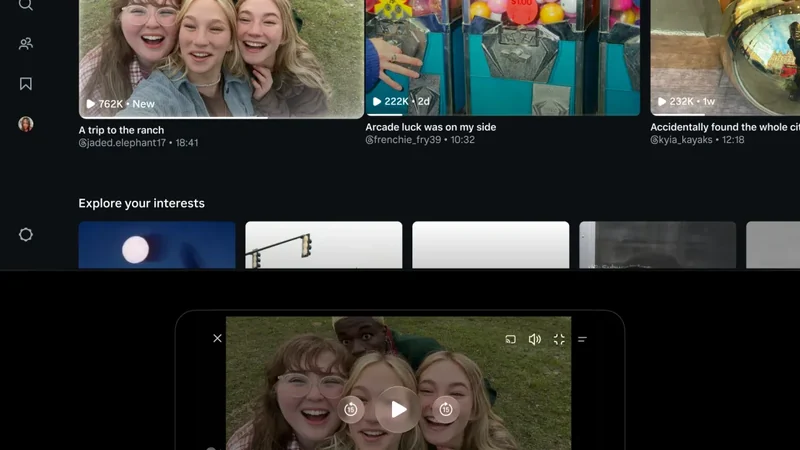
Instagram Tests 90-Minute Videos in Shift to Long-Form
Instagram is testing a new feature allowing creators to upload videos up to 90 minutes long, marking a major strategic shift toward long-form content.