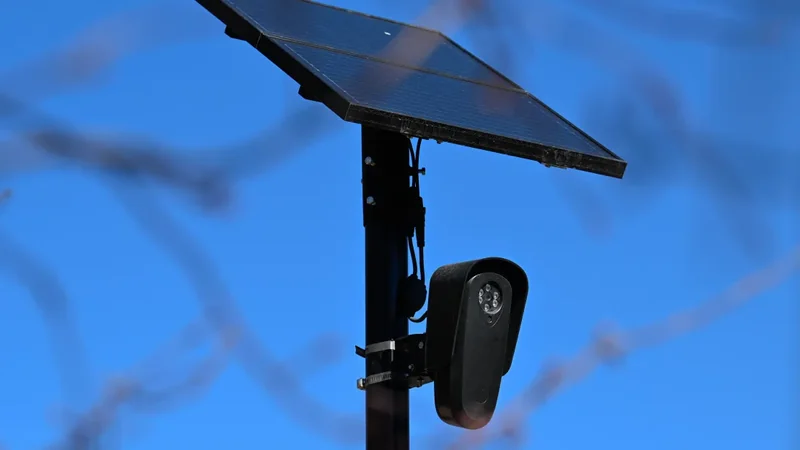
Examining How Flock Safety Costs Add Up for US Cities
An examination of public records from more than two dozen cities and towns reveals how Flock Safety contracts and software packages scale over time, leaving municipalities with growing recurring expenses.
 Radwan AbdulhadiEditor and technology writer

Rising Municipal Costs and Multiyear Commitments
Municipal spending on automated surveillance technology has drawn increased scrutiny from communities and researchers examining local expenditures. In 2020, the police department in Covington, Georgia, allocated funds to maintain a network of cameras supplied by Flock Safety . Over subsequent years, the total financial commitment expanded significantly as the department integrated additional hardware iterations. Further details are available from WIRED in the original source material.
Financial records indicate that costs grew alongside the deployment of newer camera variants and expanded software packages. While these surveillance line items represent a small fraction of broader department appropriations, public scrutiny has intensified amid concerns over automated monitoring practices. Similar financial expansions have been documented in public disclosures across multiple jurisdictions nationwide.
The Evolution of Sales Strategies and Private Networks
When the company was initially founded, its target market centered on private residential communities. By extending its business model to municipal law enforcement agencies, the firm leveraged existing private infrastructure to establish broader operational footprints without building networks from scratch.
A similar pattern emerged in jurisdictions where local departments initially acquired a modest number of camera units. Over time, recurring agreements and integrated platform licenses increased municipal expenditures substantially, reflecting broader sales tactics utilized across the public-sector technology market.
Incentives, Discounts, and Long-Term Locking
To secure long-term commitments, surveillance providers frequently employ promotional pricing models and multiyear contract discounts. Industry observers note that these commercial approaches mirror general salesmanship seen across various enterprise technology sectors, encouraging agencies to commit to extended terms.
For instance, promotional communications sent to regional authorities frequently emphasize upcoming price adjustments for hardware upgrades. By committing to multiyear agreements, agencies often secure reduced rates compared to continuous single-year renewals, though such commitments legally bind taxpayers to recurring technology expenses.
Product Bundling and Multi-Vendor Consolidations
Beyond standalone hardware installations, modern public-sector tech contracts increasingly incorporate comprehensive software ecosystems and specialized operational tools. Municipal decision-makers frequently evaluate whether to consolidate multiple third-party suppliers into a single unified service provider to streamline departmental expenditures.
In certain municipalities, leadership proposed replacing a fragmented array of specialized vendors with an expanded contract that consolidates multiple surveillance capabilities. These comprehensive bundles can encompass automated emergency data integration, drone technology acquisitions, and real-time operational platforms under unified billing structures.
Pricing Tiers and Civic Accountability
Public procurement records reviewed by researchers illustrate that deployment costs vary considerably depending on agency size and system scale. Historical pricing schedules categorized municipal customers into distinct tiers, creating wide cost differentials based on the number of sworn personnel within an organization.
As policy analysts observe, once law enforcement agencies integrate specialized technology tools into their daily workflows, reversing those deployments often presents significant political and administrative challenges. Consequently, ongoing examinations of public records continue to shed light on the long-term financial trajectories of municipal surveillance networks.
Sources
- WIREDWhat Flock Actually Costs Cities Across the Country
Continue chronologically


Related stories
Flock Safety Plans Major Layoffs Amid Growing Surveillance Backlash
Flock Safety is reportedly planning to cut 18 percent of its workforce following mounting bipartisan backlash and declining adoption nationwide.

Flock Safety Faces Backlash as Cities Struggle to Cancel Contracts
As more cities cancel their contracts with Flock Safety, municipal leaders discover the unexpected difficulties of removing the surveillance equipment.

Federal Judge Calls Flock Search Unconstitutional
A federal judge ruled a sheriff deputy's warrantless Flock search violated Fourth Amendment rights, describing it as mass surveillance.

Elgin Community College Fights Flock Over Cameras
An Illinois college attempted to cancel its Flock safety camera contract over data concerns, leading to a bizarre dispute over camera coverings.