
GPT-6.1 Sol Rolls Out in GitHub Copilot for Developers
GitHub has announced the general availability of GPT-6.1 Sol, OpenAI's latest model, within the GitHub Copilot ecosystem. The new model is designed to enhance agentic coding and terminal workflows through improved efficiency and multistep performance.
 Radwan AbdulhadiEditor and technology writer
General Availability and Rollout Strategy
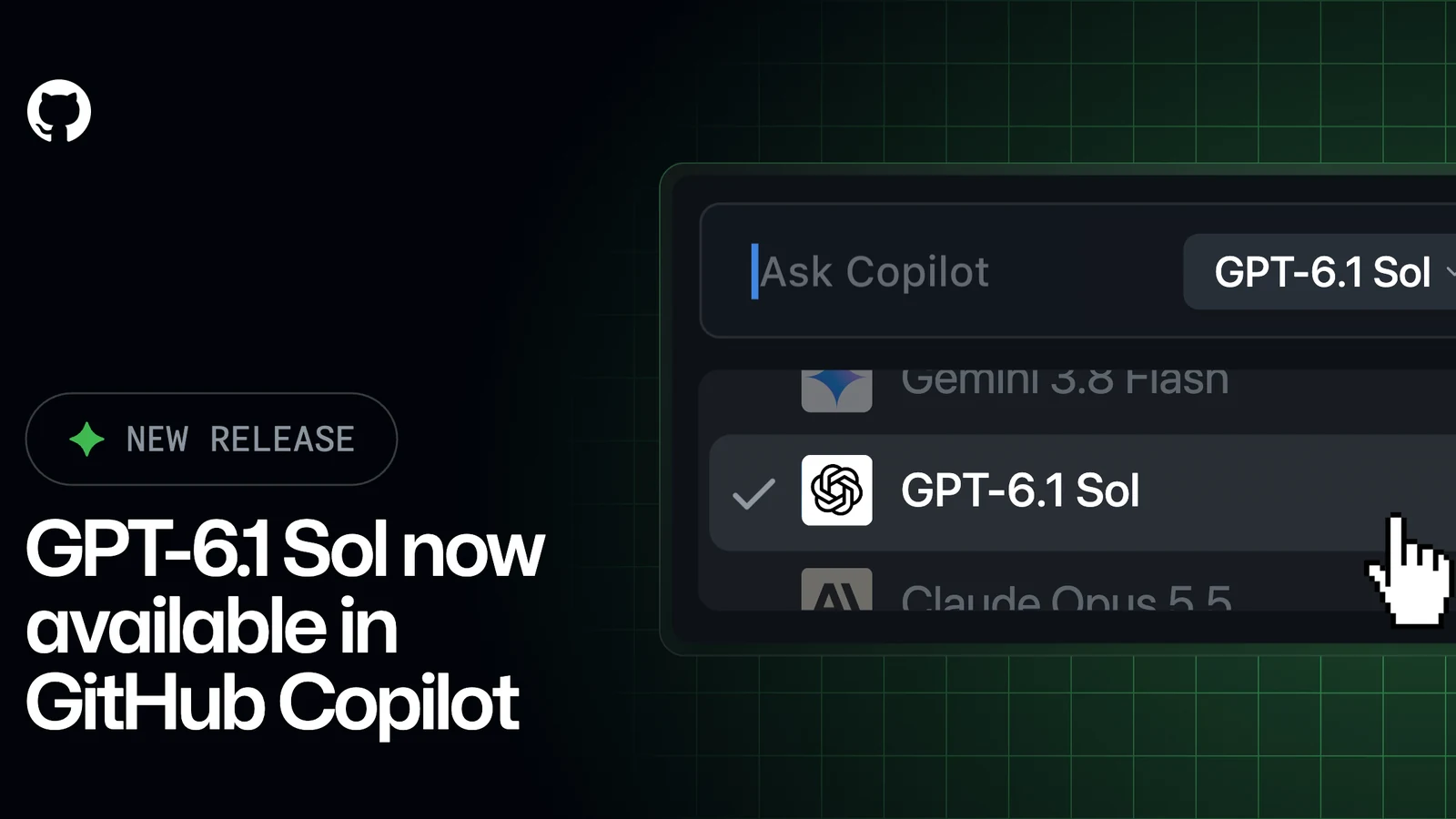
GitHub has confirmed that GPT-6.1 Sol, the latest large language model from OpenAI, is now generally available within GitHub Copilot. The rollout is currently in progress and will be gradual, meaning that not all users may see the model immediately in their interfaces. Developers who do not yet see the option in their model picker are advised to check back in the coming days as the distribution expands across the user base. This phased approach allows GitHub to monitor system stability and performance metrics while ensuring a smooth transition for the global developer community.
Performance and Efficiency Improvements
The primary focus of GPT-6.1 Sol is on enhancing agentic coding and terminal workflows. According to GitHub, early testing indicates that the model reliably completes complex tasks while utilizing noticeably fewer tokens and steps compared to earlier models in the GPT-6 and GPT-5.6 families. This efficiency is particularly significant for developers working on multistep coding problems, where token consumption can directly impact cost and latency. By reducing the number of steps required to reach a solution, GPT-6.1 Sol aims to provide a more streamlined experience for automated code generation and debugging tasks.
User Access and Subscription Tiers
Access to GPT-6.1 Sol is limited to specific subscription tiers within the GitHub Copilot ecosystem. The model is available to users subscribed to Copilot Pro+, Max, Business, and Enterprise plans. Free users or those on lower-tier plans will not have immediate access to this specific model. Once the rollout reaches their accounts, eligible users can select GPT-6.1 Sol directly from the model picker interface within Copilot. This tiered access strategy aligns with GitHub's broader approach to managing high-performance AI models, ensuring that advanced capabilities are reserved for professional and enterprise workloads.
Administrative Controls and Policy Management
For organizations using Copilot Business and Enterprise plans, administrators retain full control over model access. Through the model policy settings in Copilot, administrators can explicitly enable or disable GPT-6.1 Sol for their teams. By default, new models are automatically enabled unless an administrator has turned off the global default setting or has specifically disabled this model. This flexibility allows IT and security teams to manage compliance, cost, and usage patterns effectively. Administrators can review the broader context of available options in the documentation for models available in GitHub Copilot to ensure their policies align with organizational standards.
Billing and Cost Implications
GitHub has clarified that GPT-6.1 Sol is billed at provider list pricing under usage-based billing. This means that costs are tied directly to the consumption of the model, rather than being included in a flat-rate subscription for all features. Developers and organizations should review the detailed pricing structures to understand how this model fits into their overall budget. The efficiency gains mentioned in early testing, specifically the reduced token usage, may help mitigate potential cost increases associated with using a newer, more capable model. Users are encouraged to consult the official documentation for precise details on how these charges are calculated and applied.
Context Within Recent AI Model Updates
The introduction of GPT-6.1 Sol follows a rapid pace of AI model integrations in GitHub Copilot. Just one day prior, GitHub announced the availability of Claude Sonnet 5.5 in GitHub Copilot, highlighting the platform's commitment to offering a diverse range of top-tier AI models. This competitive landscape allows developers to choose the model that best suits their specific coding tasks, whether they prioritize speed, cost, or specific coding strengths. The frequent updates reflect the dynamic nature of the AI industry, where new models are continuously being developed and integrated into developer tools to enhance productivity and code quality.
Sources
- GitHub ChangelogGPT-6.1 Sol in GitHub Copilot