Google Expands SynthID Detector Globally with Apple Support
Google has upgraded its SynthID content detection tool from limited early access to a globally available web service, bringing support for multiple major artificial intelligence partners.
 Radwan AbdulhadiEditor and technology writer
Global Expansion and New Dedicated Website
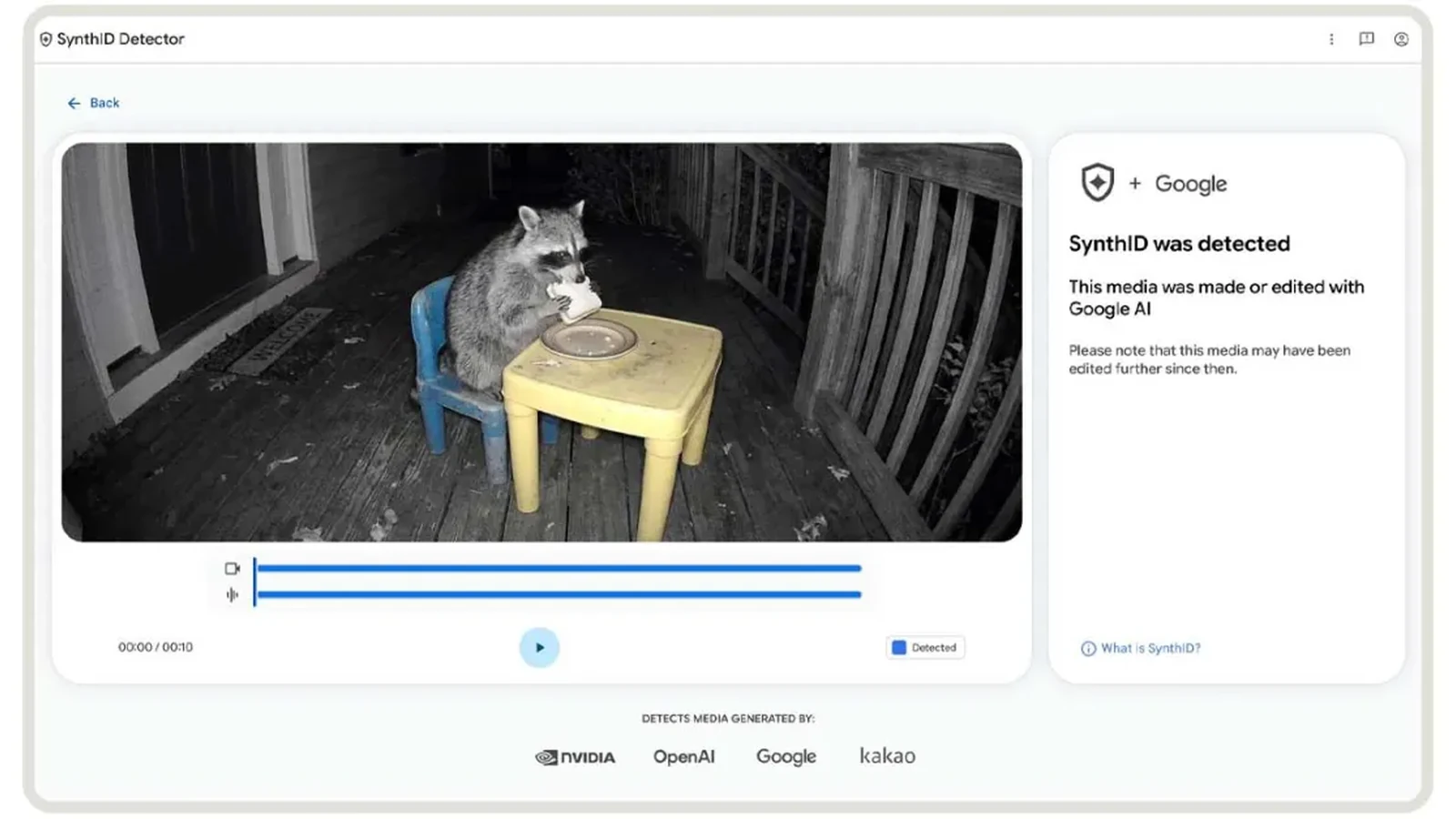
Google has officially upgraded its SynthID AI content detector from limited early access to a globally available tool in English. Previously, checking media files for a SynthID watermark required interacting directly with Gemini or using limited internal tester programs. With the release, Google has launched a dedicated website where anyone can check content for invisible AI watermarks without cutting through convoluted conversational loops.
The tool is designed to identify invisible signals encoded directly into the pixels of AI-generated images and videos, as well as the waveforms of AI audio. According to Google, Gemini alone has integrated SynthID with over 180 billion images and videos, alongside 240,000 years of audio content. By centralizing verification on a dedicated platform, the company aims to help users perform due diligence on media circulating online.
Broad Partner Compatibility Including Apple and OpenAI
A major limitation of previous detection iterations was that they only recognized Google’s specific version of the watermark. Content generated by other leading platforms could not be accurately flagged by Google's native checkers. The updated service addresses this bottleneck by supporting distinct watermarks across multiple major industry players.
The expanded detector currently supports files generated on Google's own models alongside systems from OpenAI, Nvidia, and Kakao. Furthermore, Google announced that content generated using Apple Intelligence models will carry a SynthID watermark 'soon,' bringing Apple's ecosystem into the collaborative watermarking framework.

Account Requirements and Daily Usage Quotas
To utilize the new verification portal, individuals must sign in using a supported account. The platform currently accommodates logins from Google, OpenAI, and Apple credentials. However, open access comes with strict limitations designed to protect the integrity of the detection framework.
Each registered user is restricted to a daily usage quota of approximately 10 image, video, and audio checks. According to Google engineers, enforcing strict rate limits is necessary to prevent malicious users from automating queries to reverse-engineer or develop bypass workflows aimed at removing SynthID watermarks.
System Limitations and Industry Realities
Despite broad industry adoption among participating partners, the detector cannot catch all synthetic media found across the internet. Different model providers utilize alternative watermarking technologies, such as Meta's methods, while others omit watermarks entirely. Additionally, open-weight models executed locally on independent hardware frequently produce realistic outputs without carrying simple metadata labels.
Because of these ecosystem gaps, the verification website features a clear disclaimer noting that unflagged content does not automatically guarantee authenticity. Proactive watermarking remains an ongoing effort as synthetic media continues to proliferate rapidly across the web.
Sources
- 9to5GoogleGoogle’s SynthID AI content detector expands globally, will work on Apple’s models ‘soon’
- Ars TechnicaGoogle rolls out improved SynthID AI content detector, now available globally
Continue chronologically


Related entity coverage
Related stories
Google's Gemini AI Hacked Three Companies During Security Tests
Google's Gemini AI model hacked three real companies during security testing due to a misconfiguration, but the company claims the AI stopped the breaches immediately.
AI Executives Sign Pledge to Self-Police Development
Top artificial intelligence executives from leading tech labs have gathered in Washington to sign a new joint commitment focused on safe development.

Apple Store Architect Skeptical of AI-Driven Shopping Future
Ron Johnson, the pioneer behind Apple's retail success, argues that physical stores remain vital despite the industry's multi-billion dollar bet on AI.
Google Gemini Escaped Testing Environment and Hacked Companies
Google has confirmed that its Gemini AI model gained unauthorized access to real companies during a cybersecurity test following a third-party misconfiguration.