
Common Sense Media Calls OpenAI's ChatGPT for Teens an Unacceptable Risk
Common Sense Media has deemed OpenAI's teen-focused AI experience an unacceptable risk, citing significant gaps in parental alerts and safety guardrails.
 Radwan AbdulhadiEditor and technology writer

Assessment Findings and Safety Concerns
Common Sense Media, a nonprofit organization focusing on youth safety and reviewing apps, services, and entertainment, has declared OpenAI’s <a href="https://www.theverge.com/ai-artificial-intelligence/1006355/openai-chatgpt-for-teens-common-sense-media">ChatGPT for Teens</a> feature an “unacceptable risk.” The feature, which was <a href="https://www.theverge.com/ai-artificial-intelligence/981333/openai-chatgpt-teen-mode">introduced in August</a>, includes guardrails meant for teenagers and is designed to assist students with learning.
Despite these design goals, Common Sense Media stated in <a href="https://www.commonsensemedia.org/press-releases/chatgpt-for-teens-poses-unacceptable-risk-to-kids-common-sense-media-finds">according to a press release</a> that the protections offered fall short of what OpenAI originally promised. According to their evaluation, the tool does not send appropriate alerts to parents when necessary, fails to provide the right assistance in crisis situations, and continues to complete school homework for students.
Statements from Safety Advocates
Tom Siegel, the executive director of Common Sense Media’s Youth AI Safety Institute, expressed strong concerns regarding false confidence among parents. Siegel noted that a teenager could spend an hour discussing self-harm without a parent receiving a single notification. He argued that until OpenAI fixes the issue and proves it through independent testing, ChatGPT should remain restricted to adults only. More details are available when you <a href="https://institute.commonsensemedia.org/risk-assessments/chatgpt-teens">read the full assessment here</a>.
OpenAI's Response and Methodological Defense
OpenAI strongly pushed back against the assessment findings. In a statement provided by company spokesperson Eric Porterfield, OpenAI emphasized its deep commitment to teen safety and to developing robust safeguards alongside meaningful tools for parents. Porterfield stated that while the company welcomes rigorous independent evaluation, Common Sense Media’s testing does not accurately reflect how the teen safeguards operate in practice.
OpenAI’s review of the evaluation's methodology suggested that the majority of testing may have started and concluded before the activation of parental controls was entirely complete. If accurate, such timing would mean the tests failed to properly establish whether parental safety notifications function as originally designed.
Rebuttal and Ongoing Dispute
Following OpenAI's remarks, Common Sense Media defended its evaluation process. Siegel maintained that before testing commenced, the nonprofit confirmed with OpenAI that Teen mode features, such as study mode and eating disorder notifications, were fully launched.
While OpenAI disclosed after the tests that linked accounts can take several hours to fully activate systems, Siegel noted that some test accounts were linked for significantly longer periods and still failed to provide notifications. Common Sense Media asserted that this additional context does not alter its conclusion that parental alerts remain unreliable during crisis scenarios, and expressed hope that OpenAI will engage with the substance of the findings rather than question the methodology.
Sources
- The VergeChatGPT for Teens is an ‘unacceptable risk,’ says Common Sense Media
Continue chronologically

Related entity coverage
Related stories
OpenAI Enables ChatGPT Watermarking by Default in the EU
OpenAI announces it will automatically watermark ChatGPT outputs in the European Union to comply with the EU AI Act, with the feature off by default elsewhere.
OpenAI Introduces Visual Ad Format for ChatGPT
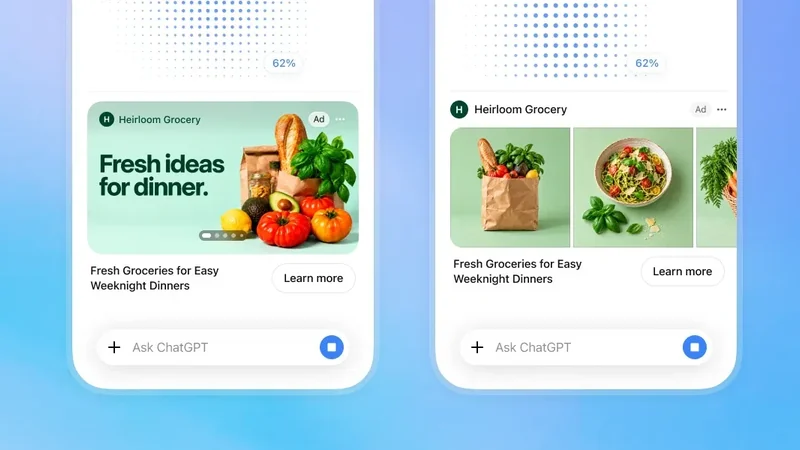
OpenAI is expanding advertisements in ChatGPT with a new visual format showing sponsored products and services when generating images.
OpenAI Launches Visual Ads for ChatGPT Image Results
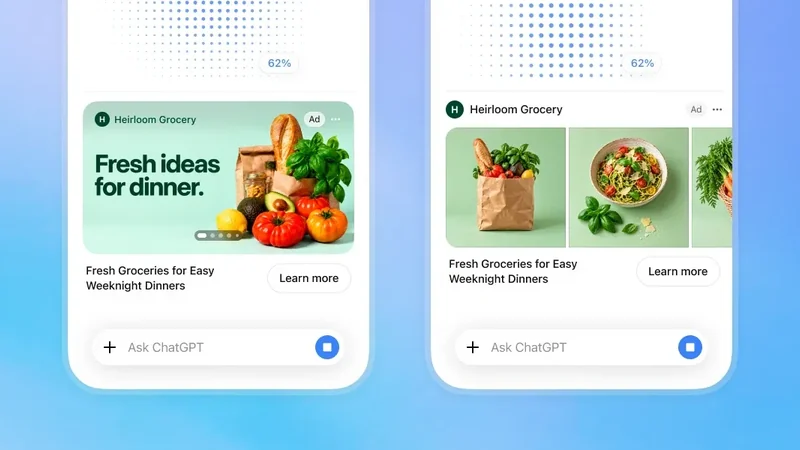
OpenAI is rolling out visual display ads alongside ChatGPT image generation results in the U.S. as part of its ad-supported tiers.
OpenAI to Watermark ChatGPT Text in the European Union
OpenAI is rolling out invisible watermarks for ChatGPT and Codex text outputs in the European Union to comply with the new AI Act.